
Plenty of workplaces have a first aid kit on the wall and assume they're covered. But UK first-aid law is broader than the kit: it reaches your needs assessment, your trained people, your signage, your records and how often you review the lot. This checklist pulls all seven duties into one place so you can audit your workplace, spot the gaps, and — just as importantly — prove you've done it.
How to use this checklist
Work through the seven sections below and mark each line done, action needed or not applicable. Anything you can't evidence on the day is a gap. Run it as a full audit at least once a year, and after any material change — new equipment, a jump in headcount, a new site, or an incident that revealed a weakness.
1. First aid needs assessment
Everything else is downstream of this one document. Without it you can't show your provision is "adequate and appropriate".
- A written, dated needs assessment exists and someone owns it.
- It reflects your current hazards, headcount, shift patterns and number of sites.
- It accounts for lone, remote and travelling workers and, where relevant, visitors or the public.
- It has a review date and hasn't lapsed.
2. First-aiders & training
The right number of the right people, trained to the right level, with cover when someone's away.
- Enough trained first-aiders or appointed persons for your risk level and size — see how many first aiders you need.
- Training matches the hazard: EFAW or FAW, plus any specialist add-ons the work demands.
- Every certificate is in date (FAW/EFAW last three years), with renewals booked before they expire.
- Annual refresher training is offered, and there's cover for holidays and sickness so you're never left with none.
3. First aid kits
- A suitably sized, BS 8599-1 stocked kit within easy reach of every work area — see how many kits you need.
- Kit size matches the risk level and number of people it serves.
- Nothing expired or used-up: kits are inspected regularly and restocked promptly.
- Each kit is signed and easy to find (see section 5) and stored somewhere sensible — see where to keep first aid kits.
4. Additional equipment
Only what your assessment calls for — but if it calls for it, it has to be present and serviceable.
- AED (defibrillator) where distance to emergency services or risk warrants it — with pads and battery in date.
- Eye-wash provision where there's a splash or dust risk and no clean running water.
- Burns, vehicle or catering kits where relevant — e.g. BS 8599-2 vehicle kits for drivers, or a catering kit for a kitchen.
- On higher-risk sites, a first aid room where the assessment requires one.
5. Signage & staff information
- Green-and-white first-aid signs mark kits, equipment and any first aid room, with the route to them.
- A first aid notice tells staff who the first-aiders or appointed persons are and where the nearest kit is.
- The notice is current — updated the day a first-aider joins, leaves or lets a certificate lapse.
- New starters are told the arrangements as part of induction.
6. Records & reporting
Compliance you can't evidence is compliance you can't prove. This is where most workplaces slip.
- An accident book is in use and GDPR-compliant, with serious cases reported under RIDDOR where required.
- Kit inspection logs are kept and dated.
- First-aider certificates are on file and retrievable.
- The needs assessment and any review notes are stored with your health-and-safety records.
7. Review & ownership
- A named person owns first aid compliance day to day.
- A full audit is diarised at least annually, plus after any material change or incident.
- The arrangements are written up in a standing first aid policy so anyone can see them at a glance.
The checklist at a glance
| Area | What "compliant" looks like |
|---|---|
| Needs assessment | Written, dated, current, reviewed. |
| First-aiders & training | Right number and level; every certificate in date; cover for absence. |
| Kits | Stocked BS 8599-1 kit within reach of every work area; nothing expired. |
| Extra equipment | Any AED, eye-wash, burns or vehicle kit the assessment calls for, serviceable. |
| Signage & notice | Signs mark provision; a current notice names first-aiders and kit locations. |
| Records | Accident book, inspection logs, certificates and assessment all retrievable. |
| Review | Named owner; annual audit diarised; arrangements written into a policy. |
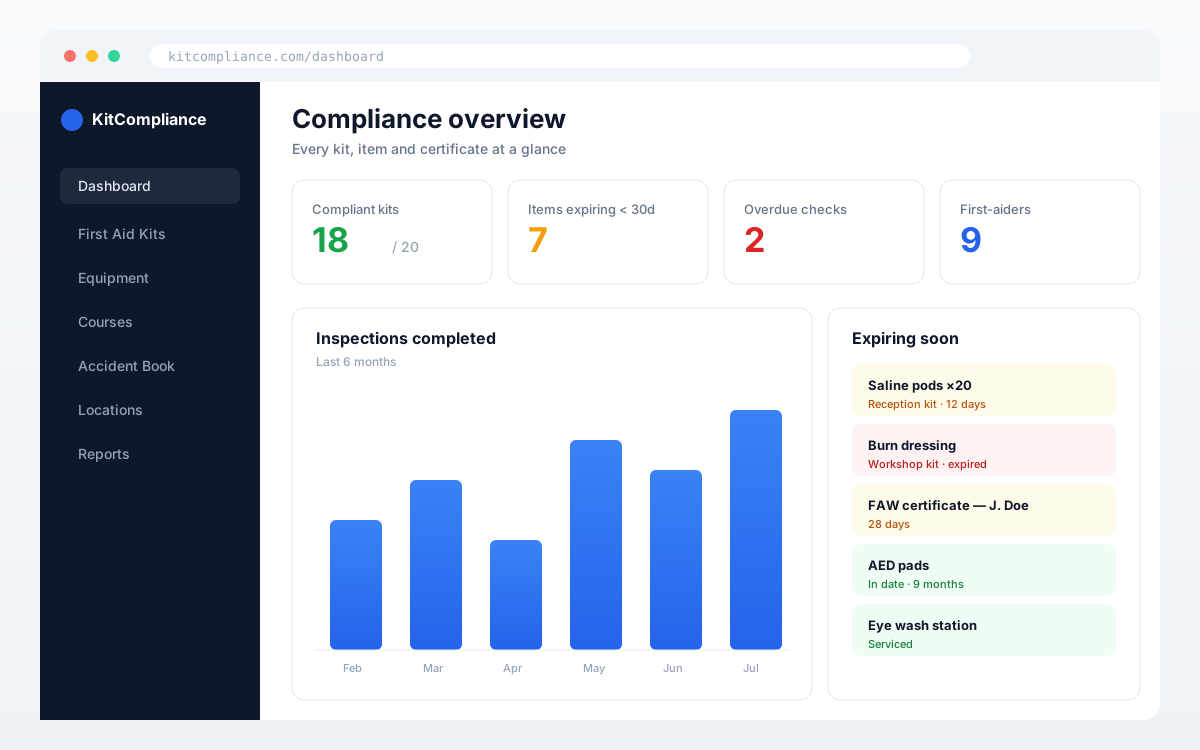
The checklist tells you what "good" looks like. Keeping it true every week — each kit stocked, each certificate in date, each inspection logged and each record retrievable — is the hard part, and it's exactly what KitCompliance automates. Build each kit from the BS 8599-1 / ISO 45001 suggested list, record inspections in seconds, get reminders before anything lapses, and produce a one-click report that proves your provision on demand. See the getting-started guide to set it up.
Frequently asked questions
Is there a legal first aid checklist UK employers must follow?
There's no single official form. The 1981 Regulations require "adequate and appropriate" provision, decided by a needs assessment. A compliance checklist is just a practical way to confirm every duty that flows from that is in place and up to date.
How often should I audit first aid compliance?
Check kits monthly, review certificates as they approach expiry, and run a full audit at least once a year — and immediately after any material change or incident.
Who is responsible for first aid compliance at work?
The legal duty sits with the employer, usually delegated to whoever owns health and safety (see who is responsible for first aid at work). The employer remains accountable for making sure provision is adequate and evidenced.
What evidence does an HSE inspector or auditor ask for?
Typically the written needs assessment, current first-aider certificates, kit inspection records, the accident book, and proof any AED is maintained. Producing these quickly is the difference between demonstrating compliance and struggling to — see what an HSE first aid inspection checks and how to prepare.