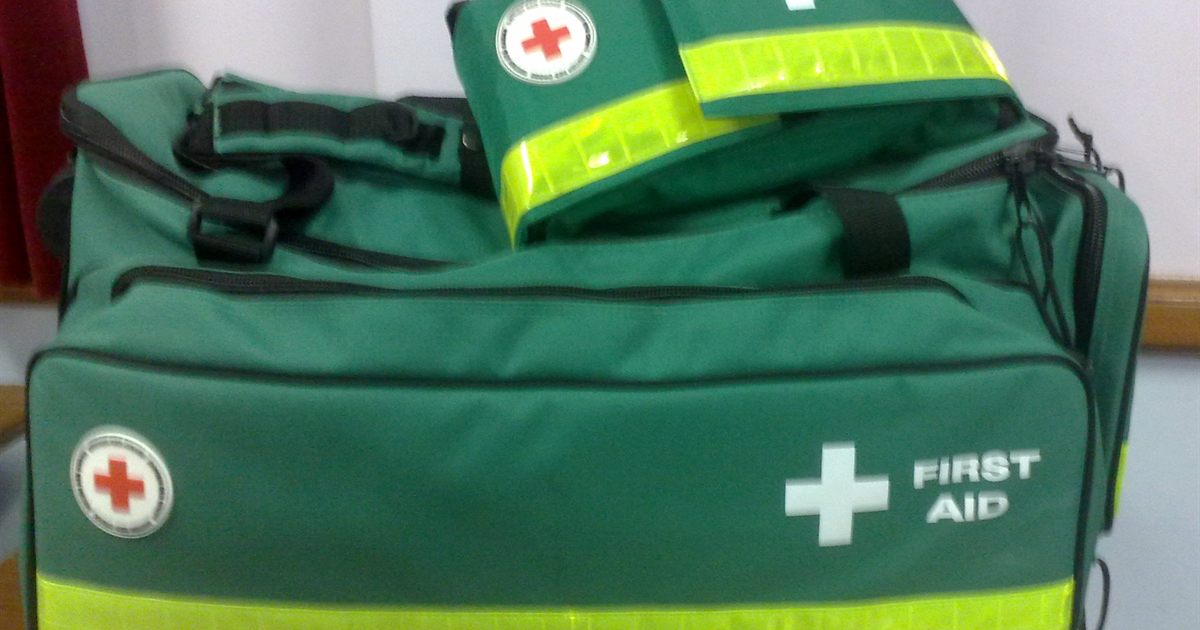
If your people drive for work — reps, engineers, carers, delivery drivers — the vehicle is their workplace, and your first-aid duty travels with them (many are also lone workers, with their own provision to plan). Yet vehicle kits are the ones most often forgotten: bought once, thrown in a boot, and never checked again until an inspector or an incident asks the question. This guide covers whether a kit is legally required in a work vehicle, the British Standard BS 8599-2 contents by size, and how to keep an entire fleet compliant without a spreadsheet.
Do work vehicles legally need a first aid kit?
No single regulation says "every vehicle must carry a first aid kit" the way some European countries mandate one. In the UK the duty is risk-based. The 1981 Regulations require employers to provide adequate first-aid equipment for their employees — and HSE guidance is explicit that this extends to employees who travel or work away from their main site. If someone could be injured while driving or working from a vehicle, and a fixed workplace kit is too far to help, the provision has to go with them.
Whether a kit is needed, and how big, comes out of your first-aid needs assessment. Points that push towards well-equipped vehicle kits:
- Lone and remote driving — the driver may be the only person able to give immediate first aid.
- Carrying passengers — taxis, minibuses, care transport and coaches raise the number of people at risk.
- Higher-risk loads or work — engineers, trades and couriers who work at the roadside or handle equipment.
The standard: BS 8599-2
BS 8599-2 is the British Standard that defines first aid kit contents for motor vehicles. Like its workplace counterpart it isn't the law, but it's the benchmark suppliers, fleet managers and auditors use. Kits are graded by the number of people the vehicle carries — broadly small, medium and large — so a company car and a 16-seat minibus don't carry the same box. A typical medium vehicle kit contains:
| Item | Typical qty (medium) | Purpose |
|---|---|---|
| Guidance leaflet | 1 | Basic first-aid instructions |
| Adhesive plasters (assorted) | 20 | Minor cuts and grazes |
| Sterile dressings (medium/large) | 4 | Wounds and bleeding |
| Triangular bandage | 2 | Slings and support |
| Sterile saline wipes | 10 | Cleaning wounds |
| Nitrile gloves (pairs) | 2 | Infection control |
| Foil blanket | 1 | Shock and warmth after a collision |
| Burn dressing | 1 | Burns and scalds |
| Clothing shears | 1 | Cutting away clothing or seatbelts |
| Adhesive tape | 1 | Securing dressings |
| Face shield / resuscitation aid | 1 | Safer rescue breaths |
Quantities scale up with kit size, and larger kits add extra dressings and gloves for multiple casualties. As always, the discipline isn't memorising the list — it's keeping the date-marked items (saline, dressings, burn gel) in date and replacing anything used.
Which size for which vehicle?
BS 8599-2 ties kit size to occupancy. A practical starting point:
- Small — cars, light vans and grey-fleet vehicles carrying one or two people.
- Medium — larger vans and vehicles regularly carrying several people.
- Large — minibuses, coaches, HGVs and any vehicle carrying passengers or higher numbers.
If you carry passengers for hire or reward (taxis, private hire, school or care transport), check the licensing conditions from your local authority as well — many require a suitable first aid kit as a condition of the licence, on top of the health-and-safety duty.
Keeping a whole fleet compliant
One kit is easy. The problem is scale: 5, 20 or 200 vehicles, each with a kit that expires, gets used and rarely gets checked — and no single place to see which ones are due. Here's the routine that keeps a fleet audit-ready.
- Fit the right kit to every vehicle. Match BS 8599-2 size to occupancy, and record which kit is in which vehicle by registration.
- Log each kit and its expiry dates. Capture the earliest expiry across the contents so you know when each vehicle's kit will lapse — see which items expire and when.
- Check on a set schedule. Inspect each vehicle kit at least monthly and after any use — seal intact, nothing missing, nothing expired. Our inspection-frequency guide explains how to set the cadence by risk.
- Restock and record. Replace used or expired items straight away, and keep a dated record of every check so you can prove provision across the fleet if the HSE or an auditor asks.
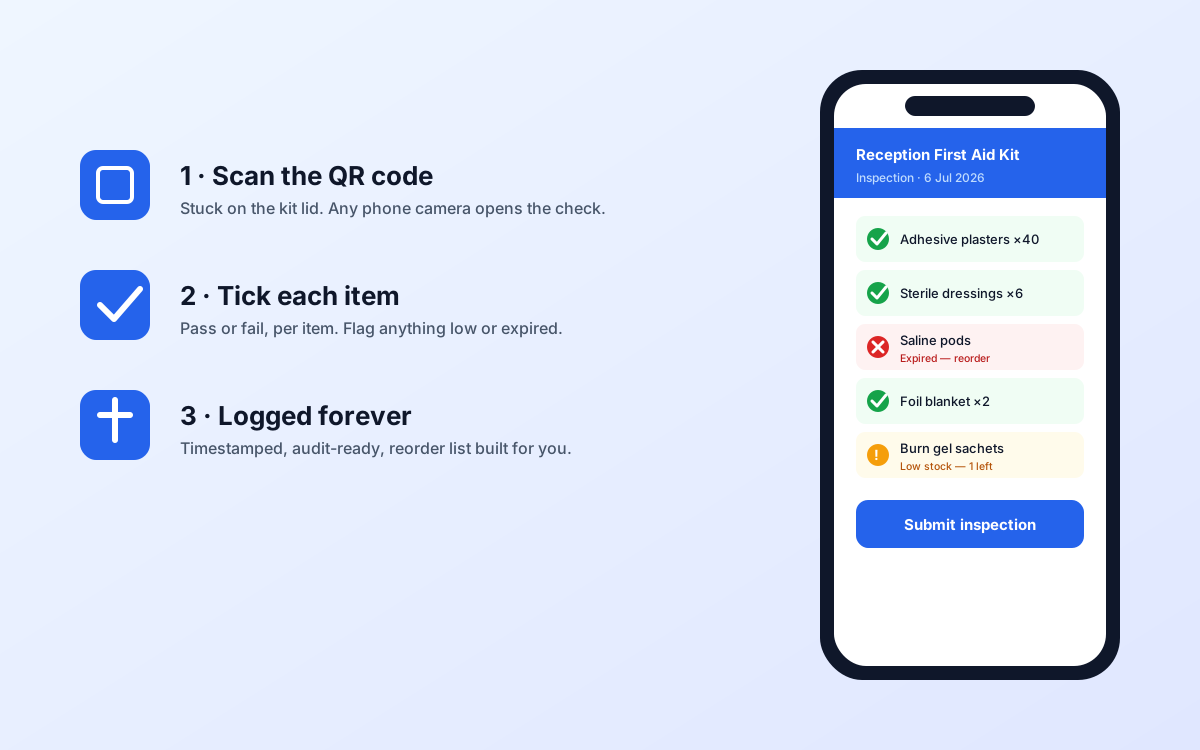
This is exactly what KitCompliance automates. Add every vehicle kit once, set its expiry dates, and get a reminder before anything lapses — plus a one-click PDF that proves provision across the whole fleet to any auditor. No more opening 40 boots to find out which kits are out of date. See the getting-started guide to set up your first kits.
Frequently asked questions
Is a first aid kit a legal requirement in a work vehicle in the UK?
There's no single law naming a kit for every vehicle, but the Health and Safety (First-Aid) Regulations 1981 require "adequate and appropriate" provision for people who work away from a fixed base. In practice, anyone who drives for work should have a kit in the vehicle, and a BS 8599-2 kit is the accepted way to meet that.
What is BS 8599-2?
BS 8599-2 is the British Standard specifying first aid kit contents for motor vehicles. It defines kit sizes suited to the number of occupants, from small kits for cars up to large kits for minibuses and HGVs. Like BS 8599-1 for workplaces, it's a benchmark rather than the law itself.
What size vehicle first aid kit do I need?
BS 8599-2 links size to occupancy: small for cars and light vans, medium for larger vans and multi-occupant vehicles, and large for minibuses, coaches and HGVs. Carrying passengers or hazardous loads points to a larger kit.
Do private cars used for work need a first aid kit?
If an employee uses their own car for work (grey fleet), your duty to provide adequate first-aid still applies to that work activity. Issue a personal or small vehicle kit and include those journeys in your needs assessment.