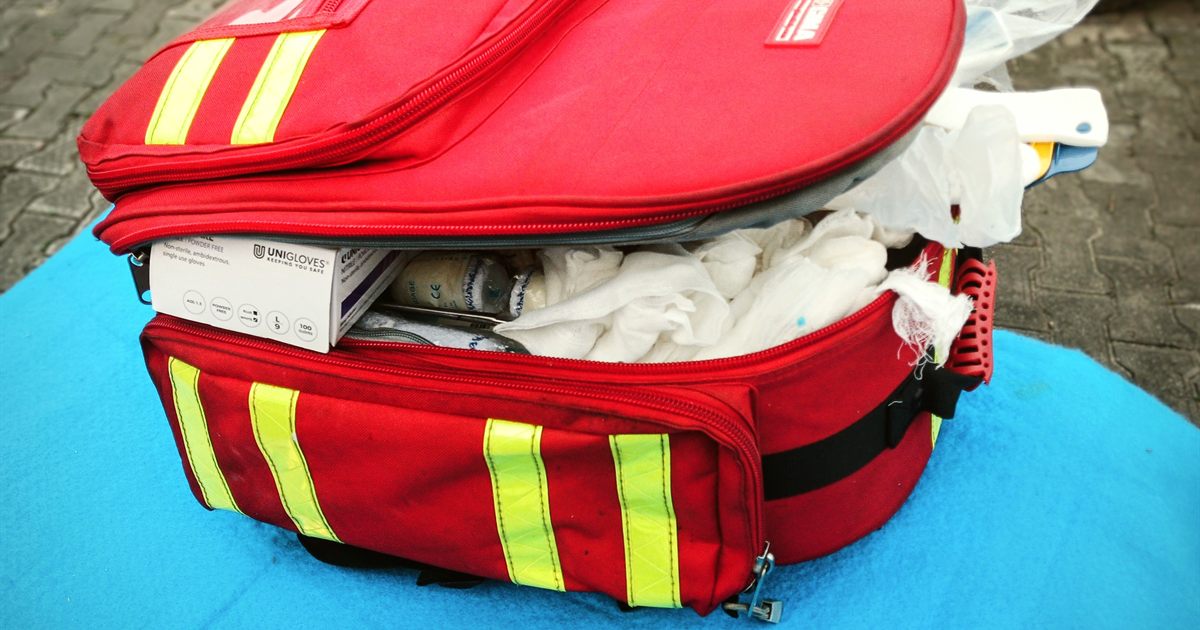
It is the single most common finding when someone finally opens the green box on the wall: half the contents went out of date years ago. Sterile items do expire, the dates are printed in small grey type on the back of each pack, and nothing warns you when they pass. This guide covers which items expire and when, what the law actually says, where to find the date, and how to check a whole site without it eating an afternoon.
Which first aid kit items expire?
The dividing line is sterility. Anything sealed in a sterile wrapper has a date because the manufacturer only guarantees that sterile barrier for a fixed period — the adhesive and the wrapper degrade, seals weaken, and gels and solutions dry out or lose their properties. Items that were never sterile in the first place, like scissors or safety pins, carry no date and are judged on condition instead.
| Item | Typical unopened shelf life | Notes |
|---|---|---|
| Sterile wound dressings (all sizes) | 3–5 years | The bulk of a BS 8599-1 kit. Replace the moment the wrapper is torn, regardless of date. |
| Adhesive dressings (plasters) | 3–5 years | Adhesive is the first thing to fail — old plasters simply will not stick. |
| Sterile eye pads | 3–5 years | Dated individually; easy to miss at the bottom of the box. |
| Saline pods / sterile eye wash | 2–3 years | Shortest life in the kit. Once opened, use immediately and discard — never retain. |
| Alcohol-free cleansing wipes | 2–3 years | Dry out in the sachet well before they look empty. |
| Burn dressings / hydrogel | 3–5 years | Essential in a catering kit; the gel dries and loses its cooling effect. |
| Disposable nitrile gloves | 3–5 years | Latex degrades faster than nitrile and can perish in a warm van. |
| CPR face shield / resuscitation mask | 3–5 years | The valve and film perish; check the date, not the box. |
| Microporous tape | 2–3 years | Adhesive-based, so it ages like plasters. |
| Triangular bandages (non-sterile) | No printed date | Replace if the pack is opened, damp, discoloured or soiled. |
| Foil blanket, scissors, safety pins, tweezers | No printed date | Condition-based. Replace if damaged, rusted or torn. |
| AED pads and battery | 2–5 years | Dated separately from the unit — see workplace defibrillator requirements. |
Is it illegal to have expired items in a first aid kit?
No regulation says "first aid items must be in date" in those words. What the Health and Safety (First-Aid) Regulations 1981 require is adequate and appropriate equipment, facilities and personnel. A box of dressings whose sterile guarantee lapsed in 2022 is not adequate equipment, and that is how it will be read.
In practice, expired stock is a finding three different ways:
- HSE inspection — evidence that provision is specified on paper but not maintained in reality.
- ISO 45001 audit — a non-conformity against your own documented controls, which is usually the more painful outcome.
- After an incident — if a casualty was treated with an expired dressing, your needs assessment and your maintenance records are what get examined.
Note that BS 8599-1, the British Standard that sets kit contents, specifies what goes in a kit — not how long it lasts. Buying a compliant kit is the start of the duty, not the end of it.
Where to find the expiry date on the packaging
Medical device packaging follows a symbol convention rather than plain English, which is why so many dates get missed:
- Hourglass symbol (⧖) or "EXP" — the expiry date, almost always month and year only. Treat the last day of that month as the deadline.
- Factory symbol with a date — the date of manufacture, not expiry. Easily confused, and it will make a kit look far older than it is.
- "LOT" or batch code — a traceability reference. Not a date at all, despite often containing digits that look like one.
- "2" in a crossed circle — single use only. Nothing to do with dates, but worth knowing when you find it on a dressing.
Where a sealed outer pack carries one date and the items inside carry their own, record the earliest. That is the date your kit effectively expires.
How to run an expiry check
Five minutes per kit, done properly. This slots straight into the routine in our first aid kit checklist:
- Empty the kit onto a clean surface so nothing stays hidden at the bottom. Check the box itself is clean, dry and intact.
- Read the date on every sealed pack — hourglass or EXP, ignoring batch and manufacture codes.
- Pull anything expired, plus anything expiring before your next check. If you inspect quarterly, remove anything dated within the next three months — otherwise the kit spends weeks non-compliant between visits.
- Check condition on undated items — torn wrappers, damp, discolouration, broken seals, rust on scissors.
- Restock, reseal and record the date, the checker, what was replaced, and the earliest expiry now in the kit.
What to do with expired items
Remove them from the kit entirely — do not leave them in "just in case", because the next person to open the box in an emergency will not check dates. Unused sterile dressings that have merely gone out of date are not clinical waste and can go in general waste, but anything contaminated must follow your normal clinical waste route. Expired stock is genuinely useful for FAW and EFAW refresher practice — keep it in a clearly marked training bag, never near a live kit.
AED pads and batteries are the exception worth flagging: they are not general waste, and a defibrillator with expired pads may refuse to deliver a shock at all. Order replacements before the date, not after.
Keeping ahead of expiry across a whole site
One kit is easy. The problem scales badly: ten kits across three floors, each holding twenty-odd dated items bought at different times, means roughly two hundred dates nobody is tracking. Spreadsheets decay — the person who built it leaves, a kit gets restocked without the sheet being updated, and by the audit it is fiction.
The fix is to make expiry visible without anyone remembering to look. Record each item's date once when the kit is built or restocked, then let the system surface what is due. That pairs with a sensible inspection rhythm — see how often first aid kits should be inspected — so checks catch problems and the register prevents them.
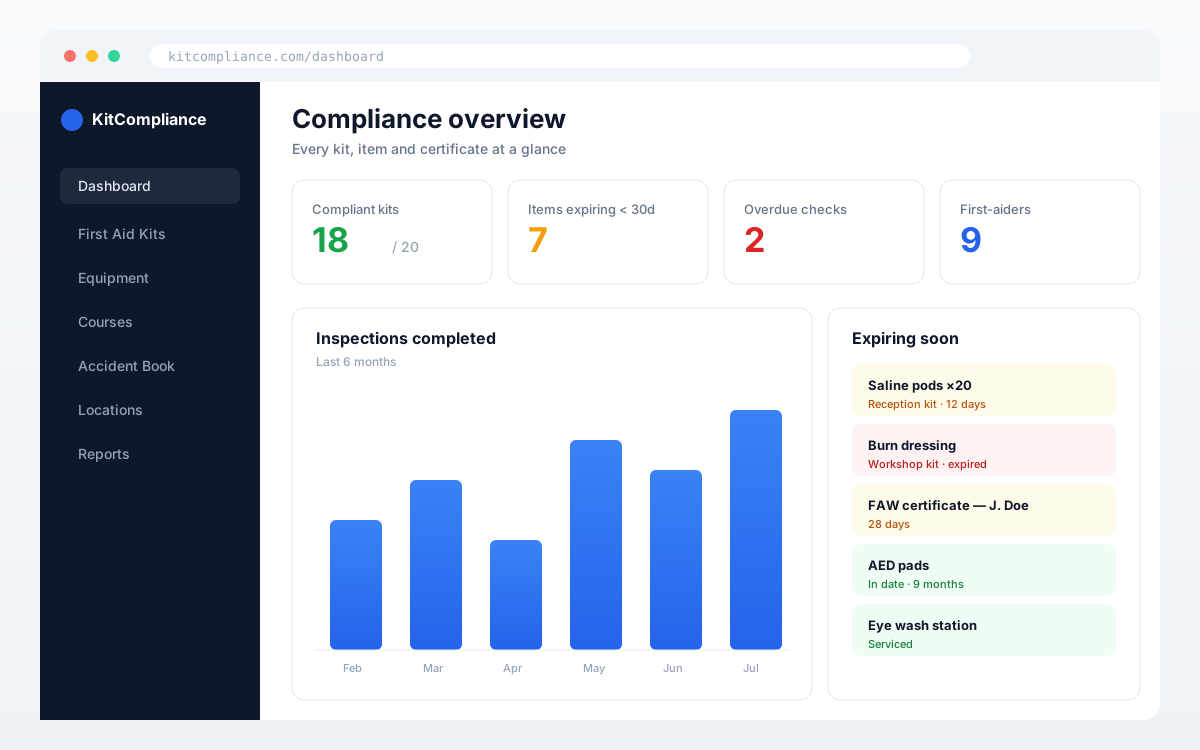
That is exactly what KitCompliance does: build each kit from the BS 8599-1 and ISO 45001 suggested lists, capture expiry dates as you stock it, and get reminders before anything lapses — plus a one-click report showing every kit in date on any given day. The getting-started guide walks through setting up your first kit in a few minutes.
Frequently asked questions
Do first aid kit items expire?
Yes. Every sterile item — plasters, wound dressings, eye pads, burn dressings, saline and cleansing wipes — carries an expiry date, typically 3–5 years from manufacture. Past that date sterility is no longer guaranteed and gels and wipes may have dried out. Non-sterile items such as scissors, safety pins and foil blankets have no printed date and are replaced on condition.
Is it illegal to have expired items in a workplace first aid kit?
No regulation names expiry dates directly, but the 1981 Regulations require "adequate and appropriate" equipment — and a kit of out-of-date sterile dressings is not adequate. An HSE inspector, EHO or ISO 45001 auditor will treat expired stock as evidence your provision is not maintained.
How long do first aid kit items last?
Typically 3–5 years for sterile dressings, plasters and eye pads; 2–3 years for saline pods and cleansing wipes; 3–5 years for nitrile gloves and CPR face shields; 2–5 years for AED pads and batteries. Always go by the date on the individual pack.
Can you still use an expired first aid dressing?
In a real emergency with nothing else available, a sealed expired dressing beats no dressing. But it must not be relied on as your provision — replace it as soon as you find it, and never restock a workplace kit with expired stock.
How often should you check first aid kit expiry dates?
At least quarterly in a typical workplace, monthly on higher-risk or heavily used sites, and always after the kit has been used. Because most items last years, the real risk isn't that dates arrive quickly — it's that nobody looks until an audit.
Does eye wash expire once opened?
Yes, and far faster than the printed date suggests. Sealed sterile saline typically lasts 2–3 years, but once the seal is broken it should be used immediately and then discarded — never kept for the next casualty.