When you go to book first aid training you hit two acronyms straight away: FAW (First Aid at Work) and EFAW (Emergency First Aid at Work). They cost different amounts, take a different number of days, and — crucially — qualify your staff to handle different things. Pick the wrong one and you either overspend or, worse, leave a higher-risk site without the cover it legally needs. This guide explains the difference and how to choose.
What each qualification covers
Both are regulated first-aid qualifications delivered by a training provider you choose (the HSE no longer approves providers), and both produce a certificate valid for three years. The difference is depth and duration.
Emergency First Aid at Work (EFAW) is a one-day course, a minimum of 6 hours of training. It teaches a first-aider to manage an incident, deal with an unresponsive casualty (including CPR), treat choking, serious bleeding, shock, and minor injuries. It is the emergency essentials — enough to keep someone alive and stable until the ambulance arrives.
First Aid at Work (FAW) is a three-day course, a minimum of 18 hours. It includes everything in EFAW and then goes much further: injuries to bones, muscles and joints, head and spinal injuries, chest pains and heart attacks, and recognising and helping with medical conditions such as diabetes, asthma, epilepsy and stroke. It is the qualification for a workplace where the range of things that could go wrong is wider.
FAW vs EFAW: side-by-side
| EFAW | FAW | |
|---|---|---|
| Full name | Emergency First Aid at Work | First Aid at Work |
| Course length | 1 day (min. 6 hours) | 3 days (min. 18 hours) |
| Typical cost per person | Lower (roughly £90–£150) | Higher (roughly £200–£300) |
| Scope | Emergency life-saving essentials | Everything in EFAW plus a wide range of injuries and medical conditions |
| Intended for | Low-risk workplaces (offices, shops) | Higher-risk workplaces (manufacturing, construction, warehousing, catering) |
| Certificate validity | 3 years | 3 years |
| Requalification | Retake the full 1-day course | Shorter 2-day requalification (before expiry) |
| Annual refresher | HSE recommends a half-day refresher each year for both | |
Which one does your workplace legally need?
Neither qualification is mandated by name. The Health and Safety (First-Aid) Regulations 1981 require "adequate and appropriate" provision, and the way you decide what that means is your first aid needs assessment. HSE guidance then maps risk level to training level:
- Low-risk workplaces — offices, shops, most libraries — can generally meet their duty with EFAW-trained first-aiders, or an appointed person for very small, low-hazard teams.
- Higher-risk workplaces — factories, warehouses, construction sites, kitchens and workshops — need at least one FAW-trained first-aider, because the range of foreseeable injuries is wider.
The number of first-aiders is a separate question from the level. For a full breakdown by headcount and risk, see how many first aiders you need. And for the difference between an employer's duty, an appointed person and a qualified first-aider, see who is responsible for first aid at work. For how this course choice fits the wider picture — how many trained people you need, choosing a provider and keeping certificates valid — see the first aid at work training requirements guide.
How to choose in practice
Work through it in this order:
- Do (or revisit) your needs assessment. List your hazards, headcount, shift patterns and how quickly an ambulance could reach each area.
- Set the risk level. Low-risk points toward EFAW; higher-risk points toward FAW as your baseline qualification.
- Decide the number and build in cover. First-aiders take holidays and go off sick — never rely on a single one. A common pattern is one or two FAW first-aiders backed up by several EFAW-trained staff.
- Book, then diarise the expiry. Certificates lapse silently after three years. Track the renewal date now, not the month it expires — see how long a first aid certificate lasts for the requalification rules.
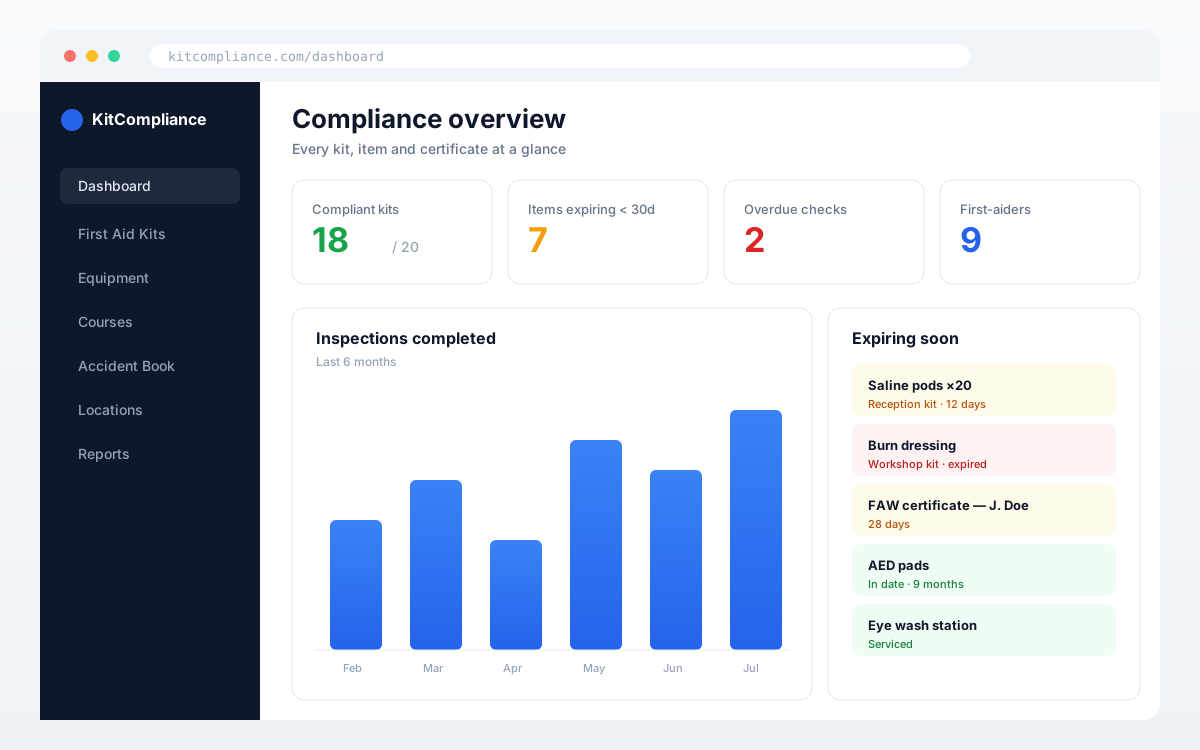
Getting the right people on the right course is one thing; keeping their certificates in date is where most workplaces slip. A FAW or EFAW certificate expires exactly three years after the course, and an expired first-aider is the same as no first-aider in an inspector's eyes. KitCompliance tracks every first-aider's qualification and expiry date alongside your kits and inspections, and reminds you before anything lapses — so your provision stays not just adequate but provable. See the getting-started guide to set it up.
Frequently asked questions
What is the difference between FAW and EFAW?
FAW (First Aid at Work) is a 3-day, 18-hour course covering a wide range of injuries and medical conditions. EFAW (Emergency First Aid at Work) is a 1-day, 6-hour course covering the emergency essentials — CPR, an unresponsive casualty, choking, bleeding, shock and minor injuries. FAW is for higher-risk workplaces; EFAW for low-risk ones.
Which one does my workplace legally need?
It depends on your needs assessment. Low-risk sites can usually rely on EFAW; higher-risk sites need at least one FAW-trained first-aider. There's no fixed rule — hazards, headcount and site layout decide it.
How long are the certificates valid?
Both last three years, with an HSE-recommended annual half-day refresher. FAW can be renewed with a shorter 2-day requalification course before it expires; EFAW is renewed by retaking the full day.
Can an EFAW first-aider cover a high-risk workplace?
Not on their own. EFAW covers life-saving basics but not the wider range of injuries a higher-risk site may face. You need at least one FAW first-aider, with EFAW staff supplementing them.
Do I need FAW or EFAW for an office?
Most low-risk offices can meet their obligations with EFAW, or an appointed person for very small teams — but the right answer comes from your assessment, not the job title.