Three different people usually touch workplace first aid — the employer, an "appointed person" and any trained first-aiders — and confusion about who owns what is exactly how kits end up empty and checks end up skipped. Here's how UK law actually divides the responsibility.
The employer: where the legal duty sits
Under the Health and Safety (First-Aid) Regulations 1981, every employer must provide adequate and appropriate first-aid equipment, facilities and personnel. That duty applies from your first employee and sits with the employer — in practice the business owner, or in larger organisations whoever holds health-and-safety responsibility at board level. The 1981 duty covers employees, but the employer is also strongly encouraged to extend provision to visitors, contractors and the public on site — and it must cover agency and temporary workers and young workers and apprentices it directs just as it does permanent staff.
Tasks can be delegated. Accountability can't: if an inspector finds an empty kit, "we told Dave to check it" is not a defence. Because the duty sits with the employer, it's also the employer — through vicarious liability and compulsory insurance — who carries the legal risk when a first-aider acts, not the individual. The employer must also carry out (and keep updated) a first-aid needs assessment — the document that decides how many first-aiders, kits and appointed persons the site needs. Setting out who holds each of these roles is exactly what a workplace first aid policy is for.
The appointed person: who looks after the kit day to day
The minimum the law requires in every workplace is an appointed person: someone tasked with looking after first-aid arrangements. Their job is logistics, not treatment:
- Keeping first aid kits stocked, in date and where the signage says they are — using a first aid kit checklist;
- Arranging restocks after use and before expiry dates lapse;
- Calling the emergency services when needed;
- Keeping records of checks and incidents.
An appointed person needs no first-aid training and can't give treatment they're not trained for. They must be available whenever people are at work — so shift sites usually name several.
First-aiders: required only when the needs assessment says so
Is it a legal requirement to have a first-aider on site? Not automatically. The regulations set no fixed headcount; your needs assessment decides. HSE's rules of thumb:
| Workplace risk | Employees | Typical provision |
|---|---|---|
| Low risk (offices, shops) | Fewer than 25 | Appointed person |
| 25–50 | At least one EFAW-trained first-aider | |
| 50+ | One FAW first-aider per 100 employees | |
| Higher risk (construction, kitchens, warehouses, manufacturing) | Fewer than 5 | Appointed person minimum |
| 5+ | At least one FAW first-aider, plus one per 50 employees |
Remember cover for holidays, sickness and every shift — one trained first-aider who works Monday to Wednesday doesn't cover a seven-day operation. For what a first-aider is actually on the hook for once appointed, see first aider duties and responsibilities.
Who checks the equipment — and how to prove it happened
So in practice: the appointed person runs the checks, and the employer must be able to prove the system works. That proof is where paper systems fail — signed sheets go missing, and nobody can say when the van kit was last opened. See how often kits should be inspected for the schedule.
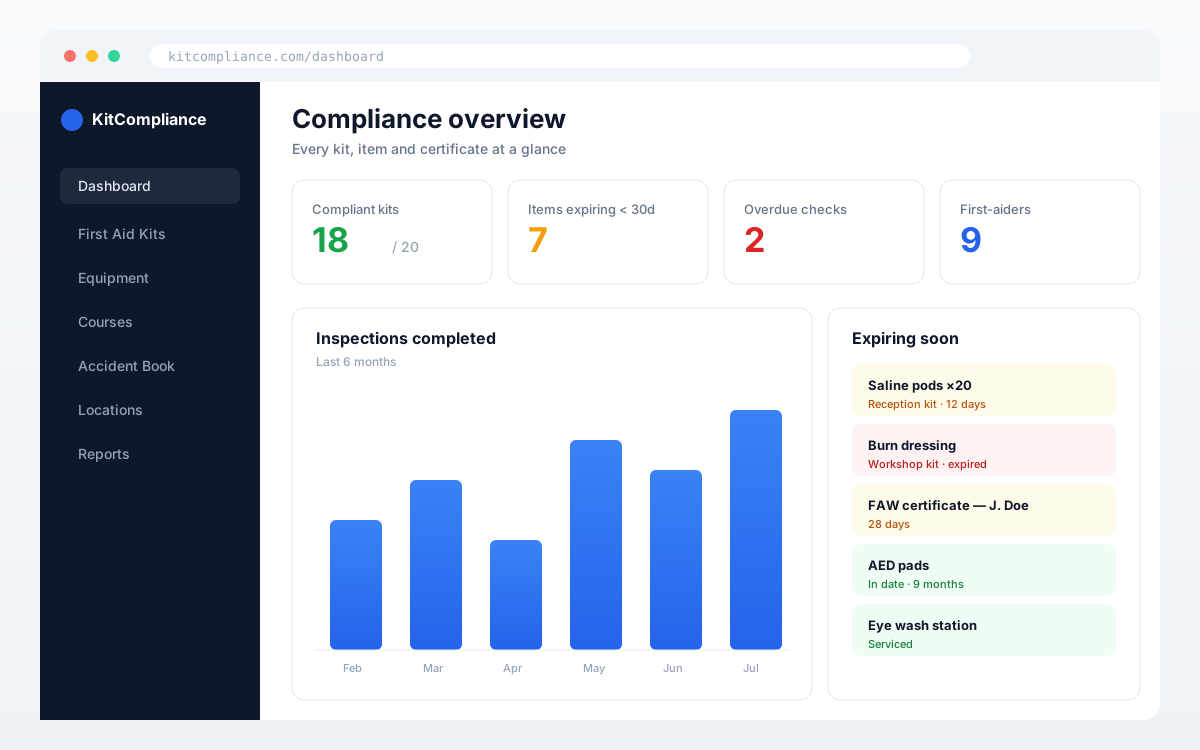
KitCompliance gives each role its view: appointed persons get QR-code checklists and expiry reminders; the employer gets a dashboard and a one-click PDF audit trail. Set it up free.
Frequently asked questions
Who is legally responsible for first aid equipment at work?
The employer — always. Checking and restocking is usually delegated to an appointed person, but the legal duty can't be transferred.
Is a first-aider legally required on site?
Not always. An appointed person is the legal minimum; trained first-aiders are required where your needs assessment says so — which it typically does for higher-risk work or larger headcounts.
Appointed person vs first-aider — what's the difference?
The appointed person manages arrangements (kits, records, calling 999) and needs no training. A first-aider holds a valid FAW/EFAW certificate and gives treatment (see FAW vs EFAW for the difference between the two qualifications, and how long a first aid certificate lasts for keeping it in date).
Can employees be made responsible for first aid?
Employees must cooperate and take reasonable care, but the duty to provide equipment and personnel stays with the employer.