Kitchens are one of the highest-risk workplaces for minor injuries — knives, hot oil, ovens, wet floors — and they add a hazard no office has: food contamination. That's why a kitchen first aid kit isn't just a normal kit kept near the fryer. This guide covers the catering kit contents list, why everything is blue, and what food-safety inspectors look for.
Why a kitchen needs a different kit
Three reasons a standard green-box kit falls short in a catering environment:
- Detectability. A skin-tone plaster that drops into a sauce is invisible. Catering plasters are blue — no food is naturally blue — and usually contain a metal strip so production-line metal detectors catch them.
- Burns. Kitchens produce far more burns and scalds than most workplaces, so catering kits carry more burn dressings — and many kitchens add a dedicated burns kit beside the cook line.
- Hygiene. Food handlers must cover wounds completely to keep working. Blue finger dressings, fingerstalls and gloves let a member of staff dress a cut and get back to work without breaching food-hygiene rules.
Kitchen first aid kit contents list (BS 8599-1 catering)
BS 8599-1 defines a specific catering variant of the workplace kit. A typical medium catering kit contains:
| Item | Typical qty (medium) | Why it's there |
|---|---|---|
| Guidance leaflet | 1 | Basic first-aid instructions |
| Blue detectable plasters (assorted) | 60 | Visible & metal-detectable if lost in food |
| Blue finger dressings | 3 | Covering fingertip cuts so staff can keep working |
| Sterile eye pads | 3 | Splashes from hot fat or cleaning chemicals |
| Triangular bandages | 3 | Slings and support |
| Safety pins | 12 | Securing bandages |
| Medium sterile dressings | 6 | Cuts and bleeding |
| Large sterile dressings | 2 | Larger wounds |
| Sterile saline wipes | 20 | Cleaning wounds |
| Blue nitrile gloves (pairs) | 9 | Infection control, food-safe colour |
| Foil blanket | 2 | Shock and warmth |
| Burn dressings | 2+ | Burns and scalds — the kitchen staple |
| Clothing shears | 1 | Cutting away clothing |
| Sterile adhesive tape | 1 | Securing dressings |
Quantities scale with kit size: small for kitchens with fewer than ~10 staff, medium for ~10–25, large for more — and step up a size for busy or high-risk kitchens. The exact provision should come from your first-aid needs assessment.
What kitchens should add beyond the standard kit
- Blue fingerstalls and fingertip plasters — the most-used items in a working kitchen; stock spares.
- Eye-wash pods — for hot-fat splashes and chemical cleaning products.
- Waterproof blue tape — to secure dressings under gloves in wet work.
- An accident book — kitchens generate frequent small incidents; every one should be logged (and some are RIDDOR-reportable).
First aid kits for chefs
On a busy line, the kit a chef reaches for is the one within arm's length. Alongside the main catering kit, most kitchens keep a small chef's top-up pouch at each section:
- Blue detectable plasters and fingerstalls — knife nicks to the fingers are the most common chef injury.
- Burn gel sachets and a burn dressing — for fryer, oven-door and pan-handle burns while someone runs the cold tap.
- Blue nitrile gloves — to wear over a dressed finger so the chef can carry on prepping safely.
A pouch like this is a convenience, not a replacement: the full catering kit still has to be stocked, in date and checked. Chefs who sharpen knives at home or work in someone else's kitchen (private chefs, agency and event chefs) should carry a small personal catering kit of their own, because the host kitchen's kit may not be catering spec.
What not to keep in it
No tablets or medicines — including paracetamol. And no skin-tone plasters anywhere in a food area: if an EHO (Environmental Health Officer) finds non-detectable plasters in your kitchen kit, expect it in the inspection report.
Catering first aid kits for restaurants, commercial kitchens and mobile catering
The contents list above applies to any food-prep area, but how many kits you need — and where they go — changes with the setup:
- Restaurants — the kitchen is a higher-risk area (knives, fryers, hot pans) while front of house is lower risk. Put a catering kit in the kitchen itself, within seconds of the line, and a standard workplace kit behind the bar or at the host station. A restaurant first aid kit at reception is no use to a chef with a burn. For first-aider numbers, shift cover and the wider legal duties, see the full restaurant & catering first aid requirements guide.
- Commercial kitchens and production — larger brigades, multiple prep areas and cold stores usually need more than one kit. Size each one by the number of people working that section on the busiest shift, not by the total payroll; see what size first aid kit you need.
- Mobile catering, food trucks and outside events — you're a workplace with no mains water and no nearby help, so carry sterile eye-wash and extra burn dressings, and treat the vehicle as needing its own vehicle first aid kit in addition to the catering kit.
- Pubs, cafés and takeaways — often under five staff per shift, so a small catering kit plus an appointed person is typically the baseline. Your needs assessment confirms it.
Food production first aid checklist
Factories, bakeries, butchers and central production kitchens add production-line hazards (slicers, conveyors, cleaning chemicals, cold rooms) to the usual cuts and burns. Use this checklist on top of the catering contents list:
- Metal-detectable blue plasters only in every food-handling zone, and logged as used, so a missing plaster can be traced before product leaves the line.
- Eye-wash stations or pods where caustic cleaning chemicals are used; see eyewash station requirements.
- A catering kit per production area, sized by the people on that area's busiest shift.
- Foil blankets near cold stores and blast chillers.
- Trained first aiders on every shift, including nights and weekends; see factory first aid requirements.
- A dated check record for every kit, because food auditors (BRCGS, SALSA) and EHOs both ask for one.
What inspectors check
Kitchen first aid provision gets looked at from two directions: food-safety inspections (EHO, feeding into your hygiene rating) and health & safety duties under the First-Aid Regulations 1981. Both boil down to the same three questions:
- Is the kit stocked to a recognised standard for catering?
- Is everything in date? Saline, dressings and burn products all expire.
- Can you show it's checked regularly — with a record?
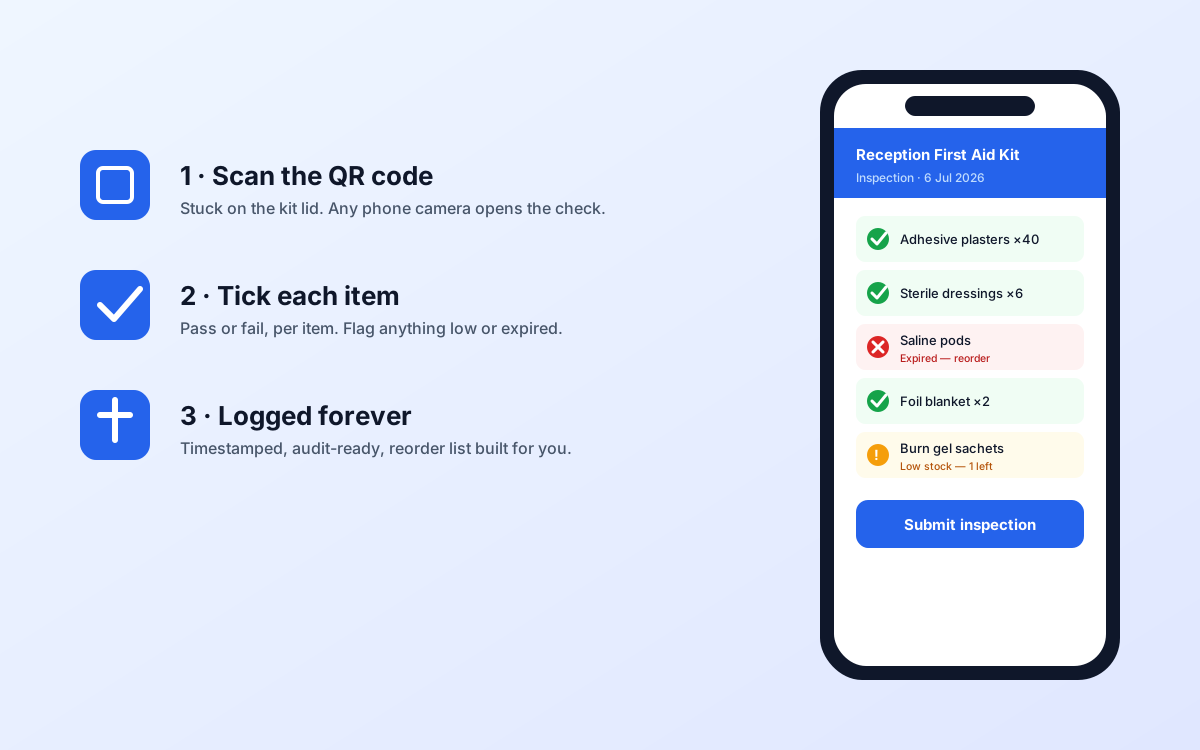
KitCompliance keeps that third answer easy: build your catering kit once, set the expiry dates, and get reminded before anything lapses — with a PDF log you can hand to an EHO on the spot. Use the printable first aid kit checklist for your monthly check, or track it digitally free.
Frequently asked questions
What is a catering first aid kit?
A catering first aid kit is the BS 8599-1 workplace kit adapted for food areas: blue detectable plasters and gloves instead of skin-tone ones, plus extra burn provision. It's what kitchens, cafés, restaurants and food production sites should use.
Why do kitchen first aid kits use blue plasters?
Blue is not a natural food colour, so a lost plaster is easy to spot in food. Most catering plasters also contain a metal strip so production-line detectors catch them.
Is a catering first aid kit a legal requirement?
The law requires "adequate and appropriate" equipment for your risks. In a kitchen those risks include cuts, burns and contamination — so a standard kit is unlikely to be adequate, and a BS 8599-1 catering kit is the accepted way to comply.
What size catering kit do I need?
Small for under ~10 staff, medium for ~10–25, large above that — sized up for busy kitchens.
Can the kit contain paracetamol?
No. Workplace first aid kits shouldn't contain tablets or medicines of any kind.
What should be in a restaurant first aid kit?
The same BS 8599-1 catering contents as any commercial kitchen — blue detectable plasters, burn dressings and gel, sterile eye wash, dressings, gloves and shears. Keep the catering kit in the kitchen itself and a standard workplace kit front of house.