If you employ anyone in the UK, you're legally required to provide "adequate and appropriate" first-aid equipment. The catch: the law never publishes a shopping list for the first aid box. This guide gives you the practical answer — the standard contents, how many kits you need, and what to add for higher-risk work. (For a tick-off version, see the printable first aid kit checklist.)
The standard: BS 8599-1
BS 8599-1 is the British Standard that defines workplace first aid kit contents. It isn't the law, but it's the benchmark most employers, suppliers and auditors use. Kits come in three sizes — small, medium and large — and a typical medium kit contains:
| Item | Typical qty (medium) | Purpose |
|---|---|---|
| Guidance leaflet | 1 | Basic first-aid instructions |
| Adhesive plasters (assorted) | 60 | Minor cuts and grazes |
| Sterile eye pads | 3 | Eye injuries |
| Triangular bandages | 4 | Slings and support |
| Safety pins | 12 | Securing bandages |
| Medium sterile dressings | 6 | Wounds and bleeding |
| Large sterile dressings | 2 | Larger wounds |
| Sterile saline wipes | 20 | Cleaning wounds |
| Nitrile gloves (pairs) | 9 | Infection control |
| Finger dressings | 3 | Fingertip injuries |
| Foil blanket | 2 | Shock and warmth |
| Burn dressings | 2 | Burns and scalds |
| Clothing shears | 1 | Cutting away clothing |
| Sterile adhesive tape | 1 | Securing dressings |
Quantities scale with kit size. The important discipline isn't memorising the list — it's keeping every date-marked item (saline, dressings, burn gel) in date and replacing anything used.
What size kit — and how many?
BS 8599-1 links kit size to headcount and risk. As a starting point (for the full size-by-size breakdown, see what size first aid kit you need):
- Low-risk (offices, shops): Small for up to 25 people, Medium for 25–100, Large for 100+.
- High-risk (workshops, warehouses, kitchens, construction): step up a size, and provide more kits.
There's no legal maximum number of people per kit — the deciding factor is that a kit is within easy reach of every work area. A single kit at reception is useless to someone injured at the far end of a warehouse. Provide one per work zone, one in every vehicle, and one at each remote or lone-working location.
What to add for higher-risk workplaces
Your needs assessment may flag hazards that a standard kit doesn't cover. Common additions:
- Eye wash — sterile eye-wash bottles where there's a risk of dust, chemicals or splashes (and mains eye-wash stations in labs and workshops); see eyewash station requirements for when each is needed.
- Burn kits — extra burn dressings and gel where there's heat, hot liquids or catering. Food businesses need a dedicated kitchen first aid kit with blue detectable plasters.
- Defibrillator (AED) — increasingly expected on larger sites and those with public access.
- Adrenaline auto-injectors / specific supplies — only where trained and appropriate.
Track this equipment the same way you track kit items — with service dates and expiry reminders — so an AED battery or eye-wash bottle never lapses unnoticed.
What not to keep in a workplace kit
A common audit finding is unauthorised medication. As a rule, workplace first aid kits should not contain tablets or medicines — including paracetamol and antihistamines — unless specifically justified by your needs assessment and managed appropriately. First aid is about preserving life and preventing deterioration, not dispensing medication — see can you keep painkillers and medication in a first aid kit for why paracetamol, antiseptic creams and eye drops don't belong.
Keeping it compliant, not just stocked
Buying the right kit is the easy part. Staying compliant means:
- Restocking after every use.
- Checking expiry dates — see which items expire and when and how often first aid kits should be inspected.
- Recording those checks, so you can prove provision was adequate if an inspector or auditor asks.
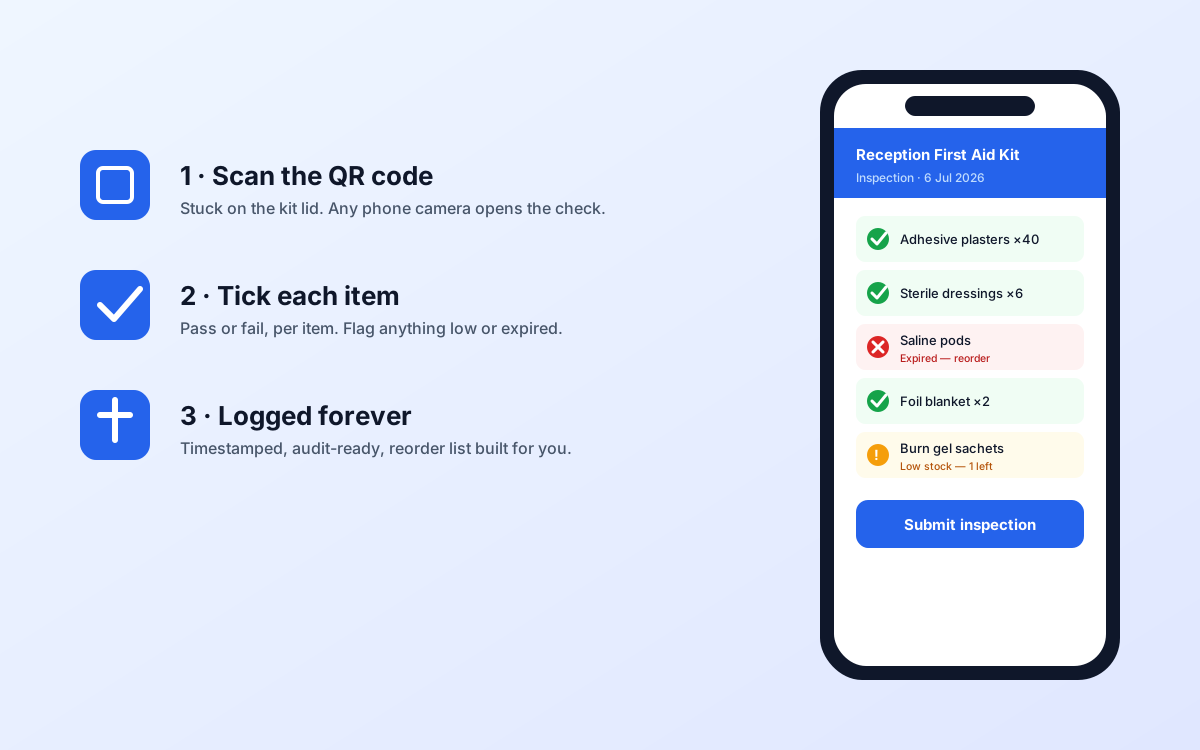
This is exactly what KitCompliance automates. Build each kit from the ISO 45001 suggested list, set expiry dates once, and get an email before anything lapses — plus a one-click PDF that proves your provision to any auditor. Learn more in the getting-started guide.
Frequently asked questions
What should be in a first aid box at work?
A workplace first aid box should hold at least the BS 8599-1 contents for its size: plasters, sterile dressings, triangular bandages, eye pads, gloves, saline wipes, a foil blanket, a burn dressing, shears and a guidance leaflet. Add items your needs assessment identifies, and no tablets or medicines.
How many first aid kits does a workplace need?
There's no fixed legal number. Your needs assessment decides it, based on headcount, site layout, travel distances and shifts. A good rule of thumb: a kit within easy reach of every work area, plus one per vehicle and remote site — see how many first aid kits you need for the full breakdown.
Is BS 8599-1 a legal requirement?
No — it's a British Standard, not law. The Health and Safety (First-Aid) Regulations 1981 require "adequate and appropriate" equipment, and a BS 8599-1 kit is the accepted way to meet that. A kit stocked from your own needs assessment is equally valid.
What size first aid kit do I need?
Small suits low-risk workplaces up to ~25 people, medium up to ~100, and large over 100 — sized up for higher-risk environments.