"First aid kit" isn't one product. A kit bolted to an office wall, one in a delivery van, one in a commercial kitchen and one in a lone worker's bag are built for different jobs — and buying the wrong type is a common, avoidable gap in workplace provision. This guide runs through the main first aid kit types used in UK workplaces, what each is for, and how to decide which you need.
Type vs size vs contents — clearing up the confusion
Three things get muddled when people shop for kits:
- Type — the kind of kit and what it's designed for (workplace, vehicle, catering, travel…). That's this article.
- Size — small, medium or large within a type, matched to headcount and risk. See first aid kit sizes (BS 8599-1).
- Contents — the actual items inside. See what should be in a workplace first aid kit.
Get the type right first, then size it, then keep the contents topped up. None of the British Standards below is legally mandatory — the Health and Safety (First-Aid) Regulations 1981 only demand "adequate and appropriate" provision — but they're the benchmark suppliers, buyers and auditors recognise, so a standard-compliant kit is the simplest way to prove yours is adequate.
The main first aid kit types
| Kit type | Standard | Best for |
|---|---|---|
| Workplace kit | BS 8599-1 | Offices, shops, warehouses, factories — any fixed premises. The default workplace kit. |
| Vehicle / motoring kit | BS 8599-2 | Vans, HGVs, company cars, forklifts — anyone who drives for work. |
| Catering kit | BS 8599-1 (+ catering extras) | Kitchens and food areas — adds blue detectable plasters and burn items. |
| Travel / grab-bag kit | No single standard | Off-site work, home visits, events — portable cover away from a fixed kit. |
| Personal-issue kit | No single standard | Lone and remote workers who need their own compact kit on them. |
| Task-specific kits | Various | Burns kits, eye-wash stations, sports/leisure kits, biohazard kits — bolt-ons where a hazard demands it. |
BS 8599-1 — the workplace kit
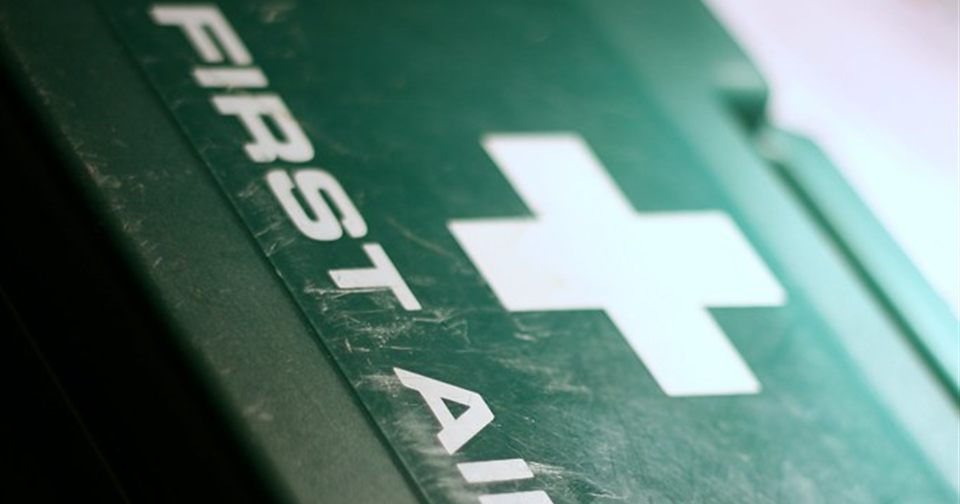
This is the one most people picture: a green box or wall cabinet with a white cross. BS 8599-1 specifies the contents of workplace kits in three sizes (small, medium, large), and the 2019 edition added items such as a foil blanket and a burn dressing to every size. For most premises, one or more BS 8599-1 kits — sized to your headcount and risk and placed within easy reach of every work area — is the backbone of your provision. Check how many kits you need and where to put them.
BS 8599-2 — the vehicle kit
A workplace kit isn't designed for a vehicle glovebox. BS 8599-2 vehicle kits are more compact and geared to road incidents. If anyone drives for work — a van, an HGV, a pool car, even a forklift — the vehicle needs its own kit. Full detail in vehicle first aid kit requirements.
Catering kits
A kitchen is a BS 8599-1 workplace at heart, but with two twists: burns and food safety. Catering kits add extra burn dressings and blue detectable plasters (visible in food and to metal detectors). See kitchen first aid kit contents for the full list, and burns first aid at work for why a dedicated burns response matters in food settings.
Travel and personal-issue kits
No British Standard governs these, but they matter for anyone away from a fixed kit. A travel or grab-bag kit gives portable cover for off-site jobs, home visits and events; a smaller personal-issue kit rides with a lone worker. Match them to the risk — see lone worker first aid requirements and remote & home workers.
Task-specific kits and equipment
Some hazards need dedicated kit on top of the general one: a eye-wash station where dust or chemicals are present, extra burns provision near hot processes, a biohazard/spill kit, or a defibrillator (AED) on a large or remote site. These aren't alternatives to a workplace kit — they sit alongside it.
How to choose the right type (and how many)
You don't pick kits from a catalogue — you pick them from your needs assessment. Work through it in order:
- List your settings. Premises, vehicles, kitchens, off-site work, lone workers — each maps to a kit type from the table above.
- Assign a type to each. BS 8599-1 for premises, BS 8599-2 for vehicles, catering for kitchens, travel/personal for mobile work.
- Size each kit. Within a type, choose small, medium or large by headcount and whether the area is low or higher risk.
- Add task-specific extras. Eye wash, burns, AED — wherever a hazard or a remote location calls for it.
Write the result into your assessment so you can show why you hold each kit — and cross-check it against the workplace first aid compliance checklist.
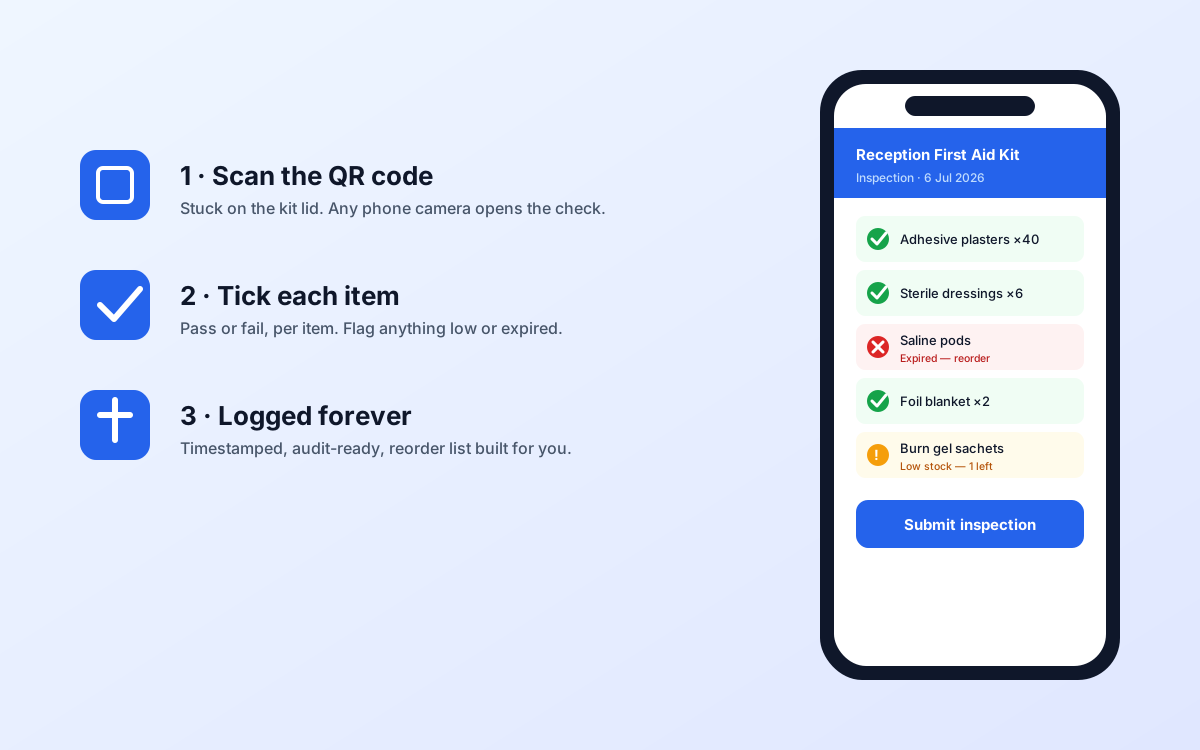
Once you know which types you need, the work shifts to keeping each one stocked, in date and evidenced — across every location, vehicle and lone worker. That's exactly what KitCompliance does: create each kit from the ISO 45001 suggested list (workplace, vehicle, catering or custom), log inspections in seconds, and get reminders before anything lapses, with a one-click report that proves your provision. See the getting-started guide to set it up.
Frequently asked questions
What are the main types of first aid kit?
The common workplace types are BS 8599-1 workplace kits, BS 8599-2 vehicle kits, catering kits, travel or grab-bag kits, and small personal-issue kits for lone workers — plus task-specific kits such as burns kits, eye-wash stations and sports kits.
What's the difference between BS 8599-1 and BS 8599-2?
BS 8599-1 covers workplace kits kept on premises; BS 8599-2 covers more compact vehicle kits suited to road incidents. Neither is legally mandatory, but both are the recognised benchmark.
Do I legally have to buy a BS 8599-1 kit?
No. The 1981 Regulations require only "adequate and appropriate" provision and never name a standard. A BS 8599-1 kit is simply the easiest way to evidence that yours is adequate.
Which type do I need for my workplace?
Let your needs assessment decide. Most premises need BS 8599-1 kits sized to headcount and risk, plus vehicle, catering and personal kits wherever those settings exist.