A first aid kit is only compliant while it is complete and in date. The moment a dressing is used, a plaster runs out or a sterile item passes its expiry, the kit has a gap — and that gap is exactly what an inspector, an auditor or an injured colleague will find. Restocking is the routine that keeps your provision true between assessments. This guide covers who is responsible, when to replenish, what to reorder and how to record it.
Whose duty is it to keep first aid boxes stocked?
The legal duty is the employer's. The Health and Safety (First-Aid) Regulations 1981 require every employer to provide and maintain "adequate and appropriate" first-aid equipment — and a kit that has run down is no longer adequate. In practice the day-to-day job is delegated to a first-aider, an appointed person or a facilities manager, who checks and replenishes the kits. But delegating the task never moves the legal responsibility off the employer — see who is responsible for first aid at work for how that duty is shared.
For it to actually happen, someone has to own it. Name a person for each kit, give them the contents list, and make sure there is cover when they are on leave.
When to restock
There are three moments that should trigger a replenishment:
- Immediately after use — the biggest cause of understocked kits is items used and never replaced. Whoever uses the kit should flag it, and it should be topped up the same day.
- At every routine inspection — check the kit against its contents list and replenish anything missing, and remove and replace anything expired. Most workplaces do this monthly (see how often first aid kits should be inspected).
- Before an expiry date passes — sterile items and some others carry dates. Reorder ahead of time so the kit is never sitting with an out-of-date item in it.
What to reorder — and what to bin
Work through the kit against the contents list for a workplace kit and sort every item into one of three piles:
| Item state | Action |
|---|---|
| Missing or below the required quantity | Reorder to bring it back up to the full BS 8599-1 count for the kit size. |
| Expired (past printed date) | Remove and replace, even if unopened — an expired sterile item can't be relied on. |
| Damaged, dirty or opened packaging | Bin and replace. Sterility is lost once a wrapper is opened or torn. |
| Present, in date, sealed | Leave in place. Note its expiry for the next check. |
Always refill with BS 8599-1 compliant refills matched to the kit's size (small, medium or large). Buying loose, random items is how kits drift out of specification — the box looks full but is short on the quantities the standard sets. Keep a small buffer stock of fast-moving items (plasters, dressings, wipes) so a top-up doesn't wait on a delivery.
How to restock a first aid kit, step by step
- Check against the contents list. Open the kit and compare it item by item with the BS 8599-1 list for its size.
- Remove expired and damaged items. Take out anything out of date or with compromised packaging and set it aside for disposal.
- Reorder the shortfall. Order compliant refills for everything missing, expired or damaged.
- Refill and reseal. Put the new items in, confirm the kit is complete and in date, and check the tamper seal.
- Record it. Log what you replaced, the date and who did it (more on this below).
Record every restock
A stocked kit you can't evidence is worth little in an inspection. Keep a simple record for each kit showing the date checked, what was replaced or reordered, the person responsible, and the next check date. It's the same discipline as your first aid kit checklist, extended to capture the top-up. Over time these records prove the kit has been continuously maintained — exactly what "maintain adequate provision" means in practice.
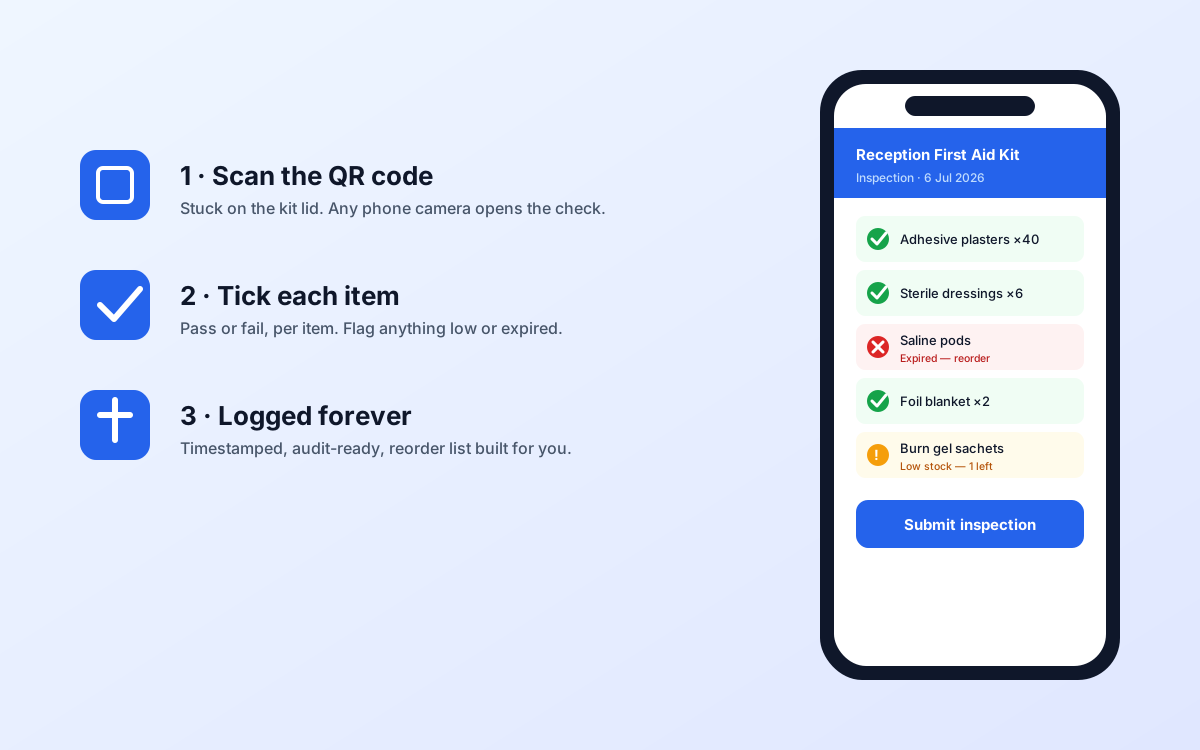
Restocking is easy to intend and easy to forget — until the day the kit is needed and the dressing isn't there. That's the gap KitCompliance closes: build each kit from the BS 8599-1 / ISO 45001 suggested list, log an inspection in seconds, and get low-stock and expiry reminders before anything runs out — with a one-click report that proves every kit has been kept complete. See the getting-started guide to set it up.
Frequently asked questions
Whose duty is it to ensure first aid boxes are stocked?
The legal duty is the employer's, under the 1981 Regulations. It is usually delegated to a first-aider, appointed person or facilities manager who does the checks and replenishment — but delegating the task doesn't move the legal responsibility off the employer.
How often should a first aid kit be restocked?
As soon as anything is used, and at every routine inspection (commonly monthly) for anything missing or expired. Reorder immediately after any incident that emptied part of the kit.
Do you have to replace expired first aid items?
Yes. Sterile dressings and many other items carry expiry dates and can't be relied on once past them. An expired item is a gap in your provision, so remove and replace it during restocking even if it looks unused.
What should you use to refill a workplace first aid kit?
BS 8599-1 refills that match the kit's size, so it stays compliant with the contents list your needs assessment settled on. Loose or mismatched items risk leaving the kit short of the required quantities.