Naming someone the workplace first aider is the easy part. Knowing exactly what that person is — and isn't — responsible for is where most employers and volunteers get vague. This guide sets out the real duties of a first aider at work in the UK: what they do the moment someone is hurt, what happens around that in normal times, the records they keep, and the limits of the role.
Where the first aider fits in
Under the Health and Safety (First-Aid) Regulations 1981, the legal duty to provide "adequate and appropriate" first aid sits with the employer, not the first aider. A trained first aider is one of the ways an employer meets that duty — required only when the needs assessment says so. Below the first aider sits the appointed person, who takes charge in an emergency and looks after the equipment but does not give hands-on treatment. For the full chain of duty, see who is responsible for first aid at work.
The core duty: responding to an incident
This is the part everyone pictures, and it's the heart of the role. A first aider gives immediate treatment to anyone who is injured or falls ill at work. The recognised steps:
- Check the scene is safe. Never become a second casualty. Deal with obvious dangers — traffic, live electricity, chemicals, fire — before approaching.
- Assess the casualty. Run a primary survey (response, airway, breathing, circulation — DR ABC) to find and treat life-threatening problems first.
- Give immediate first aid. Treat within your training using the first aid kit — control bleeding, support breathing, use the recovery position for an unresponsive casualty who is breathing, or start CPR if they are not.
- Call for help. Dial 999 or 112 for anything serious, send someone to meet the ambulance, and fetch the nearest AED if the casualty is in cardiac arrest. Knowing the signs of the common emergencies saves time — for example the FAST test for a stroke.
- Hand over and reassure. Stay with the casualty, keep monitoring, and give the ambulance crew a clear handover of what happened and what you did.
Responsibilities around the incident
The role isn't only about the minutes an emergency lasts. A good workplace first aider also:
| Responsibility | What it means in practice |
|---|---|
| Recording incidents | Writing up every treatment in the accident book, and flagging anything reportable under RIDDOR to whoever handles the report. |
| Looking after the kit | Replacing or flagging items they use, watching expiry dates, and supporting the regular kit inspection — the person who relies on the kit is the best-placed to notice a gap. |
| Being findable | Making sure staff know who the first aiders are and how to reach them — usually via first aid notices and signage. |
| Staying qualified | Requalifying before the certificate expires and keeping skills current with a refresher (see below). |
None of these are the first aider's job alone — restocking and inspection are often shared with the appointed person or manager — but a first aider who ignores them can find the kit empty or their certificate lapsed at the worst possible moment.
Staying qualified is part of the role
A first aider can only carry out the role if their qualification is live. FAW and EFAW certificates last three years and must be requalified before they expire — and the HSE strongly recommends a short annual refresher in between, because skills, and CPR in particular, fade fast without practice. For the full timeline see how long a first aid certificate lasts. Letting a certificate lapse doesn't just fail an audit; it can leave a workplace with no valid first aid cover at all.
What a first aider is not responsible for
Just as important as the duties are the limits:
- Not liable for the employer's duty. The legal requirement to provide first aid rests with the employer. A volunteer first aider acting in good faith within their training is very unlikely to face liability.
- Not obliged to give more than first aid. They are not paramedics. For anything beyond first aid, the right action is to call 999.
- Not on duty around the clock. Cover has to allow for holidays, sickness and shifts — which is exactly why a workplace usually needs more than one first aider.
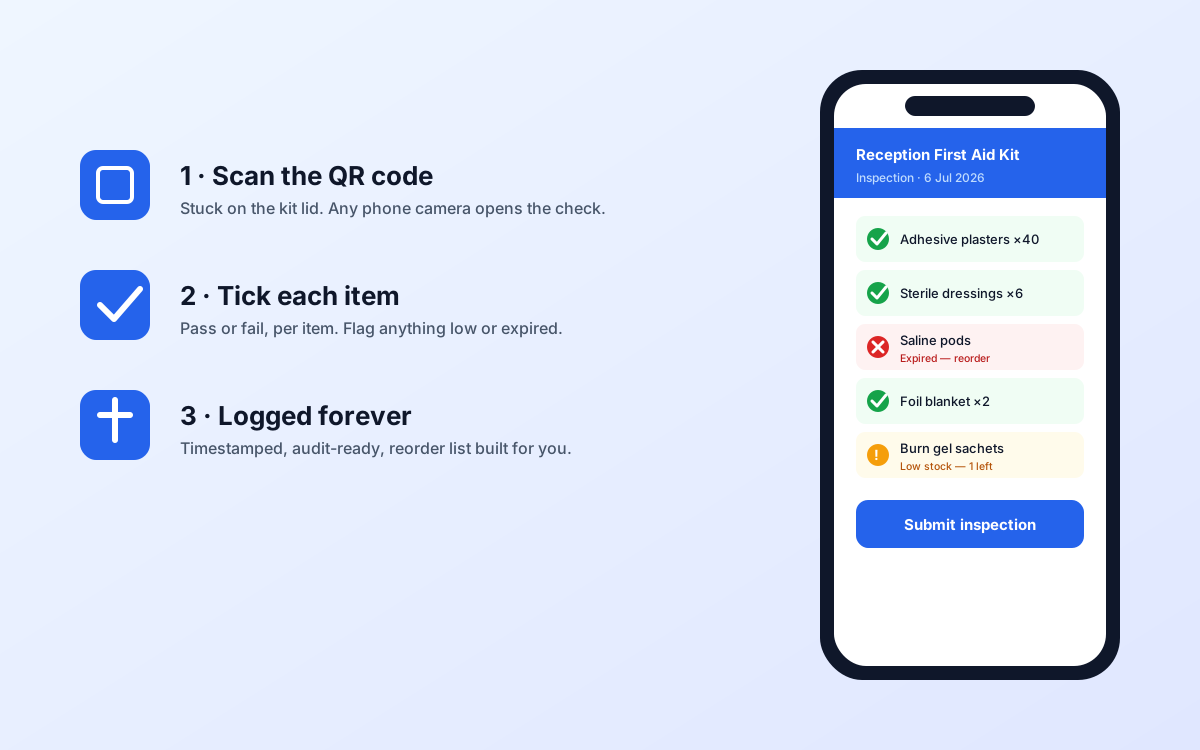
A first aider's duties come down to being ready: trained, in date, and working from a stocked kit. Keeping that true day to day — every item in date, every inspection logged, every certificate tracked with a reminder before it lapses — is where most workplaces slip. That's exactly what KitCompliance automates: build each kit from the ISO 45001 suggested list, record inspections in seconds, and track first aider certificates so nobody's qualification quietly expires. See the getting-started guide to set it up.
Frequently asked questions
What are the main duties of a workplace first aider?
To give immediate first aid to anyone injured or taken ill at work, call the emergency services when needed, and stay with the casualty until help arrives. Around that, they help keep the kit stocked and in date, record incidents in the accident book, and keep their own qualification current. The aim is to preserve life, prevent things getting worse and promote recovery until professionals take over.
Is a first aider responsible for restocking the first aid kit?
The legal duty to provide equipment is the employer's, and day-to-day upkeep is often the appointed person's job. In practice first aiders help by replacing or flagging what they use and watching expiry dates, because they rely on the kit in an emergency. Write down who does what so nothing is missed.
Can a first aider be held liable if something goes wrong?
A first aider acting in good faith within the limits of their training is very unlikely to face liability — the legal duty sits with the employer. The key protections are to act only within your competence and to call 999 for anything beyond first aid.
Do first aiders have to keep their training up to date?
Yes. FAW and EFAW certificates last three years and must be requalified before they expire, with a recommended annual refresher in between to keep skills current. Keeping the qualification live is part of being able to do the role.