A stroke can strike anyone, at any age, without warning — and at work it is easy to mistake for tiredness, a funny turn or too much sun. It is one of the most time-critical emergencies there is: brain cells die every minute the blood supply is interrupted, so the faster you recognise it and call 999, the better the chance of recovery. The good news is that spotting a stroke does not need medical training. It takes one simple test — FAST — and the confidence to dial 999 straight away.
What a stroke is — and why minutes matter
A stroke happens when the blood supply to part of the brain is cut off. There are two main types: an ischaemic stroke, caused by a clot blocking a vessel (the most common), and a haemorrhagic stroke, caused by a bleed. You cannot tell which is which at the scene, and you do not need to — that is decided by a hospital scan. What matters to you as a first-aider is the same for both: recognise it, and get an ambulance moving. Hospital treatments such as clot-busting drugs and clot removal only work within a tight window from when symptoms started, which is why the time of onset is so important.
The FAST test
FAST is the UK's national stroke test and the one every first-aider should know by heart. Check each sign in turn:
| Letter | Check | Sign of a stroke |
|---|---|---|
| F — Face | Ask them to smile. | The mouth or an eye has drooped on one side. |
| A — Arms | Ask them to raise both arms and hold them up. | One arm drifts down or they cannot lift it at all, from weakness or numbness. |
| S — Speech | Ask a simple question and listen. | Speech is slurred or garbled, or they cannot speak at all despite being awake. |
| T — Time | Any one of the above? | Time to call 999 — do not wait. |
You only need one of the F, A or S signs to act. Other stroke symptoms can include sudden loss or blurring of vision, sudden dizziness or loss of balance, a sudden severe headache, or sudden confusion — so if someone becomes suddenly unwell in a way you cannot explain, take it seriously and consider a stroke.
What to do at work, step by step
- Run the FAST test. If any sign is present, treat it as a stroke.
- Call 999 immediately. Say clearly that you suspect a stroke and describe the FAST signs. Do not drive them yourself or wait to "see how they go".
- Note the time symptoms started. If you did not see it begin, note when the person was last seen well. This decides which hospital treatment is possible, so tell the ambulance crew.
- Keep them comfortable and reassured. Help them into a comfortable position — ideally sitting, supported, with head and shoulders slightly raised. Loosen tight clothing, keep them calm and stay with them; a stroke is frightening.
- Give nothing to eat or drink, and no medication. A stroke can affect swallowing, so food, water or any medicine — including aspirin — could do harm. Leave treatment to the hospital.
- Keep monitoring. Watch their breathing and level of response. If they become unresponsive and stop breathing normally, be ready to start CPR and send for the nearest defibrillator.
What UK employers should have in place
No single regulation names "stroke", but the duty to be ready for a medical emergency falls out of the Health and Safety (First-Aid) Regulations 1981, which require "adequate and appropriate" provision. Your first aid needs assessment is where you decide what that looks like for your workplace:
| Provision | What to put in place |
|---|---|
| Trained first-aiders | Enough first-aiders who know the FAST test and can act fast, covering every shift — a stroke at 3am needs the same response as one at midday. |
| A way to call for help fast | Everyone knows how to dial 999 and how to direct the ambulance in quickly, especially on large, rural or gated sites. |
| Awareness for everyone | FAST is simple enough for all staff to learn — a poster in the break room means anyone can raise the alarm, not just the first-aider. |
| Refresher practice | Keep skills current with an annual refresher between three-yearly requalification. |
| Recording & reporting | Log the incident in your first aid record and accident book, and check whether it is reportable under RIDDOR. |
After the emergency
Once the ambulance has taken over, record what happened while it is fresh — the FAST signs you saw, the time symptoms started, and what you did — in your first aid treatment record. A stroke from a personal medical cause is generally not reportable under RIDDOR, but always log it, and report it if a work activity caused or contributed to it. Restock anything you used from the first aid kit so it is ready for the next incident.
Supporting a colleague through a medical emergency is stressful, even when it goes well. Offer a debrief to everyone involved — looking after the responder is part of a first-aider's duties and responsibilities. A stroke is one of several sudden collapses first-aiders should be ready for — a seizure looks different and needs a different response, so it's worth knowing both.
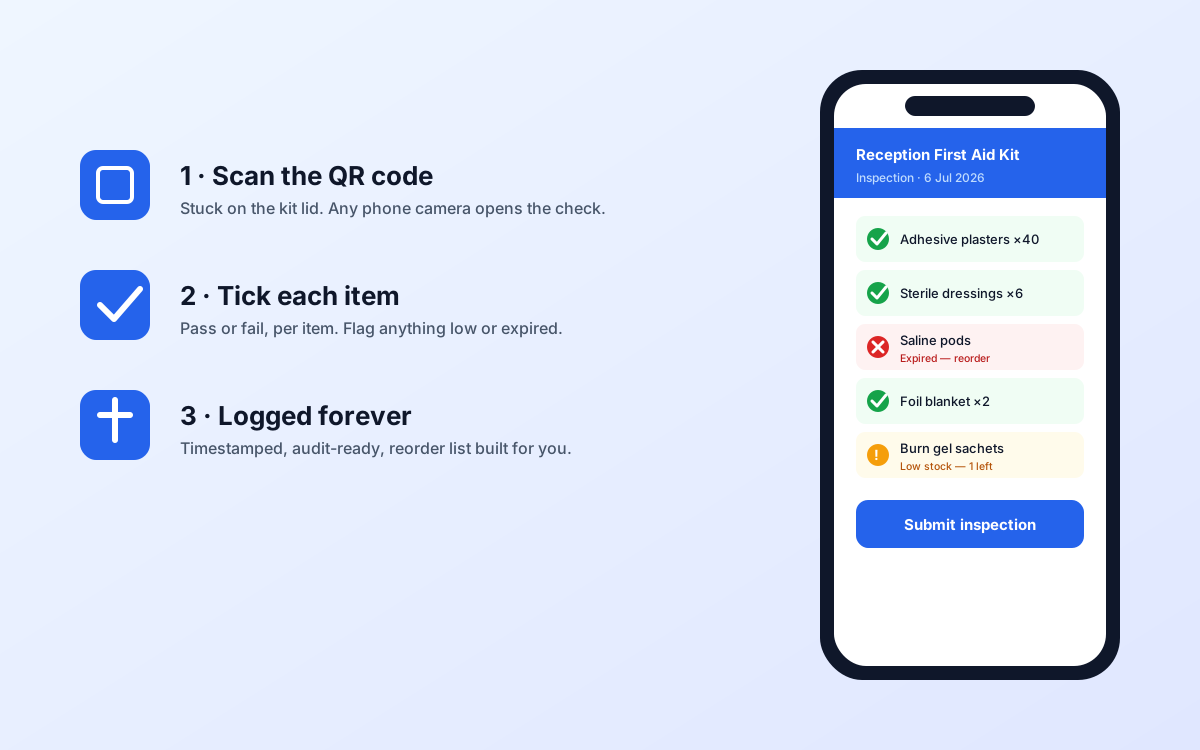
Recognising a stroke is a skill; keeping the provision behind your first-aiders in order is a routine. That is what KitCompliance does: track every first aid kit and its contents, every certificate and refresher due date, and log your checks in seconds — with reminders before anything lapses and a one-click report that proves your provision. See the getting-started guide to set it up.
Frequently asked questions
What are the signs of a stroke?
Use the FAST test. Face: it may have dropped on one side and they cannot smile evenly. Arms: they may not be able to lift both arms and keep them up because of weakness or numbness. Speech: it may be slurred or garbled, or they cannot talk at all despite being awake. Time: if you see any single one of these signs, call 999. Other signs include sudden loss of vision, dizziness, a severe headache or confusion.
What should I do if a colleague is having a stroke at work?
Call 999 straight away and say you suspect a stroke — do not wait to see if it passes. Note the time the symptoms started, keep the person comfortable and reassured, and give them nothing to eat or drink and no medication. Stay with them and be ready to start CPR if they stop breathing normally.
Should I give someone having a stroke aspirin, food or water?
No. Do not give aspirin, any other medicine, food or drink. A stroke can impair swallowing, and because a stroke can be caused by a bleed rather than a clot, aspirin could make it worse. The right treatment is decided in hospital after a scan.
What is a TIA or mini-stroke, and is it still an emergency?
A transient ischaemic attack (TIA), or mini-stroke, has the same FAST signs but they pass, often within minutes. It is still a medical emergency and a warning that a full stroke may follow, so treat it the same: call 999. Never assume someone is fine because the symptoms have gone.
Is a stroke at work reportable under RIDDOR?
Usually not. A stroke from a personal medical cause, unconnected to the work, is not reportable. It becomes reportable only if a work activity caused or contributed to it and it results in death or a specified injury. Whatever the cause, always record it in your first aid treatment record and the accident book.