
Recording workplace injuries is one of those duties that feels simple until something serious happens and you're not sure what you were supposed to do. There are really two separate obligations, and people mix them up constantly: keeping an accident book (your own internal record of every injury), and reporting certain incidents to the HSE under RIDDOR. This guide explains both — what to record, what to report, the deadlines, and how long to keep it all.
The accident book: your internal record
An accident book is where you record every injury that happens at work, however minor. If you employ 10 or more people, you are legally required to keep one under the Social Security (Claims and Payments) Regulations 1979. Smaller employers aren't strictly obliged to — but keeping one is strongly advised, because both the first-aid regulations and RIDDOR assume you are recording injuries, and a good record is your best evidence if a claim is made months later.
Each entry should capture:
- The date, time and place of the incident.
- The injured person's name, job and (if different) who is filling in the entry.
- What happened and how — a short factual account.
- The injury itself and the first aid or treatment given.
The accident book records that an accident happened; the clinical detail of what a first-aider actually did belongs in a separate first aid treatment record. Many workplaces keep both.
RIDDOR: what you must report to the HSE
RIDDOR is the Reporting of Injuries, Diseases and Dangerous Occurrences Regulations 2013. It sits on top of the accident book: most entries stay internal, but a defined set of more serious incidents must be reported to the Health and Safety Executive (HSE). The duty falls on the "responsible person" — usually the employer, the self-employed person, or whoever is in control of the premises.
Five categories are reportable:
| Category | What it covers |
|---|---|
| Deaths | Any death arising from a work-related accident (other than suicide). |
| Specified injuries | Fractures (other than to fingers, thumbs and toes), amputations, permanent loss of sight and chemical or hot-metal burns to the eye, crush injuries to the head or torso, serious burns, scalpings, loss of consciousness from a head injury or asphyxia, and injuries from working in an enclosed space. |
| Over-seven-day injuries | An injury that stops the person doing their normal work for more than seven consecutive days (not counting the day of the accident, but including weekends and rest days). |
| Occupational diseases | Certain diagnosed conditions linked to work — e.g. carpal tunnel syndrome, severe cramp of the hand, occupational dermatitis, asthma, tendonitis, or cancers from a known carcinogen. |
| Dangerous occurrences | Specified near-miss events that could have caused serious harm — e.g. plant collapse, explosions, or the accidental release of a dangerous substance. |
The RIDDOR deadlines
Getting the timing right matters — the deadlines differ by category:
| Incident | Deadline |
|---|---|
| Death or specified injury | Report without delay (by phone for fatalities and major incidents), then submit the online report within 10 days. |
| Over-seven-day injury | Report within 15 days of the accident. |
| Reportable disease | Report as soon as you receive the written diagnosis from a doctor. |
| Dangerous occurrence | Report without delay. |
Reports are made through the online forms at riddor.hse.gov.uk. There's a dedicated phone line (0345 300 9923) for reporting fatal and specified injuries during office hours.
How to record and report an accident, step by step
- Give first aid and make the area safe. The injured person and any ongoing hazard come before any paperwork. Make sure your first aid kit is stocked and a trained first-aider is on hand.
- Record it in the accident book. Log the date, time, place, people, what happened, the injury and the treatment given — while it's fresh.
- Decide if it's RIDDOR-reportable. Run it against the five categories above. When in doubt, the HSE guidance is the authority.
- Report to the HSE within the deadline if it qualifies, using the correct online form.
- Keep the records and look for patterns. Retain the entry and any report for at least three years, and review recurring causes so you can stop the next one.
How long to keep the records
Both accident book entries and RIDDOR reports must be kept for at least three years from the date of the entry. In practice many employers keep them longer — claims can surface years later, and records involving young workers or long-latency health conditions are often retained well beyond three years. Store them securely, and make sure the person who needs them (an HSE inspector, your insurer, an ISO 45001 auditor) can actually find the right entry. A reportable accident is also the most common trigger for scrutiny of your wider provision — see what an HSE first aid inspection checks and how to prepare.
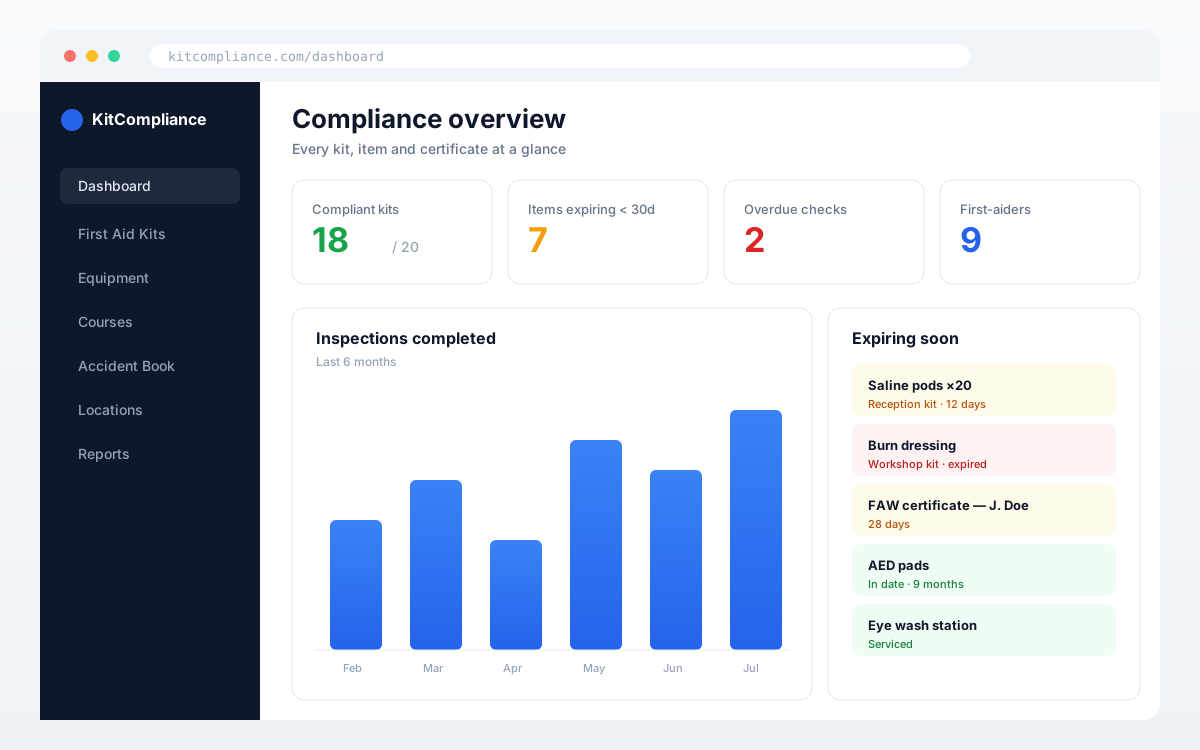
A paper book gets lost, coffee-stained and left in a drawer no one can find in a hurry. KitCompliance gives you a digital accident log alongside your kit records: capture each incident with a timestamp, keep it access-controlled and GDPR-tidy, flag whether it might be RIDDOR-reportable, and keep everything the required three years without a filing cabinet. See the getting-started guide to set it up.
Frequently asked questions
Is an accident book a legal requirement in the UK?
If you employ 10 or more people, yes — under the Social Security (Claims and Payments) Regulations 1979. Smaller employers aren't strictly required to keep one, but it's strongly recommended: the first-aid regulations and RIDDOR both assume you're recording injuries, and the entries are valuable evidence if a claim arises.
What is the difference between the accident book and RIDDOR?
The accident book is your own internal record of every injury, however minor. RIDDOR is a separate duty to report the more serious incidents to the HSE. Most accident book entries never become RIDDOR reports, but every RIDDOR report should also appear in the accident book.
When must a RIDDOR report be made?
Deaths and specified injuries: without delay, confirmed within 10 days. Over-seven-day injuries: within 15 days. Diseases and dangerous occurrences: as soon as you're aware. All via the online forms at hse.gov.uk.
How long must accident records be kept?
At least three years from the date of the entry — often longer for young workers or long-latency conditions.
Does the accident book need to be GDPR-compliant?
Yes. Entries hold personal and health data, so they must be kept confidential and stored securely — hence the tear-out pages in paper books, or access controls in a digital system.