First aid rules are easy to get right at 11am on a Tuesday, when the building is full and both trained first-aiders are at their desks. The gap most workplaces miss is the 3am Sunday shift — the skeleton crew, the lone security guard, the early cleaners, the weekend warehouse pick. The law does not clock off when the day shift does: first-aid provision has to be available for every hour people are at work. This guide covers how to work out night shift and out-of-hours cover, who counts, and how to keep it standing when people are on holiday or off sick.
Does the night shift legally need first aid cover?
Yes. The 1981 Regulations say first-aid equipment, facilities and people must be available "whenever people are at work". There is no exemption for nights, weekends, bank holidays or a handful of on-call staff. If employees are present and working, they are entitled to the same standard of first-aid provision as the day shift — even if that shift is one person.
The mistake is to assess the workplace as a single daytime snapshot. If your building runs 24/7, or has early starts, late finishes, weekend crews or on-call working, each of those working periods is its own scenario. A shift with people on site but no trained first-aider or appointed person and no accessible kit is, quite simply, not adequate provision.
Why quiet shifts often need more, not less
It feels intuitive that a quiet night with five people needs less cover than a busy day with fifty. The needs assessment usually says the opposite, because the factors that decide cover get worse at night, not better:
| Factor | Why it worsens out of hours |
|---|---|
| Fewer people on site | With a small crew, one trained first-aider being on a break, off sick or being the casualty can leave the whole shift with no cover at all. |
| More lone & isolated working | Security, cleaning, maintenance and single-operator roles mean people work out of sight of others — see lone worker first aid requirements. An unwitnessed collapse can go unnoticed for a long time. |
| Slower access to help | Reception is unstaffed, gates are locked and it takes longer to direct an ambulance in. Response times to reach a casualty — and for help to reach them — stretch out. |
| Fatigue & the work itself | Tiredness raises the chance of an accident, and many higher-risk tasks (warehousing, manufacturing, driving) run through the night when supervision is lighter. |
How many first-aiders does each shift need?
There is no fixed legal ratio — the number falls out of your assessment for that shift (for the headcount rules of thumb, see how many first aiders you need). Two principles matter most out of hours:
- Never rely on a single point of failure. One first-aider covering a 12-hour night alone means that if they are on a break, off sick or hurt, the shift has zero cover. Most workplaces train more than one person per shift, or at minimum keep an appointed person as backup with a clear way to call for help.
- Assess each shift, don't copy the day. Count the maximum people on the night shift, score the risk for that period, and set the number from there. Higher-risk night operations may need FAW-level trained first-aiders, not just EFAW.
Remember the difference between an appointed person and a qualified first-aider, and where the duty ultimately sits — see who is responsible for first aid at work. An appointed person can take charge and call the emergency services but is not a substitute for a trained first-aider where your assessment calls for one.
Keeping cover standing across the rota
Getting one trained person onto each shift is the easy part. Keeping cover in place every day of the year — through holidays, sickness, turnover and expiring certificates — is where out-of-hours provision quietly fails. Build in resilience:
- Train a surplus, spread across shifts. Enough first-aiders on every rota that one absence never leaves a shift uncovered. This is the same problem as first aid cover during holidays and absence, just baked into the shift pattern.
- Track certificate expiry. A FAW or EFAW certificate lasts three years (see how long a first aid certificate lasts) — book requalification before it lapses, and keep up the annual refresher so night-shift first-aiders don't go stale.
- Make kits and the AED accessible out of hours. A kit locked in a manager's office that is empty at night, or a defibrillator behind a door that is keyed shut, is no use at 3am. Kits must be reachable on every shift and checked regularly so they are not found empty when it counts.
- Tell every shift who their first-aider is. Night and weekend staff often never meet the day team. First-aid notices must name the first-aider(s) and kit locations for that shift, not just the 9-to-5 names.
Write it into your assessment and policy
Out-of-hours cover is only defensible if it is written down. Record the shift-by-shift arrangements in your first aid needs assessment, then carry the conclusions into your workplace first aid policy so every shift knows the arrangements and you can evidence them to an inspector or ISO 45001 auditor. Review it whenever rotas, headcount or the work change — a new night line, a dropped weekend shift or a first-aider leaving all move the numbers. It's worth sense-checking the whole picture against the workplace first aid compliance checklist so nothing on the quiet shifts has quietly lapsed.
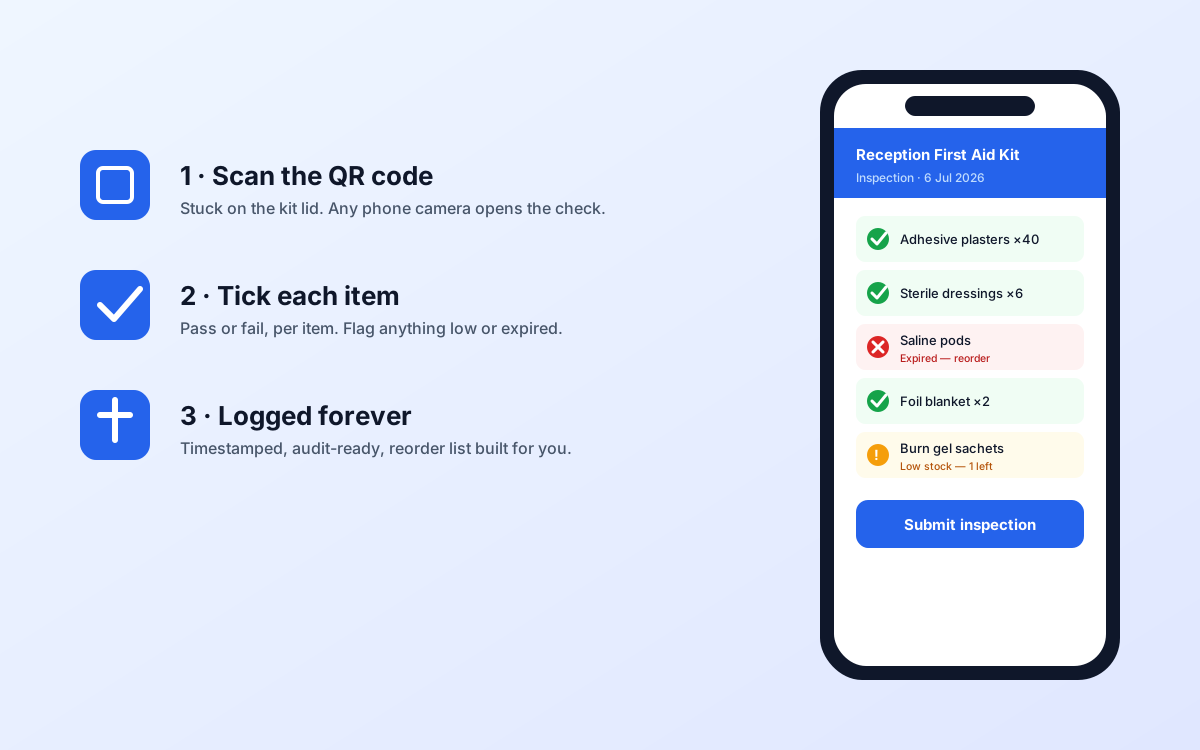
The hardest part of out-of-hours first aid isn't deciding the cover — it's proving, on any given night, that every kit is stocked, every certificate is in date and every check was done. That's exactly what KitCompliance automates: build each kit from the ISO 45001 suggested list, log inspections in seconds from any shift, and get reminders before a certificate or kit item lapses, with a one-click report that evidences your provision around the clock. See the getting-started guide to set it up.
Frequently asked questions
Do night shifts legally need first aid cover?
Yes. The 1981 Regulations require first-aid provision whenever people are at work, which includes nights, weekends and any out-of-hours working. A shift with employees present but no first-aider or appointed person and no accessible kit is not adequate provision.
Does a night shift need the same number of first-aiders as the day?
Not necessarily the same number, but often proportionally more. Nights run with smaller teams, slower access to help and more lone working, so the risk per person can be higher. Base it on your needs assessment for that shift, not a copy of the day figure.
Can one first-aider cover a 12-hour night shift alone?
A single first-aider is a single point of failure — if they're on a break, off sick or are the casualty, the shift has no cover. Most workplaces train more than one person per shift, or at minimum keep an appointed person as backup with a clear way to raise the alarm.
Who is responsible for out-of-hours first aid cover?
The employer's duty applies to every hour worked. A manager or health-and-safety owner usually arranges the rotas, but the legal responsibility to make sure cover is in place sits with the employer.