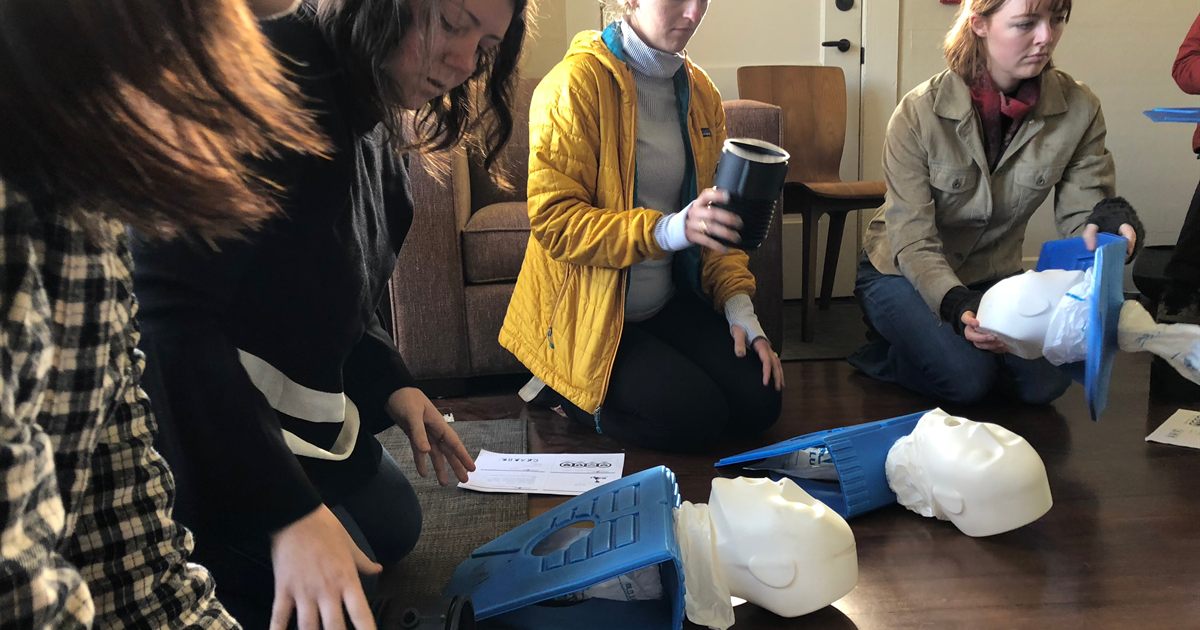
Kits and signage are the visible part of workplace first aid, but the law is just as concerned with people — having enough suitably trained staff on hand when someone is hurt. That raises the questions every employer eventually asks: what first aid training am I legally required to provide, which course level, how many people, and how do I keep it all valid? This guide answers each one and shows how the training rules fit together.
Is first aid training a legal requirement?
Yes, in effect. The 1981 Regulations require every employer to provide "adequate and appropriate" first-aid equipment, facilities and personnel. There is no fixed rule that says "you must send X people on a course" — instead you decide what is adequate through your needs assessment. For a very small, low-risk business that may mean a single appointed person; for most workplaces it means one or more trained first-aiders. Either way, arriving at "enough trained people" is a legal duty, not a nice-to-have. It is also the employer who carries that duty, and cannot delegate it away.
The three levels of provision
UK workplace first aid training comes in three practical tiers. Your needs assessment points you to the right one (and you can mix them — for example an FAW first-aider plus several EFAW-trained backups):
| Level | Typical length | Best for |
|---|---|---|
| Appointed person | Short (½ day) or none required | The lowest-risk, smallest workplaces. An appointed person takes charge in an emergency, calls the ambulance and looks after the kit — but is not a trained first-aider and cannot give the same care. |
| Emergency First Aid at Work (EFAW) | 1 day | Lower-risk workplaces such as offices and shops. Covers the life-saving essentials: an unresponsive casualty, CPR, choking, bleeding, shock and minor injuries. |
| First Aid at Work (FAW) | 3 days | Higher-risk workplaces such as warehousing, manufacturing, construction and catering. Covers everything in EFAW plus a wider range of injuries and illnesses. |
How many trained people do you need?
There is no single legal ratio — the number falls out of your assessment. As a widely used HSE rule of thumb:
- Low-risk (offices, shops): an appointed person for fewer than 25 staff; at least one EFAW first-aider for 25–50; one more for every additional 100.
- Higher-risk (warehousing, manufacturing, construction, catering): at least one FAW first-aider for 5–50 staff; one more for every additional 50, with specialist training where the hazard demands it.
Always train more people than the bare minimum. First-aiders take holidays, go off sick and leave — so build in cover for absence and never let a shift run with nobody qualified. For a full breakdown by headcount and risk, see how many first-aiders do I need.
Choosing a training provider
Here is the point most employers get wrong: since October 2013 the HSE no longer approves first-aid training providers or keeps an official list. That deregulation put the responsibility on you to check a provider is competent before booking. Do basic due diligence — trainer qualifications and experience, the course syllabus and hours, quality-assurance arrangements, and appropriate insurance. Awarding-organisation-regulated qualifications (Ofqual) or membership of a recognised trade body are good signals. The choosing a first aid training provider guide walks through the exact checklist.
Keeping certificates valid
Training is not a one-off. Both EFAW and FAW certificates are valid for three years. Before a certificate expires, the first-aider must complete a requalification course to stay qualified — see how long a first aid certificate lasts for the requalification windows and what happens if one lapses. In between, the HSE strongly recommends annual refresher training — a short top-up that keeps skills like CPR sharp, because they fade fast when they are not used.
How to arrange compliant training, step by step
- Start with your needs assessment — it sets the risk level, the number of trained people and the course level required.
- Choose the right course(s) — appointed person, EFAW, FAW, and any hazard-specific add-ons.
- Vet a competent provider — the HSE won't do it for you, so check qualifications, syllabus, QA and insurance.
- Train enough people, with cover — for holidays, sickness and every shift.
- Record and renew — file the certificates, schedule annual refreshers, and requalify before the three-year expiry.
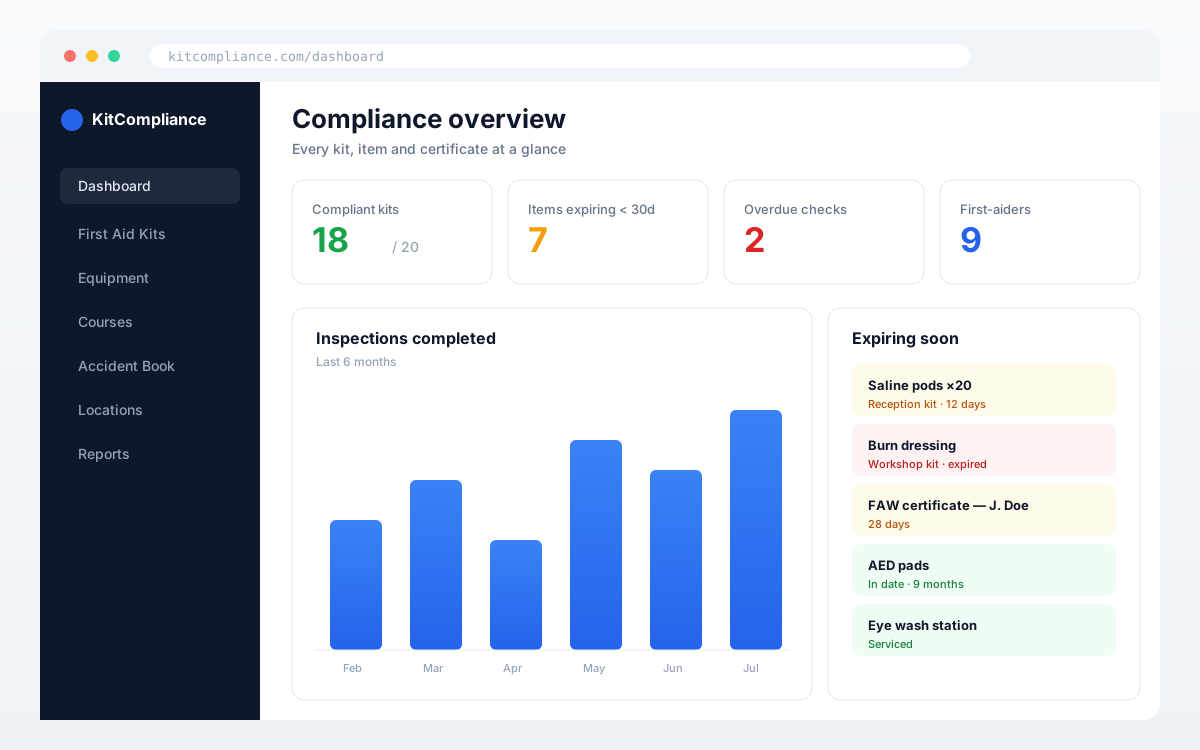
The part that catches workplaces out is not booking the training — it's the paperwork afterwards. Three years is long enough to forget a certificate is running out, and a lapsed first-aider means your provision quietly stops being "adequate". That's exactly what KitCompliance is built to prevent: record each first-aider's certificate and expiry alongside your kits and inspections, get reminders before anything lapses, and produce a one-click report that proves your provision to an inspector or ISO 45001 auditor. See the getting-started guide to set it up. It sits neatly at the end of your workplace first aid compliance checklist.
Frequently asked questions
Is first aid training a legal requirement for employers?
The 1981 Regulations require adequate and appropriate first-aid personnel. Whether that means trained first-aiders or an appointed person depends on your needs assessment, but providing enough suitably trained people is a legal duty for anyone with employees.
What is the difference between EFAW and FAW training?
EFAW is a one-day course for lower-risk workplaces; FAW is a three-day course covering a wider range of injuries and illnesses for higher-risk workplaces. Your needs assessment decides which — and how many of each — you need.
How long does a first aid at work certificate last?
Three years, for both EFAW and FAW. First-aiders must requalify before it expires, and the HSE recommends an annual refresher in between.
Does the HSE approve first aid training providers?
No — not since October 2013. The employer must check a provider is competent, reviewing trainer qualifications, syllabus, quality assurance and insurance before booking.