Every few months a headline suggests UK employers will soon be forced to train mental health first-aiders. It's a fair thing to plan for — but as of 2026 it isn't the law. This guide sets out what's actually required, what's strongly recommended, and how to add mental health first aid to the arrangements you already keep for physical first aid.
Is mental health first aid a legal requirement?
No. There is no law that says you must have a trained mental health first-aider. Two different sets of rules sit behind the confusion:
- The Health and Safety (First-Aid) Regulations 1981 require "adequate and appropriate" first-aid equipment, facilities and people. In law this has always meant physical first aid — treating injury and sudden illness.
- The Management of Health and Safety at Work Regulations 1999 require every employer to assess the risks to the health of their staff and do something about them. "Health" here includes mental health, so work-related stress and mental ill health fall within your general duty to assess and manage risk.
In 2023 the HSE updated its first-aid guidance to make clear that employers should consider mental as well as physical health when deciding what first aid provision they need. That is guidance and good practice — not a duty to appoint a mental health first-aider. Various proposals to make it mandatory have been raised in Parliament, but none had become law by 2026.
What a mental health first-aider actually does
A mental health first-aider is a trained colleague — not a therapist. The role is to notice when someone may be struggling, start a supportive, non-judgemental conversation, and point them towards the right professional help (an EAP, occupational health, their GP, or a crisis line). They are a first point of contact, in the same way a physical first-aider gives immediate help before an ambulance arrives.
They are not there to:
- diagnose conditions;
- provide ongoing counselling or treatment;
- replace professional support, HR processes or occupational health.
This is the key difference from a physical first-aider: physical first aid is often a legal requirement decided by your needs assessment, whereas a mental health first-aider is a voluntary, good-practice role that supports — but never replaces — proper mental health support.
Physical vs mental health first aid at a glance
| Physical first aid | Mental health first aid | |
|---|---|---|
| Legally required? | Yes, where your needs assessment calls for it (1981 Regs) | No — recommended good practice |
| Governing rules | Health and Safety (First-Aid) Regulations 1981 | General duty under the 1999 Management Regulations |
| Typical training | EFAW (1 day) or FAW (3 days) | MHFA half-day, one-day or two-day course |
| Certificate validity | 3 years (requalify before expiry) | Usually 3 years, annual refresher recommended |
| Equipment | First aid kits, AEDs, eye wash | None — it's a people-and-conversation role |
How many mental health first-aiders do you need?
Because it isn't a statutory requirement, there is no legal ratio — unlike the rough guides for how many physical first-aiders you need. Decide the number the same way you decide everything else in first aid: through your assessment. Weigh up:
- headcount and how many people are on site at once;
- number of sites, floors and separate teams;
- shift patterns, lone and remote workers;
- the level of pressure or trauma exposure in the work (for example frontline, care or emergency roles).
A widely used starting point is around one trained mental health first-aider per 25–50 employees, adjusted so that everyone has someone realistically reachable. What matters is coverage and visibility, not hitting a magic number.
Training options
Several accredited providers run Mental Health First Aid courses in the UK. Course length and titles vary, but they broadly fall into three tiers:
| Course | Typical length | Who it suits |
|---|---|---|
| Awareness / champion | Half day | All staff or managers — spot the signs and know where to signpost. |
| One-day | 1 day | A lighter first-aider role or a stepping stone to the full course. |
| Two-day (MHFAider) | 2 days | Your designated mental health first-aiders — the fullest, most-recognised qualification. |
Most certificates last three years, with the provider recommending an annual refresher to keep skills sharp — mirroring the pattern for physical first aid certificates. Build those renewal dates into your records from day one so a lapsed certificate never catches you out.
How to introduce mental health first aid
Five practical steps to add it to what you already do:
- Include mental health in your needs assessment. When you carry out or review your first aid needs assessment, weigh the mental health risks in your work and decide what support your people need.
- Decide how many first-aiders you need — based on headcount, sites, shifts and risk, so cover is reachable for everyone.
- Train them on a recognised course — usually the two-day MHFAider course for designated first-aiders.
- Tell staff who they are. Publicise them the way you display physical first-aiders on your first aid signage and notices, and in inductions.
- Record certificates and refresh them. Log each certificate and its expiry, and book refreshers before they lapse.
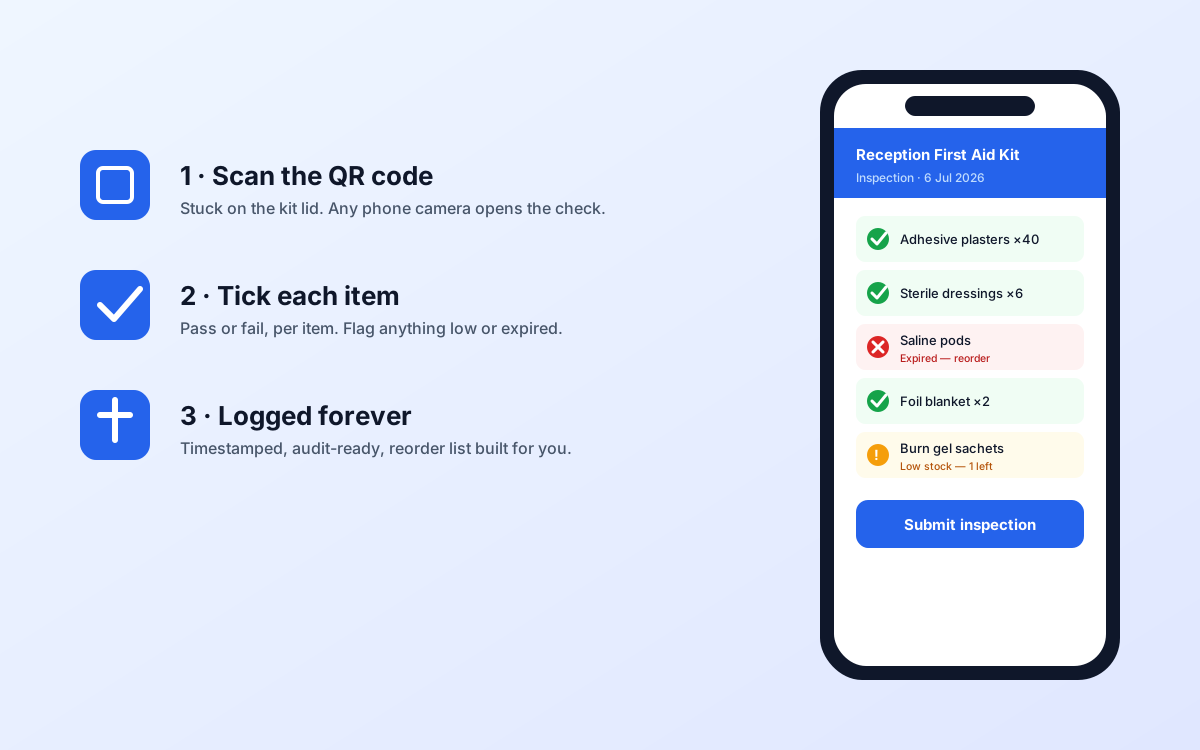
Whether a first-aid qualification is physical or mental health, the compliance risk is the same: a certificate quietly expires and nobody notices until it's needed. KitCompliance keeps every first-aider's certificate and renewal date alongside your kits, inspections and expiry dates, and reminds you before anything lapses — so your whole first aid picture stays current and provable. See the getting-started guide to set it up.
Frequently asked questions
Is mental health first aid a legal requirement in the UK?
No. No law requires a trained mental health first-aider. The 1981 First-Aid Regulations cover physical first aid, but the 1999 Management Regulations require you to assess and manage risks to health — including mental health — and HSE guidance says to consider mental ill health in your first aid needs assessment.
How many mental health first-aiders should a workplace have?
There's no legal ratio because it isn't statutory. Decide through your needs assessment, based on headcount, sites, shifts and risk. A common starting point is roughly one per 25–50 staff, adjusted so cover is reachable for everyone.
How long does a mental health first aid certificate last?
Most accredited certificates are valid for three years, with an annual refresher recommended. Check the specific course, as durations vary by provider.
What's the difference between a mental health and a physical first-aider?
A physical first-aider gives immediate help for injury and illness and is often legally required. A mental health first-aider spots the signs of mental ill health, starts a supportive conversation and signposts professional help — a voluntary, good-practice role that never replaces proper care.