
A first aid kit no one can find is not much use in an emergency. That is the whole point of first aid signage — the green-and-white symbol that tells anyone, at a glance and whatever their first language, where to get help. UK law backs it up: employers have a duty to make sure staff know where the kit, the first-aiders and any defibrillator are. This guide covers what the rules actually say, what a compliant sign looks like, and exactly where to put them.
Are first aid signs a legal requirement?
Two sets of regulations sit behind workplace first aid signage, and it helps to keep them separate:
- The Health and Safety (First-Aid) Regulations 1981 require every employer to inform employees of the arrangements made for first aid, including the location of equipment, facilities and personnel. Signs and a first aid notice are the accepted way to do this.
- The Health and Safety (Safety Signs and Signals) Regulations 1996 require a safety sign wherever a risk has not been removed by other means, and they set the format every first-aid sign must follow — colour, shape and the use of a pictogram.
So no single sentence in law reads "you must display a first aid sign". But between the duty to inform staff and the rules on how any first-aid sign must look, signage is how a compliant workplace meets its obligations in practice. Deciding what provision needs signing in the first place comes out of your first aid needs assessment.
What a compliant first aid sign looks like
First-aid signs are "safe condition" signs. The 1996 Regulations give each type of safety sign a fixed colour and shape so people learn to read them instantly:
| Sign type | Colour & shape | Used for |
|---|---|---|
| Safe condition (first aid) | White symbol on a green rectangle/square | First aid kits, first aid rooms, AEDs, emergency escape |
| Prohibition | Red circle with a diagonal bar | "Do not" — no smoking, no entry |
| Warning | Black symbol on a yellow triangle | Hazards — slippery floor, electricity |
| Fire equipment | White symbol on a red rectangle | Extinguishers, alarms, hoses |
Two other points from the standard for safety signs (BS EN ISO 7010):
- Pictogram, not just words. The symbol does the work; text can support it but cannot replace it. A "First Aid" wording strip is fine underneath the green symbol, not instead of it.
- Visible in a power cut. Photoluminescent (glow-in-the-dark) signs are recommended for first-aid and escape routes so they stay readable if the lights fail.
Where to put first aid signs
Sign the things people need to find fast, and the way to them:
- Every first aid kit. A green sign on or directly above the kit, visible from across the room. If you keep more than one kit, sign each — see what should be in a workplace first aid kit for how many you need.
- The route. Where a kit or first aid room is round a corner or up a floor, add directional arrow signs along corridors and stairwells.
- Any defibrillator. Mark an AED with the standard green heart-and-flash symbol. If it is in a cabinet, sign the cabinet too — more in our workplace defibrillator guide.
- The first aid room. A first aid sign on the door of any dedicated first aid room.
Keep signs at a readable height, well lit, and clear of anything that might hide them — stored stock, propped-open doors, coat racks and machinery are the usual culprits.
The first aid notice
A symbol shows where the kit is (and the kit needs to be stored somewhere accessible in the first place); a notice tells staff who to call. Put up at least one notice — on the staff noticeboard, by the kit, or both — that lists:
- The names (and locations) of your first-aiders or appointed persons.
- Where the nearest first aid kit and AED are.
- Where to find the first aid room, if you have one.
Keep it current. When a first-aider leaves or their certificate expires, the notice needs updating the same day — an out-of-date list is arguably worse than none. Who owns that job comes down to who is responsible for first aid at work.
Keeping signage right over time
Signage drifts out of compliance quietly. A wall gets repainted and the sign never goes back up. A team moves floor and the kit moves with it but the sign does not. A photoluminescent sign fades. Fold a quick look at signs into the same routine you use to inspect your first aid kits: is every kit still signed, is every sign still visible, does the notice still name the right people?
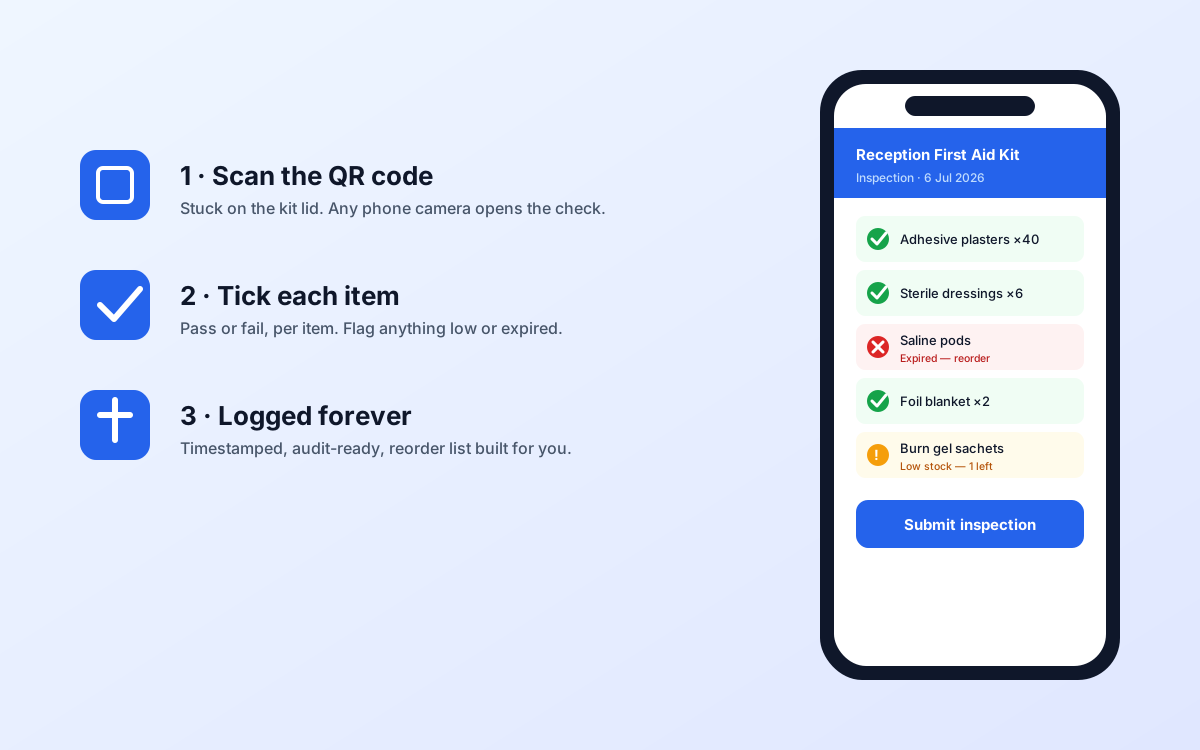
A sign points to the kit; the kit still has to be stocked, in date and logged. That second half is where most workplaces slip, and it is exactly what KitCompliance automates: build each kit from the ISO 45001 suggested list, record inspections in seconds, and get reminders before an item expires or a certificate lapses — with a one-click report that proves your provision. See the getting-started guide to set it up.
Frequently asked questions
Are first aid signs a legal requirement in the UK?
You must inform employees of your first-aid arrangements under the 1981 Regulations, and signs plus a notice are the standard way to do it. The 1996 Safety Signs Regulations set how any first-aid sign must look. So signage is how employers meet the duty in practice, even though no single rule says "display a first aid sign".
What colour is a first aid sign?
Green with a white symbol — a "safe condition" sign. A red cross is not compliant; red is reserved for fire and prohibition signs.
Do I need a sign for a defibrillator?
Yes — mark any AED with the standard green-and-white AED symbol so anyone can find it fast in an emergency.
Where should first aid signs be placed?
On or above every kit, by any AED, on the first aid room door, and along the route to them where they are not immediately visible — at a readable height, well lit and unobstructed.
Can a first aid sign be text only?
No. A compliant safety sign must carry a pictogram. Words can support the symbol but cannot replace it.