Most UK workplaces don't need a dedicated first aid room — a well-stocked kit and a trained first-aider are enough. But higher-risk sites do, and getting it wrong cuts both ways: too little provision and you're non-compliant; a room nobody maintains is just a cupboard with a couch. This guide explains when the HSE expects a first aid room, what it must contain, and how to decide from your first aid needs assessment.
Is a first aid room a legal requirement?
Not on its own. The Health and Safety (First-Aid) Regulations 1981 require every employer to provide "adequate and appropriate" equipment, facilities and personnel — see our overview of UK workplace first aid requirements. A first aid room is one possible facility, not a blanket duty. HSE guidance is clear that a room is generally only necessary where the work is higher-risk or the workforce is large, and leaves the decision to your needs assessment.
So the honest answer to "do I need a first aid room?" is: probably not if you run a low-risk office or shop, and quite possibly yes if you run a factory, large construction project, or a site handling hazardous substances.
When do you need a first aid room?
Work through these factors in your assessment. The more that apply, the stronger the case for a dedicated room:
| Factor | Points towards a first aid room |
|---|---|
| Level of hazard | Heavy machinery, chemicals, hot processes, working at height or other work where serious injury is foreseeable. |
| Size of workforce | Large numbers of people on site — more people means more incidents and a greater chance of simultaneous casualties. |
| Access to emergency services | Remote or rural sites, or ones where an ambulance would take time, benefit from a place to treat and stabilise someone. |
| Spread of the site | Large or multi-building premises where casualties can't easily be taken somewhere clean and private. |
| Nature of the work | Sectors the HSE specifically flags — construction, shipbuilding, chemicals and similar higher-risk industries. |
What must a first aid room contain?
If your assessment calls for a room, HSE guidance sets out what it should hold. It must be easy to find, signed, and — importantly — reserved for first aid rather than doubling as a store or break room.
- A sink with hot and cold running water, always available
- Drinking water and disposable cups
- Soap and paper towels
- A store of first aid materials and a suitably stocked first aid kit
- A couch (with waterproof protection), clean pillows and blankets
- A chair
- A foot-operated clinical waste bin
- A first aid record book — the same accident record you use to log incidents
- A means of summoning help — a telephone or alarm
- Clear signage on the door and around the site
The room should be big enough to work all the way around the couch, get a wheelchair or stretcher in and out, and be kept clean, warm, ventilated and well lit. Position it close to a point of access for transport to hospital and, where possible, on the ground floor.
Who should be in charge of it?
Give a named person clear responsibility for the room — normally a designated first-aider or appointed person (see who is responsible for first aid at work). They should be available whenever people are at work and able to reach the room quickly. Their job is to keep it stocked, clean and ready: restocking used items, checking expiry dates, and making sure the record book and waste bin are in order.
Keeping a first aid room compliant
A first aid room only counts as "adequate" if it's actually ready when someone needs it. That means routine checks — not a one-off fit-out. Build a simple recurring routine:
- Restock after every use — anything used comes off the shelf and gets replaced.
- Scheduled inspections — check contents, expiry dates and cleanliness on a set frequency (see how often first aid kits should be inspected).
- Track expiries — dressings, eye-wash and AED pads and batteries all lapse; know the dates before they pass.
- Keep evidence — dated records that show the room and its kit have been maintained, ready for an inspector or ISO 45001 auditor.
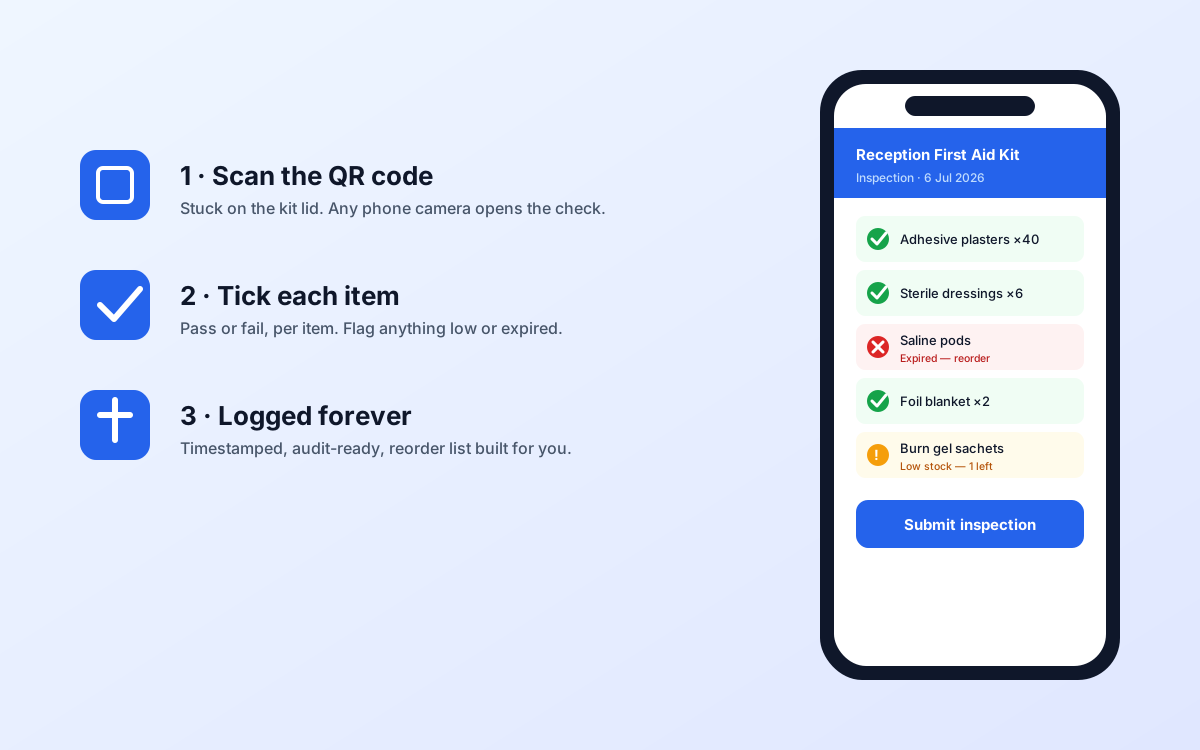
Whether or not you have a dedicated room, the hard part is the same: keeping every kit stocked, every certificate in date, and every check logged. That's exactly what KitCompliance automates — build each kit from the ISO 45001 suggested list, record inspections in seconds, and get reminders before anything lapses, with a one-click report that proves your provision. See the getting-started guide to set it up.
Frequently asked questions
Is a first aid room a legal requirement in the UK?
Not automatically. The 1981 Regulations require "adequate and appropriate" facilities, and HSE guidance says a first aid room is usually only needed in higher-risk workplaces. Your needs assessment decides whether yours does.
What size should a workplace first aid room be?
There's no fixed dimension. It must be large enough for a couch with space to work all around it, a chair, and the equipment and washing facilities HSE lists, while letting a stretcher or wheelchair in and out.
What must a first aid room contain?
Running water and a sink, drinking water, soap and towels, a couch with pillows and blankets, a chair, a first aid kit, a clinical waste bin, a record book, a means to raise the alarm, and clear signage.
Who should be in charge of the first aid room?
A named first-aider or appointed person, available during working hours, who keeps it stocked, clean and ready for use.