You can buy the right first aid kit, stock it perfectly and still fail an inspection — because where the kit lives matters as much as what's inside it. A kit locked in the manager's office, buried in a stockroom or stuck on a floor no one can reach isn't provision; it's a box. This guide covers exactly where UK workplace first aid kits should be stored, what the HSE expects, and how to place them so they're there when someone needs one.
What the law actually says about kit location
The Health and Safety (First-Aid) Regulations 1981 require every employer to provide "adequate and appropriate" first-aid equipment and facilities. The Regulations deliberately don't name rooms or heights — a print works and a call centre need different answers. HSE guidance fills the gap: first-aid equipment should be easily accessible and its position clearly identified. In other words, the standard is practical, not prescriptive — and that means the placement decision is yours to make and to justify.
You justify it the same way you justify everything else about your provision: through your first aid needs assessment. It decides how many kits you need; the same walk-round tells you where they belong.
The rules of good kit placement
Wherever you put a kit, it needs to meet all of these:
| Requirement | What it means in practice |
|---|---|
| Accessible | Any employee can reach it in seconds without a key, code or asking permission. Not in a locked office, not behind the counter only supervisors go behind. |
| One per work area | At least one kit on every floor and in every self-contained area, so no one has to leave the building or climb stairs to reach help. Big or spread-out sites need more. |
| Near the hazard | Put extra kits where injuries are most likely — kitchens, workshops, machinery, loading bays, labs — so the kit is closest to where it's used. |
| Clearly signed | A white-on-green first-aid sign above each kit and on the route to it, so people find it under stress. See first aid signage requirements. |
| Right environment | Out of direct sunlight, away from damp, heat, dust and contamination — all of which spoil dressings and shorten item expiry dates. |
| Reachable height | Mounted where staff of different heights, and wheelchair users, can lift it down — roughly between waist and shoulder height, not on a top shelf. |
Where to store kits, area by area
- Offices & shops (low-risk): one kit per floor near a communal point — reception, the kitchen, a main corridor — is usually enough for smaller sites. Add one per department once floors get large.
- Kitchens & catering: a dedicated catering kit mounted in the kitchen itself, close to where burns and cuts happen — not shared with the office kit down the hall.
- Warehouses, workshops & factories (higher-risk): multiple kits spread so one is always within a short walk, with extras beside machinery, cutting and hot-work stations, plus any eye-wash the tasks require.
- Vehicles & mobile workers: a personal BS 8599-2 travel/motoring kit in each vehicle and for lone or off-site workers, since they can't reach the building kit.
- Multi-storey & multi-building sites: a kit on every floor and in every building, each signed, so travel distance in an emergency stays short.
Accessibility vs. security — the locked-cupboard trap
The most common placement mistake is locking kits away to stop items walking off. It's understandable, but a kit only one keyholder can open isn't accessible, and that's a straight failure against HSE guidance. If pilfering is a real problem, keep the kit visible and openable but tamper-evident: a numbered plastic seal or a signed break-seal cabinet lets anyone open it in an emergency while showing you at a glance when it's been used and needs restocking. That way security and accessibility don't fight each other.
A quick kit-placement checklist
Walk your site and confirm each kit's location passes:
- Reachable by any employee without a key or code.
- One kit per floor / self-contained work area, minimum.
- Extra kits beside the highest-risk tasks.
- A first-aid sign above the kit and on the way to it.
- Out of sun, damp and heat; at a height people can reach.
- Location known to all staff and listed on the first-aid notice.
- Logged, owned by someone, and inspected on a schedule.
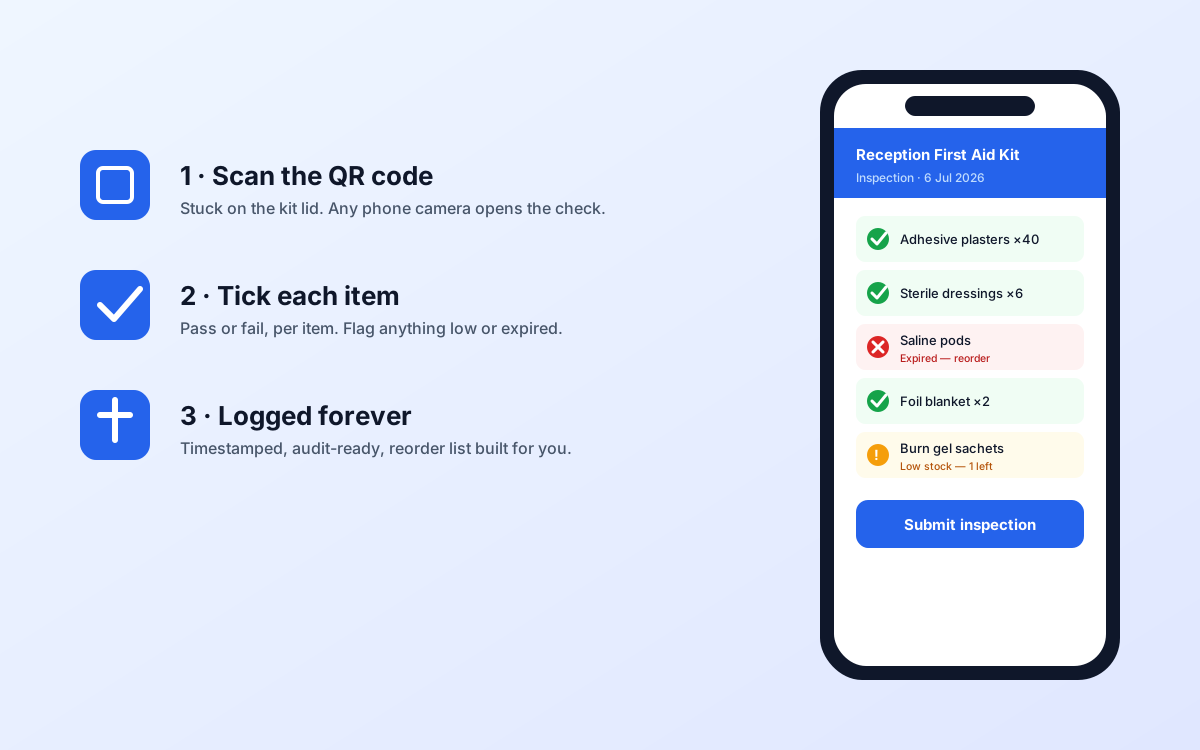
Deciding where kits go is the easy part — the hard part is knowing, on any given day, that every kit at every location is still there, stocked and in date. That's exactly what KitCompliance handles: register each kit against its site and location, record inspections in seconds, and get reminders before anything lapses, with a one-click report that proves your provision across every floor and site. See the getting-started guide to set it up.
Frequently asked questions
Where should a first aid kit be kept at work?
In a clearly signed, accessible spot every employee knows and can reach without a key — usually one kit per floor or work area, plus extras next to higher-hazard tasks. Keep it out of sun, damp and heat, at a reachable height, and never locked where staff can't open it.
Does the law say exactly where kits must go?
No. The 1981 Regulations require "adequate and appropriate" provision but set no fixed locations. HSE guidance says kits must be easily accessible and clearly identified; your needs assessment decides the specifics.
Can a first aid kit be locked in a cupboard?
Not if only one person holds the key — that isn't accessible. Use a tamper-evident seal or a signed break-seal cabinet instead, so anyone can open it in an emergency.
How many kits and locations do I need?
There's no per-employee figure. As a guide: at least one kit per floor or work area, more for higher-risk or spread-out sites, and a personal kit for mobile and lone workers. Your needs assessment sets the exact number.