"How many first aid kits do I need?" is one of the most common workplace first aid questions — and, like most of them, the honest answer is it depends on your workplace. There is no legal number per head. What the law does say is that provision must be "adequate and appropriate", and the number of kits falls out of your first aid needs assessment. This guide gives you the rules that decide it, a rule of thumb by site type, and a five-step way to work out your own number.
Is there a legal minimum number of kits?
Not a number, no. The Health and Safety (First-Aid) Regulations 1981 require employers to provide adequate first-aid equipment, and HSE guidance is clear that the absolute minimum is one suitably stocked first aid kit that is accessible to all employees. For a single small room with a handful of low-risk staff, one kit may genuinely be enough. For anything larger or more spread out, one kit stops being adequate quickly — and "adequate" is what an inspector, auditor or the employer's duty is measured against.
The two questions that decide it
People often confuse two separate decisions. Keep them apart and the answer gets much simpler:
- How big should each kit be? — driven by headcount and risk. Under BS 8599-1 kit sizes, small covers low-risk sites up to ~25 people, medium up to ~100, large beyond that. Higher-risk work bumps you up a size.
- How many kits do you need? — driven by layout and spread. This is about how far anyone has to travel to reach a kit, not how many people you employ.
So 40 people in one open-plan office might need a single large kit; 40 people spread across four floors need a kit on each floor even though the total headcount is identical.
Factors that add kits
Work through these against your own site. Each one can add a kit on top of your baseline:
| Factor | What it means for kit numbers |
|---|---|
| Floors & buildings | A kit on every floor and in every separate building. Nobody should have to change floors or cross a car park to reach one. |
| Travel distance | Aim for a kit reachable within a minute or two. Large warehouses, yards and campuses need several, positioned so no work area is far from one. |
| Shift patterns | Kits must be available on every shift, including nights and weekends. If a locked office holds the only kit out of hours, that is a gap. |
| Higher-risk zones | Workshops, plant rooms, kitchens and labs often warrant their own kit — sometimes a specialist one such as a burns or catering kit. |
| Lone & remote workers | A personal or travel kit each for people who work alone or off-site, plus a way to raise the alarm. |
| Vehicles | A BS 8599-2 vehicle kit in each car, van or truck used for work. |
A rule of thumb by workplace type
Use this as a starting point, then adjust from your needs assessment — it is guidance, not a legal formula:
| Workplace | Typical starting point |
|---|---|
| Small low-risk office (1 floor, <25 staff) | 1 medium kit, centrally placed and signed. |
| Multi-floor office | 1 kit per floor, sized to the people on that floor. |
| Shop or small hospitality venue | 1 kit front-of-house plus 1 in the kitchen or stockroom if higher-risk work happens there. |
| Warehouse / factory | Several kits positioned by work zone, plus specialist kits for the highest-hazard areas. |
| Construction site | Kits at each work area and welfare unit — see construction first aid requirements. |
| Field / mobile workforce | 1 personal kit per worker and 1 vehicle kit per vehicle. |
How to work out your own number
- Start with one kit per site as the floor — the legal minimum, accessible to everyone.
- Add one for each separate work area — every floor, building or zone someone would have to leave to reach the main kit.
- Cover shifts, spread and risk — night and weekend cover, long travel distances, and higher-hazard areas.
- Add personal and vehicle kits for lone, remote and driving workers.
- Size and record each one — pick the right BS 8599-1 size for the people it serves, then log the count, locations and sizes in your needs assessment.
More kits means more to keep in date
Every extra kit is another set of expiry dates and another item on your inspection schedule. This is where spread-out workplaces slip: it's easy to keep the one reception kit stocked and quietly forget the kit in the far warehouse bay or the third van. A kit that exists on paper but is empty when it's needed is worse than useless — and it's exactly the sort of gap an audit or an incident exposes.
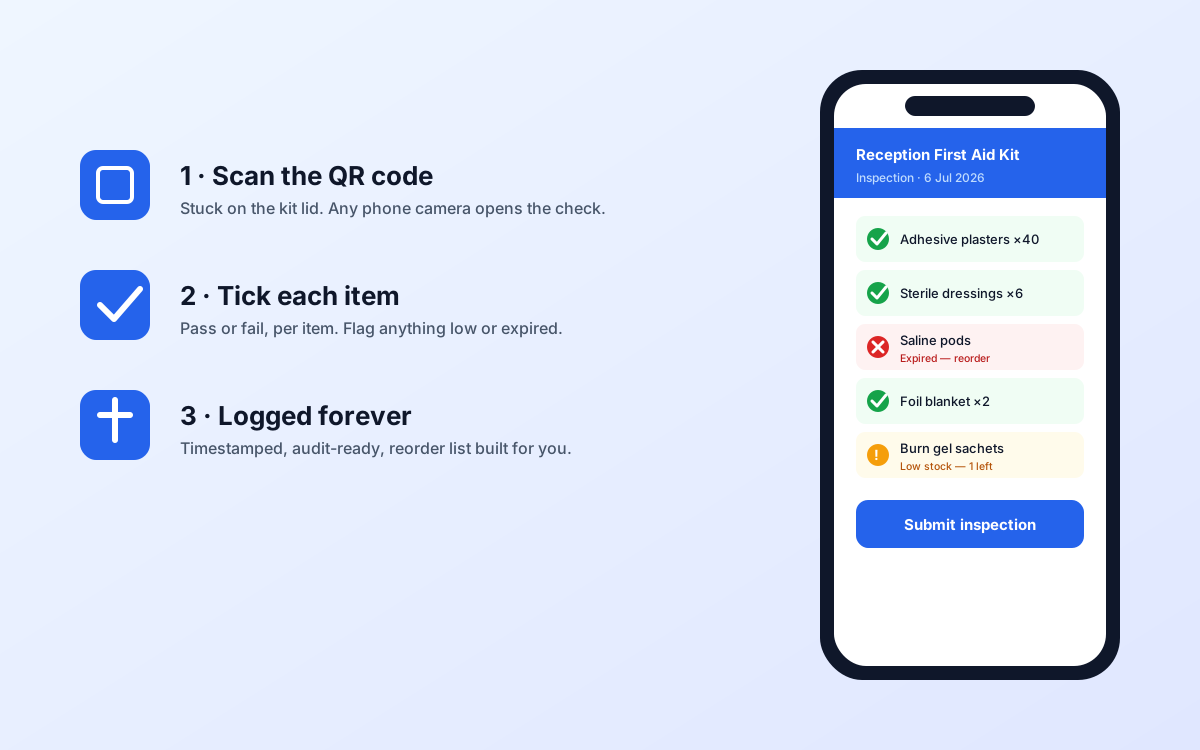
Deciding how many kits you need is the easy part; keeping all of them stocked and provable across floors, sites and vehicles is the ongoing job. That's what KitCompliance is for: register each kit and its location, build it from the BS 8599-1 / ISO 45001 suggested list, log inspections in seconds, and get reminders before anything lapses — with a one-click report that proves every kit was in date. See the getting-started guide to set it up.
Frequently asked questions
How many first aid kits does a workplace legally need?
There's no fixed legal number. The law requires at least one fully stocked kit that all employees can reach; how many more you need is decided by your needs assessment, based on layout, headcount, shifts and risk.
How many first aid kits do I need per employee?
There's no per-employee ratio for the number of kits. Headcount sets the size of each kit under BS 8599-1; the number of kits is set by how spread out your workplace is.
Where should first aid kits be located?
In a clearly signed, accessible spot everyone knows, ideally near washing facilities, with a kit within a minute or two of every work area and one on each floor or in each separate building.
Do I need a first aid kit on every floor?
If people work on more than one floor, yes — each floor should have its own. Expecting an injured person to travel between floors to find a kit would not be considered adequate.
How many kits for a multi-site business?
Each site needs its own provision from its own needs assessment; you can't share one kit across locations. Vehicles and lone workers need kits on top of the fixed-site ones.