BS 8599-1 workplace first aid kits come in three sizes — small, medium and large — plus a travel kit for vehicles. Getting the size right matters: too small and you run out of dressings mid-incident; too large and you have paid for stock that expires unused. This guide shows what each size holds, how many people it covers, and how to pick the right one for your workplace.
What is BS 8599-1?
BS 8599-1 is the British Standard that specifies the contents of workplace first aid kits. It is not a legal requirement — the Health and Safety (First-Aid) Regulations 1981 only require "adequate and appropriate" provision and never name a standard. But BS 8599-1 is the benchmark suppliers, buyers and auditors use, so buying a compliant kit and sizing it correctly is the simplest way to evidence that your kit contents are adequate. The current edition (BS 8599-1:2019) increased quantities and added items such as a foil blanket and a burn dressing to every size.
The three kit sizes compared
Size is about quantity within a kit; if you're not sure a BS 8599-1 workplace kit is even the right kind for the setting, start with first aid kit types (workplace vs vehicle vs catering) first, then size it here. All three sizes carry the same types of item — the difference is quantity. A large kit holds roughly twice what a small one does. These are representative BS 8599-1:2019 quantities; check the label on the kit you buy, as suppliers can vary slightly:
| Item | Small | Medium | Large |
|---|---|---|---|
| Guidance leaflet | 1 | 1 | 1 |
| Adhesive plasters (assorted) | 40 | 60 | 100 |
| Sterile wound dressings (medium) | 2 | 4 | 6 |
| Sterile wound dressings (large) | 2 | 3 | 4 |
| Triangular bandages | 2 | 3 | 4 |
| Sterile eye pads | 2 | 3 | 4 |
| Cleansing wipes (alcohol-free) | 20 | 30 | 40 |
| Nitrile gloves (pairs) | 6 | 9 | 12 |
| Finger dressings | 2 | 3 | 4 |
| Resuscitation face shield | 1 | 1 | 2 |
| Foil (emergency) blanket | 1 | 2 | 3 |
| Burn dressing (10 × 10 cm) | 1 | 2 | 2 |
| Clothing shears | 1 | 1 | 1 |
How many people does each size cover?
The size you need depends on two things: the risk level of the work and the number of people in the area on any one shift. HSE guidance groups workplaces into low and high risk, and the recognised rule of thumb is:
| Risk level | Small kit | Medium kit | Large kit |
|---|---|---|---|
| Low risk offices, shops, libraries |
Up to 25 people | 25–100 people | 100+ people |
|
High risk warehousing, manufacturing, construction, catering |
Up to 5 people | 5–25 people | 25+ people |
Count the maximum on any one shift, not the total across the week — a site with 20 people per shift over three shifts is a 20-person area, not 60. And if a single area is above the large-kit threshold, don't buy a bigger box: provide a second kit. Two correctly placed kits beat one giant one because people can reach them faster.
Travel and specialist kits
- Travel / vehicle kit — a smaller BS 8599-2 kit for cars, vans and HGVs. If your staff drive for work, each vehicle needs one; see vehicle first aid kit requirements.
- Burn kit — for kitchens, catering and hot processes, a dedicated burns kit supplements the burn dressing in the main kit. See kitchen first aid kit contents.
- Eye-wash — where there's a risk of dust, chemicals or foreign bodies and no mains water nearby, add sterile eye-wash (eyewash station requirements).
- Critical-injury / catastrophic-bleed kit — for high-hazard sites with cutting, machinery or crush risks, a BS 8599-1 critical-injury pack adds tourniquets and haemostatic dressings beyond a standard kit.
How to choose the right size — quick method
- Set the risk level for each area (low or high).
- Count the people in that area on the busiest shift.
- Read the size off the table above — and round up if you're on a boundary.
- Add specialist kits (travel, burn, eye-wash, critical-injury) where the hazards call for them.
This mirrors the logic of a full first aid needs assessment, which also sets how many first-aiders you need. Kit size and first-aider numbers move together: more people and higher risk push both up.
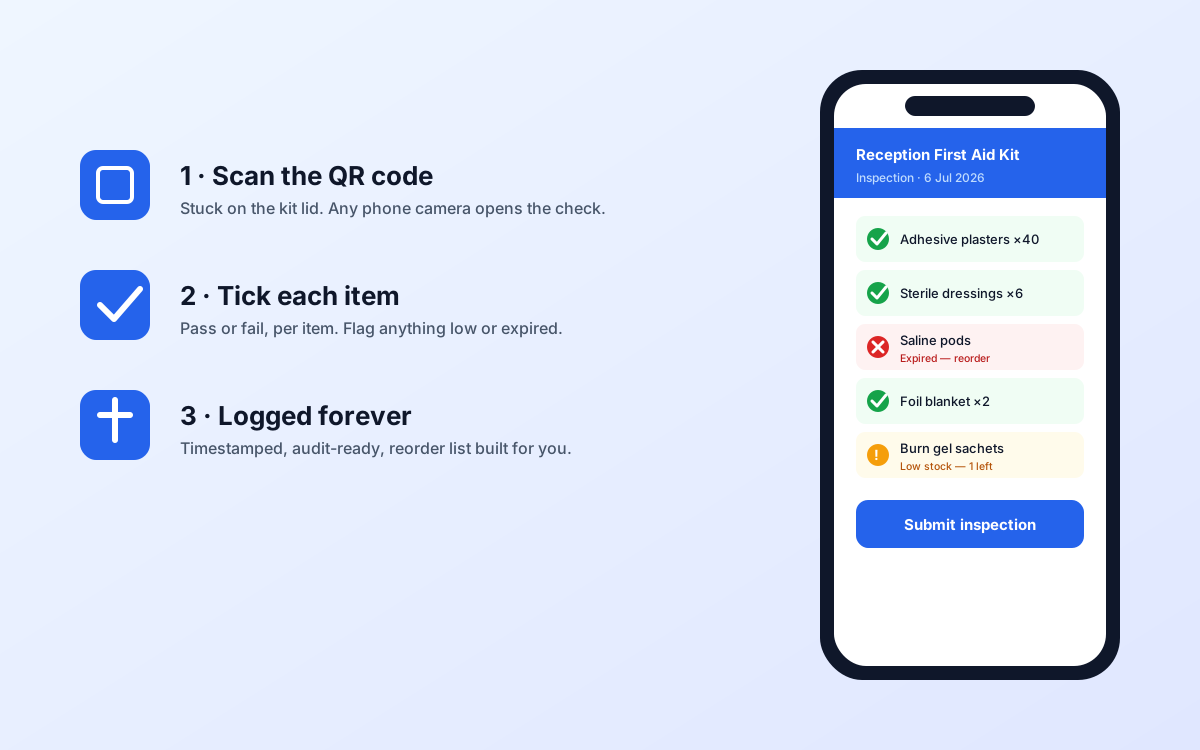
Choosing the size is the easy part. The part workplaces get wrong is keeping each kit at full stock as items are used and dressings expire — a small kit that's half empty is worse than no size at all. That's what KitCompliance is built for: create each kit from the BS 8599-1 / ISO 45001 suggested list, log inspections in seconds, and get reminders before anything runs low or lapses, with a one-click report that proves it. See the getting-started guide to set it up.
Frequently asked questions
What size first aid kit do I need for the workplace?
It depends on risk and headcount per shift. As a guide, in a low-risk workplace a small kit covers up to 25 people, medium up to 100 and large over 100; in a high-risk workplace use small for up to 5, medium for 5–25 and large for over 25. Your needs assessment confirms it.
What's the difference between small, medium and large kits?
Only the quantities. Each size holds the same types of item — plasters, dressings, gloves, wipes, a foil blanket, a burn dressing — with a large kit carrying roughly double a small one.
Is BS 8599-1 a legal requirement?
No. The law requires "adequate and appropriate" provision and doesn't name a standard. BS 8599-1 is simply the recognised benchmark, so buying and sizing to it is the easiest way to show your kits are adequate.
How many first aid kits do I need?
At least one within easy reach of every work area, plus one per vehicle and at any remote site. On large or spread-out sites, several correctly sized kits beat one oversized one.