Construction is one of the highest-risk industries in the UK — falls from height, plant and vehicles, buried services and heavy manual handling mean the first aid you need on a building site is a long way from the single office box. This guide covers exactly what the law expects on a construction site: who's responsible, how many first-aiders and kits you need, what belongs in them, and how to keep cover across a spread-out or fast-changing site.
Is first aid a legal requirement on construction sites?
Yes. Two sets of regulations apply at once. The Health and Safety (First-Aid) Regulations 1981 require every employer to provide "adequate and appropriate" first-aid equipment, facilities and people for their workers — the same duty that governs every UK workplace. On top of that, the Construction (Design and Management) Regulations 2015 (CDM 2015) make the principal contractor responsible for coordinating health and safety — including first aid — across a site where more than one contractor works.
Because construction is explicitly treated as higher-risk, "adequate and appropriate" sits well above the office baseline. An inspector finding a single small kit and no trained first-aider on an active building site is a clear failing.
Who is responsible for first aid on site?
Responsibility is shared, and it's worth being clear about who does what:
- The principal contractor coordinates first-aid arrangements for the whole site and records them in the construction phase plan. They make sure cover exists, kits are placed, and everyone knows where to find help.
- Each employer / subcontractor remains responsible for their own workers — they can't assume the principal contractor covers their gang unless that's been agreed.
- The self-employed must make their own provision, and cooperate with the site arrangements.
For the wider picture of employer duty versus first-aider versus appointed person, see who is responsible for first aid at work.
How many first-aiders do you need on a construction site?
There's no fixed legal ratio — it falls out of your needs assessment — but because construction is higher-risk, HSE guidance points to stronger cover than a low-risk office. As a widely used rule of thumb for higher-risk work:
- Fewer than 5 workers — at least an appointed person (someone to take charge, call an ambulance and look after the kit), though on an active site a trained first-aider is strongly advised.
- 5–50 workers — at least one First Aid at Work (FAW) trained first-aider.
- More than 50 workers — one additional FAW first-aider for every extra 50.
FAW is the higher of the two main qualifications — the 3-day course rather than the 1-day EFAW — which is why it's the expected level on a building site. Whatever number you land on, build in cover for holidays, sickness and shift patterns so you're never left with no first-aider on site, and count the maximum people present at once, not the payroll total. For worked examples by headcount, see how many first aiders do I need.
What first aid kits does a construction site need?
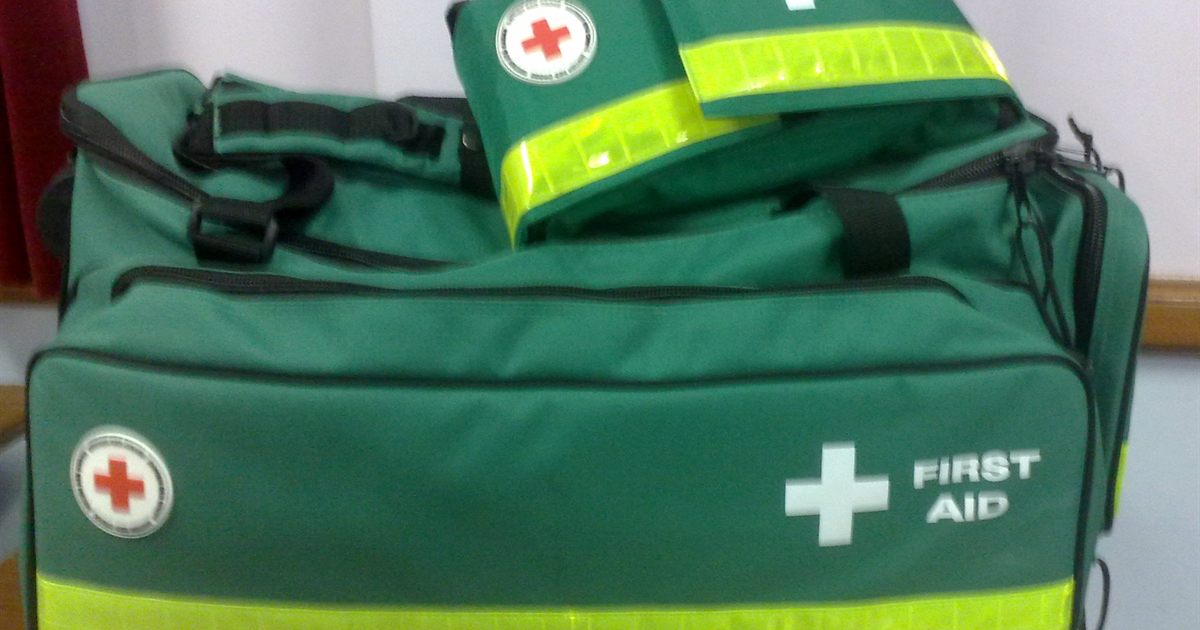
Use British Standard BS 8599-1 workplace kits, sized to the number of people and placed within easy reach of every work area. BS 8599-1 kits come in small, medium and large — a higher-risk site normally uses medium or large kits, and more of them. As a rough guide for higher-risk work:
| Workers per kit | BS 8599-1 kit size |
|---|---|
| Fewer than 5 | Small |
| 5–25 | Medium |
| 25–100 | Large (one per 25 as a guide) |
For the full contents of each size and how many kits to hold, see what should be in a workplace first aid kit. The same higher-risk logic applies to fixed sites — see warehouse first aid requirements and factory first aid requirements, to a vehicle workshop, and to spread-out high-risk work like farms and agriculture. Construction sites commonly add extras that the standard kit doesn't cover, driven by the hazards on site:
- Large trauma / wound dressings for serious bleeds from cuts, crush injuries or falls — many sites now also add a bleed control kit for catastrophic bleeding.
- Burn dressings where there's hot work, cutting or welding.
- Eye wash where dust, cement, chemicals or grinding put eyes at risk — see eyewash station requirements.
- A defibrillator (AED) on larger or remote sites — see are defibrillators a legal requirement at work.
- Cement burn / irrigation supplies — wet cement is corrosive and a common construction injury.
- Cooling means for hot weather — water, shade and cold packs so first-aiders can manage heat exhaustion and heat stroke during outdoor work in summer.
Remote, mobile and spread-out sites
Construction rarely happens in one tidy room. A single site can span several floors, buildings or a long linear job like groundworks or highways, and gangs move around during the day. Provision has to follow the work:
- Give each separate work area its own kit and, where the risk and travel distances justify it, its own first-aider — don't rely on one box in the site cabin.
- Issue travel / personal kits to mobile gangs and anyone driving between sites (see vehicle first aid kit requirements for BS 8599-2).
- For lone or remote workers, provide a personal kit and a reliable way to raise the alarm, and factor in how long an ambulance would realistically take to reach them.
Setting it up: a quick checklist
Pulling it together, first-aid provision on a construction site should cover:
- A written needs assessment treating the site as higher-risk and listing the real hazards.
- Enough FAW first-aiders for the busiest day, with cover for absence.
- BS 8599-1 medium/large kits within reach of every work area, plus burn, eye-wash and trauma extras as needed.
- Arrangements in the construction phase plan and communicated to every contractor on site.
- Clear signage showing where kits, first-aiders and any AED are — see first aid signage requirements.
- Regular checks and restocking, plus an accident book and RIDDOR process for recording and reporting injuries.
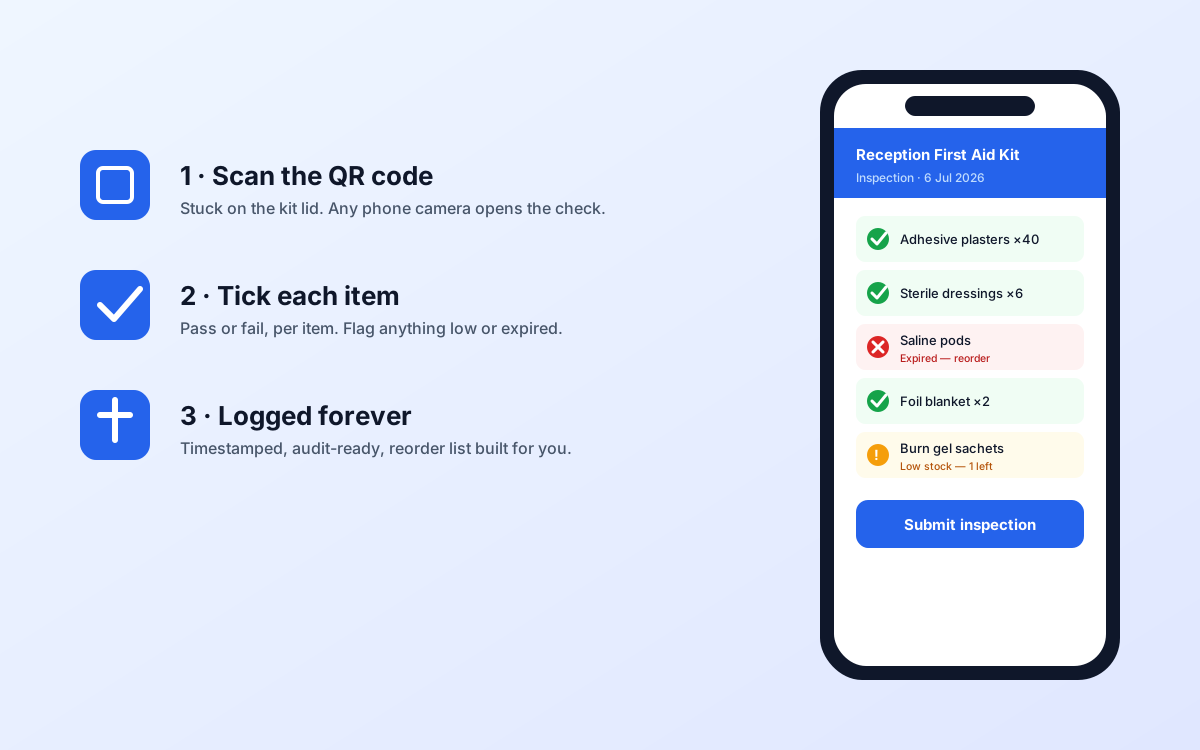
The hard part on construction isn't deciding the provision — it's keeping it true across multiple kits, multiple sites and a workforce that changes weekly. Kits get raided, dressings expire, and when an inspector or client audit lands you need to prove every box was checked. That's exactly what KitCompliance automates: build each site kit from the BS 8599-1 / ISO 45001 suggested list, log inspections in seconds from a phone on site, get reminders before anything lapses, and produce a one-click report per site. See the getting-started guide to set it up.
Frequently asked questions
Is first aid a legal requirement on construction sites?
Yes. The 1981 First-Aid Regulations require adequate and appropriate provision for every worker, and CDM 2015 makes the principal contractor arrange it across the site. As higher-risk work, construction needs more than the office minimum.
How many first-aiders are needed on a construction site?
There's no fixed ratio, but HSE higher-risk guidance points to at least one FAW-trained first-aider for 5–50 workers, and one more per extra 50. Your needs assessment sets the exact number, allowing for shifts and absence.
What first aid kit does a construction site need?
BS 8599-1 kits sized to headcount — usually medium or large — within reach of every work area, plus extras such as burn dressings, eye wash and large trauma dressings based on the site's hazards.
Who is responsible for first aid on a construction site?
The principal contractor coordinates it for the whole site under CDM 2015, but every employer stays responsible for their own workers. Arrangements go in the construction phase plan.