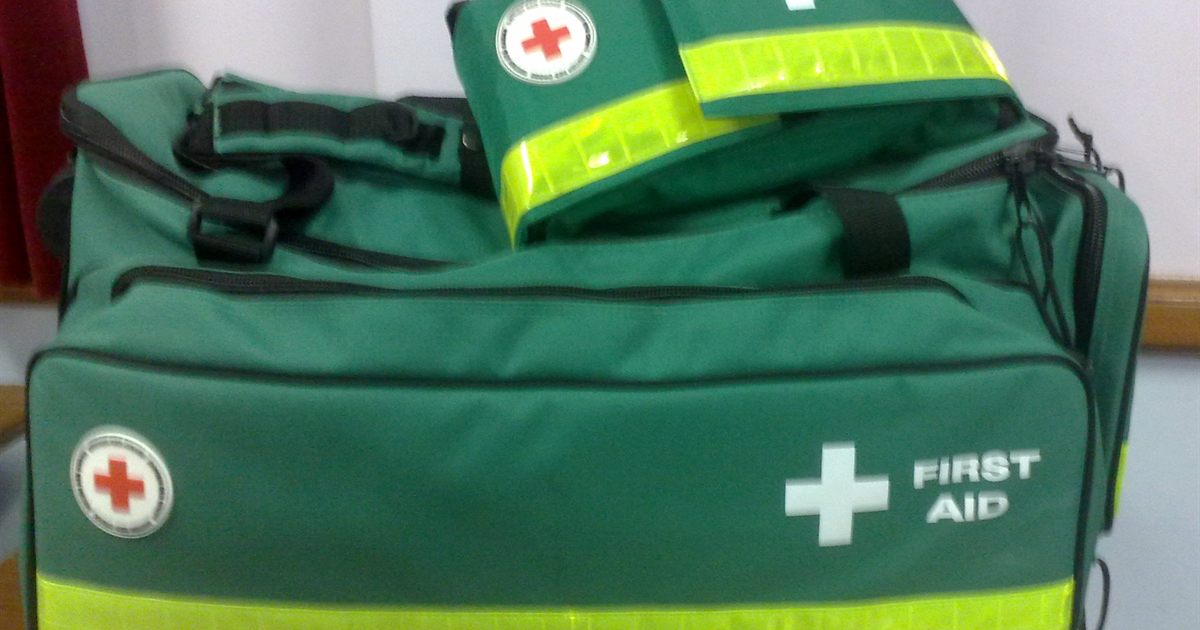
A catastrophic bleed — the kind that follows a deep cut from a blade, a machine, broken glass or a vehicle impact — can kill in three to five minutes. That's faster than an ambulance can usually reach you. The plasters and dressings in a standard workplace first aid kit are not designed to stop a major haemorrhage. A bleed control kit is. This guide covers what one contains, whether your workplace needs it, and how to use it.
What is a bleed control kit?
A bleed control kit (also called a catastrophic bleeding kit or trauma kit) is a purpose-built pack for stopping severe, life-threatening bleeding. Unlike a general first aid kit, which handles everyday cuts, burns and sprains, a bleed control kit contains the specific equipment the emergency services rely on to keep someone alive until they arrive: tourniquets and blood-clotting dressings. It is a supplementary kit — you keep it alongside your standard kit, not instead of it.
The BS 8599-1 Critical Injury Pack
When the British Standard for workplace first aid kits was revised in 2019 (BS 8599-1:2019), it introduced a new supplementary kit: the Critical Injury Pack. This was a direct response to growing awareness of major trauma — from industrial accidents through to terrorist incidents — and the evidence that early bleeding control saves lives. The Critical Injury Pack is the British-Standard version of a bleed control kit, and it's a useful benchmark when you're deciding what to buy. For how the standard governs ordinary kits too, see our guide to BS 8599-1 first aid kit sizes and the different types of first aid kit.
What should a bleed control kit contain?
Contents vary by supplier, but a workplace bleed control kit (or BS 8599-1 Critical Injury Pack) typically includes:
| Item | What it does |
|---|---|
| Tourniquet | Applied high and tight above a limb wound to stop arterial bleeding when direct pressure isn't enough. |
| Haemostatic dressing / gauze | Contains a clotting agent; packed into a deep wound to speed blood clotting where a tourniquet can't be used. |
| Wound packing gauze | Sterile gauze used to fill and apply pressure inside a deep wound cavity. |
| Large trauma / pressure dressing | A big absorbent dressing with built-in pressure to control heavy bleeding. |
| Nitrile gloves | Protect the first-aider from blood-borne infection. |
| Trauma shears | Cut away clothing quickly to expose the wound. |
| Foil (survival) blanket | Keeps the casualty warm and helps treat for shock. |
| Marker pen | Record the time a tourniquet was applied — critical information for the ambulance crew. |
Which workplaces need a bleed control kit?
There's no blanket rule — it comes out of your needs assessment. But the risk of catastrophic bleeding is clearly higher in workplaces with cutting tools, heavy machinery, blades, glass, or vehicles, and on sites a long way from an ambulance. Strongly consider a bleed control kit if you run:
- Construction sites and demolition — power tools, falls, sharp materials.
- Factories and manufacturing — cutting, pressing and moving machinery.
- Warehouses with forklifts, balers and cutting equipment.
- Farms and agriculture, forestry and grounds maintenance — PTO shafts, chainsaws, livestock, remote locations.
- Garages and vehicle workshops, engineering, glazing, and food processing / abattoirs.
- Venues open to the public — many are reviewing bleed control provision in light of the Terrorism (Protection of Premises) Act (Martyn's Law).
Low-risk offices and shops won't usually need one. The point is to decide on the evidence and record why — that's the whole job of the needs assessment.
Training: a kit is only as good as the person using it
This is the part employers most often miss. A standard First Aid at Work (FAW) course teaches severe-bleeding basics but does not usually cover applying a tourniquet or packing a wound with haemostatic gauze in depth. If you provide a bleed control kit, your first-aiders need specific catastrophic-bleeding or trauma training so they can act fast and correctly. Public-access schemes such as citizenAID and "Stop the Bleed"-style courses exist for exactly this. Record who's trained alongside your other first aid training records.
How to treat catastrophic bleeding
If someone is bleeding severely, act immediately — every second counts:
- Call 999 (or send someone to) for an ambulance, and put on gloves.
- Apply firm direct pressure straight onto the wound with a trauma dressing or your gloved hands. This alone stops most bleeding.
- Pack deep wounds to a limb, groin or armpit firmly with haemostatic gauze and keep pressing.
- Apply a tourniquet for a limb wound that won't stop — high and tight above the wound, tighten until the bleeding stops, and write down the time.
- Treat for shock — keep them warm with the foil blanket, reassure them, and monitor breathing. Never remove a tourniquet or packing yourself; leave that to the paramedics.
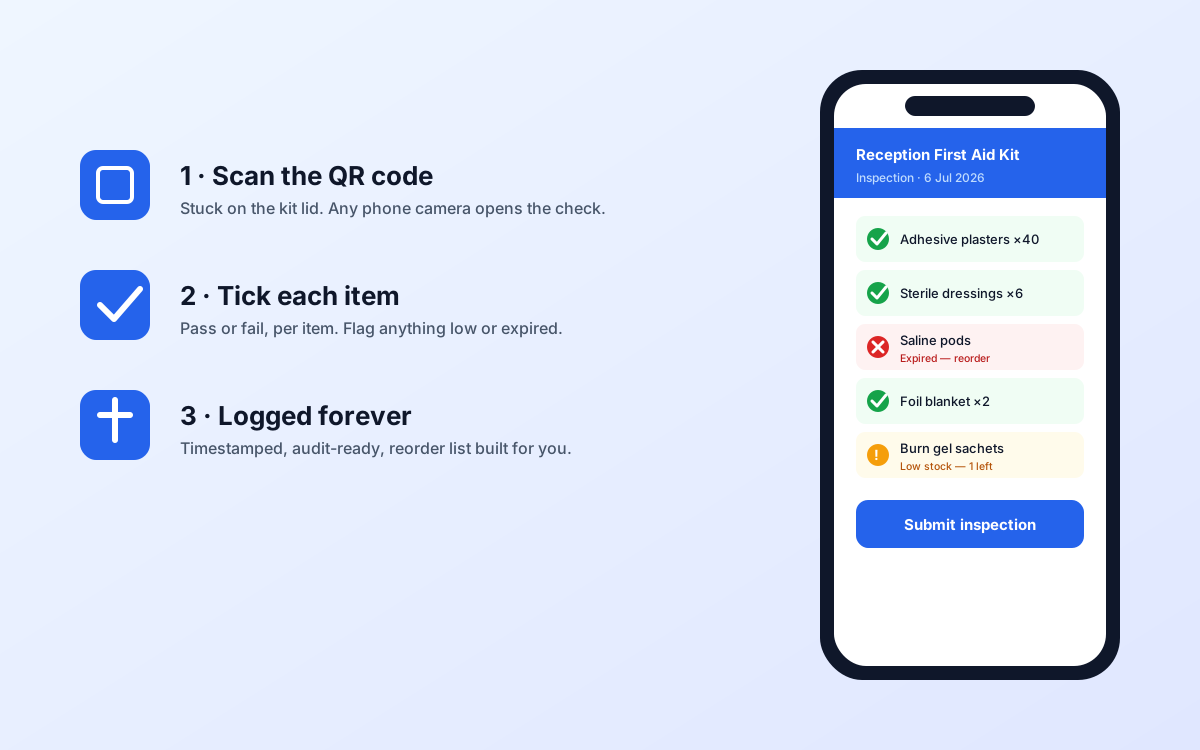
Haemostatic dressings and other sterile items have expiry dates, and a bleed control kit is no use if a tourniquet is missing or a dressing is out of date when you reach for it. That's exactly what KitCompliance is built for: register each bleed control kit and Critical Injury Pack, log inspections in seconds, and get a reminder before anything expires — with a one-click report that proves your provision to an HSE inspector or auditor. See the getting-started guide to set it up.
Frequently asked questions
Are bleed control kits a legal requirement in UK workplaces?
No specific law names them, but the Health and Safety (First-Aid) Regulations 1981 require "adequate and appropriate" provision. If your needs assessment identifies a real risk of catastrophic bleeding — machinery, blades, glass, vehicles, remote sites — a bleed control kit is part of adequate provision and the HSE would expect you to have one.
What is a Critical Injury Pack?
It's the supplementary kit introduced in BS 8599-1:2019 for treating catastrophic bleeding and major trauma. It sits alongside your standard workplace kit and holds a tourniquet, haemostatic dressing, trauma dressings, packing gauze, foil blanket, gloves and shears.
What should a workplace bleed control kit contain?
One or more tourniquets, haemostatic (clotting) dressings or gauze, wound packing gauze, large trauma dressings, nitrile gloves, trauma shears, a foil blanket, and a marker to record tourniquet time.
Do staff need special training to use one?
Yes. A standard FAW course doesn't cover tourniquets or haemostatic dressings in depth. Provide specific catastrophic-bleeding or trauma training so first-aiders can use the kit correctly under pressure.