You can have the right number of first-aiders, the right kits and the right signage — and still fail an audit because you cannot prove your first-aiders are actually qualified and in date. A first aid training record is the evidence that ties your people to valid certificates. This guide covers what the record should contain, whether keeping one is a legal duty, how long to keep it, how GDPR applies, and a template you can copy.
Do you legally have to keep first aid training records?
There is no specific clause in the Health and Safety (First-Aid) Regulations 1981 that says you must maintain a training log, the way the accident book and RIDDOR carry explicit recording duties. But the duty to provide adequate provision is meaningless if you cannot show your first-aiders are competent and current. In practice, a training record is how you discharge the duty: it proves who is trained, to what level, and until when. It is one of the first documents an auditor, insurer or HSE inspector will ask to see alongside your first aid needs assessment and workplace first aid policy. It sits alongside your first aid treatment records — training proves who can treat; the treatment log proves what they did.
What a first aid training record should contain
It does not need to be elaborate. A single row per first-aider, capturing these fields, is enough:
| Field | What to record |
|---|---|
| Name & role | The person, their department and the site or area they cover. |
| Qualification & level | FAW, EFAW, paediatric, or mental health first aid — the exact course, not just "first aid trained". |
| Training provider | Who delivered it (see choosing a training provider), so you can verify the certificate if needed. |
| Certificate date & expiry | Date issued and expiry — normally three years from the course date. |
| Annual refresher dates | Each annual refresher completed between requalifications. |
| Renewal / requalification due | The date you need to book the next course by, with a reminder set ahead of it. |
How to set up a first aid training record
Whether you use a spreadsheet or an app, the steps are the same:
- List everyone with a first aid role — every qualified first-aider and appointed person, with name, department and location.
- Record the qualification and level — the exact course and the provider who delivered it.
- Capture the certificate date and expiry — issue date and the three-year expiry.
- Log annual refreshers so you can show skills were kept current in the years between requalifications.
- Set reminders and review cover — a prompt a few months before each expiry, and a check that the totals still meet your assessment.
How long is a first aid certificate valid?
Both FAW and EFAW certificates last three years from the course date. You must requalify before the certificate expires — if it lapses, the HSE expects a full requalification course rather than a short top-up, and a late gap can leave you below required cover. In the years between, the HSE strongly recommends an annual refresher to keep skills sharp; it is not compulsory, but recording it strengthens your evidence that your first-aiders stayed competent. For what those first-aiders are expected to do on the day, see first-aider duties and responsibilities.
How long should you keep the records, and GDPR
Names, qualifications and certificate dates are personal data, so the record falls under UK GDPR. Hold only what you need, keep it secure, tell staff why you hold it, and set a retention period. Keep a first-aider's record while they hold the role and for a reasonable period afterwards — commonly three to six years — so you can evidence the cover that was in place if an incident is investigated long after the event. Training records are routine employment data, not special-category health data, but handle them under your normal data-protection policy and delete them when the retention period ends.
A simple first aid training matrix template
Copy this into a sheet, one row per first-aider, and sort by the expiry column so the next renewal is always at the top:
| Column | Example |
|---|---|
| Name | … |
| Site / area covered | … |
| Qualification (FAW / EFAW / other) | … |
| Training provider | … |
| Certificate issued | … |
| Certificate expires | … |
| Last annual refresher | … |
| Renewal booked? (Y/N) | … |
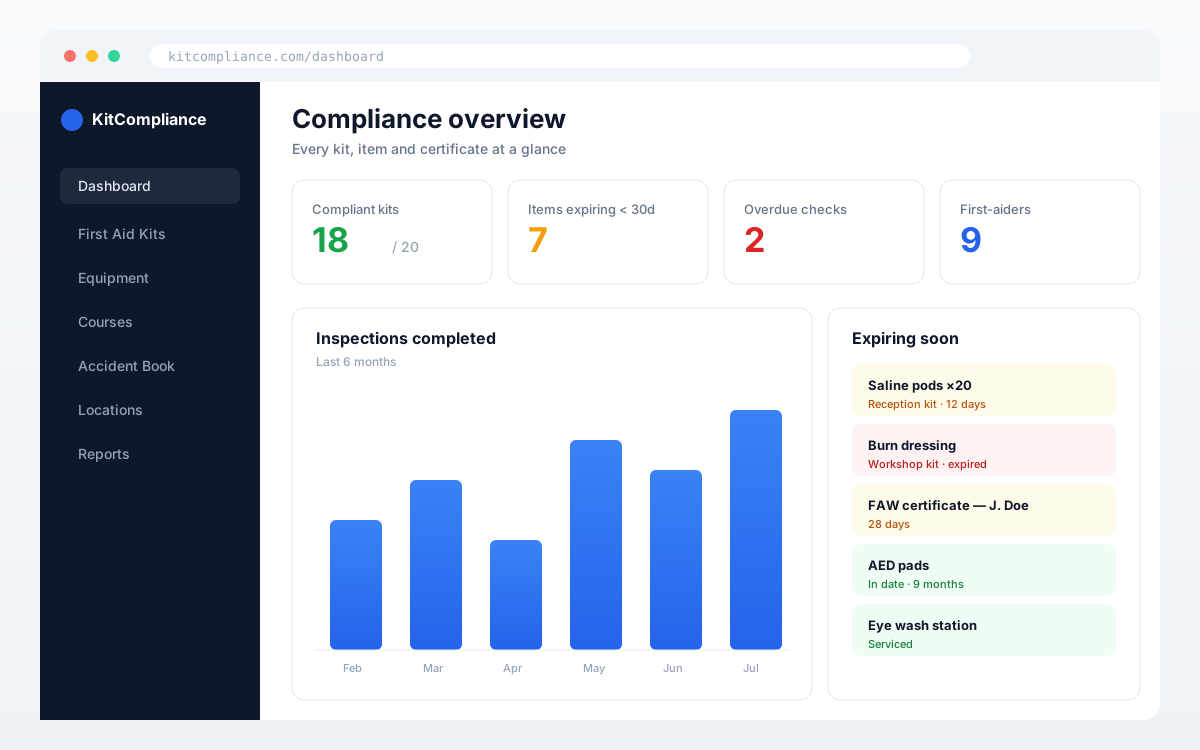
A spreadsheet is fine until a certificate quietly expires and nobody notices. That is exactly where most workplaces slip. With KitCompliance you record each first-aider's qualification and expiry alongside your kits and inspections, get reminders before any certificate lapses, and produce a one-click report that proves your training and provision together. See the getting-started guide to set it up.
Frequently asked questions
Do I legally have to keep first aid training records?
There is no regulation that says "keep a training log", but the 1981 Regulations require adequate provision and the HSE expects your first-aiders to hold valid, in-date certificates. A training record is how you evidence that — without it you cannot show your provision is adequate.
How long should I keep first aid training records?
Keep a first-aider's records while they hold the role plus a reasonable period afterwards — commonly three to six years — so you can evidence past cover if an incident is investigated later. Set a retention period and delete when it passes.
How long is a first aid at work certificate valid?
Both FAW and EFAW certificates are valid for three years from the course date. Requalify before expiry, and record the HSE-recommended annual refreshers in between.
Are first aid training records covered by GDPR?
Yes. They are personal data, so hold only what you need, keep it secure, explain why you hold it, and delete it when your retention period ends. They are routine employment data rather than special-category health data.