Running first aid for one workplace is simple enough. Running it for ten branches, three warehouses and a fleet of vans is where employers come unstuck — not because the rules change, but because the same rules now apply at every location, independently. A chain of shops, a care group, a facilities contractor or a multi-depot logistics firm all face the same trap: head office assumes each site is covered, each site assumes head office is on it, and a first aid kit somewhere goes a year without a check. This guide covers how to keep first aid compliant and provable across every site you run.
The core rule: provision is decided per site
The Health and Safety (First-Aid) Regulations 1981 require every employer to provide "adequate and appropriate" first-aid equipment, facilities and personnel. That duty attaches to the workplace, not the company. A 6-person satellite office and a 90-person distribution centre are two different workplaces with two different answers — even under the same employer, on the same insurance, in the same brand.
So the first thing to accept is that you cannot write one assessment and stamp it across the estate. What you can do is run the same assessment process at each location and roll the results up. For the underlying method — the five factors HSE expects you to weigh — see how to do a first aid needs assessment.
Why multi-site first aid slips
| The failure | What actually happens |
|---|---|
| Split responsibility | Head office and site managers each assume the other owns kit checks and first-aider cover. No one does. |
| No line of sight | Records live in a drawer at each site. Head office has no way to see which kits are stocked or which certificates have expired. |
| Cover gaps on small sites | A branch with one first-aider loses all cover the moment that person is on holiday, off sick or leaves. |
| Certificates expiring unseen | First aid certificates last three years. Across dozens of people on different renewal dates, they lapse quietly without a central tracker. |
| Inconsistent kits | Every site buys its own kit, so contents, sizes and standards vary and an audit finds a different gap at each one. |
A framework for compliance across sites
The workable model for any multi-site business is standardise centrally, execute locally, monitor from the top. In practice that means five things:
- One assessment per site — run the same needs assessment at every location and file each one. This sets each site's number of first-aiders, kits and any extra equipment.
- A group baseline specification — agree a minimum kit standard (BS 8599-1), an inspection frequency and a record format that apply everywhere, so a low-risk site can't drift below a sensible floor. Sites then add to the baseline where their assessment demands it (a catering kit, an eye wash station, a defibrillator).
- A named responsible person at each site — someone on the ground who runs inspections and restocking, plus a central owner who holds the overall duty. Delegation is fine; the employer's legal responsibility never transfers (see who is responsible for first aid at work).
- One central register — every kit, every first-aider and every certificate expiry across all sites in one view, so cover gaps and expiries surface before they become breaches.
- A review schedule — revisit each site's assessment at least annually and after any change (a new site, a refit, a headcount jump, an incident), and keep dated evidence you can pull for any location.
Standardise the paperwork, not the answer
The mistake groups make is trying to make every site identical. You don't want identical provision — you want an identical process producing site-appropriate provision. Give every location the same needs-assessment template, the same inspection checklist, the same restocking rules and the same workplace first aid policy to work from. Then let each site's assessment set its own numbers. When an auditor or an HSE inspector visits any branch, they see the same clear, dated records — that consistency is itself evidence of a managed system, and it maps straight onto the workplace first aid compliance checklist you'd run at a single site.
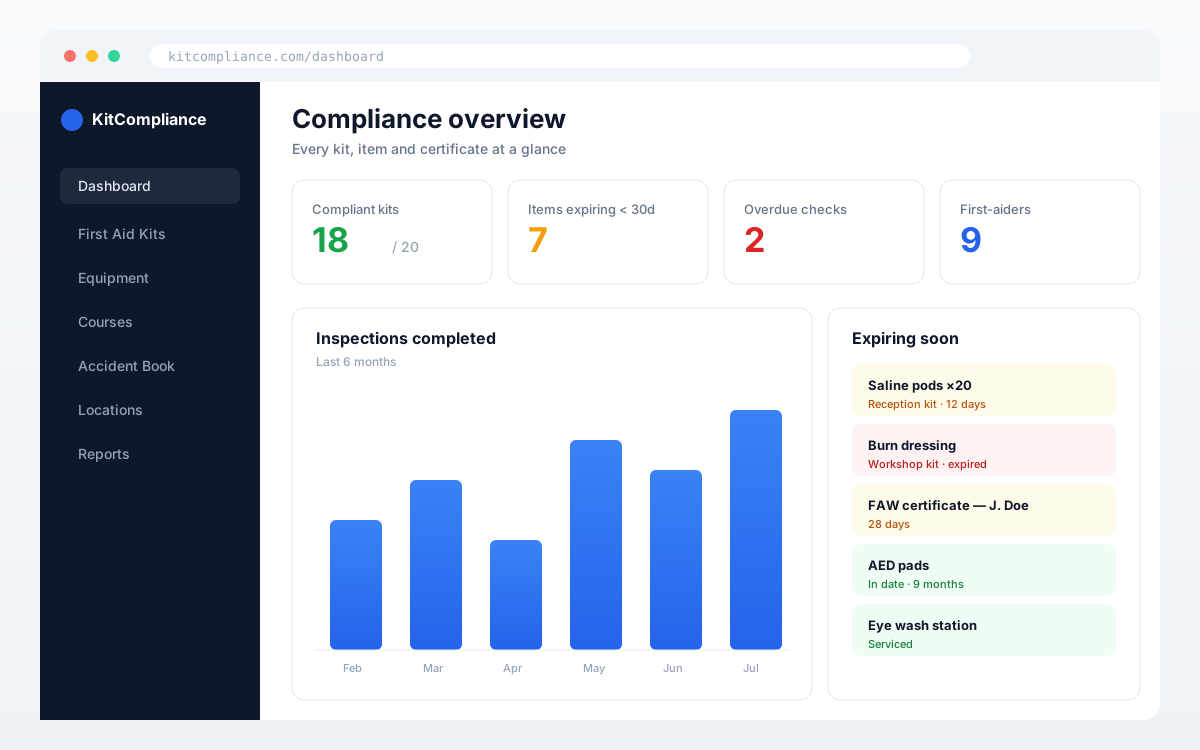
This is exactly the problem KitCompliance was built for. Set up each site once, build its kits from the ISO 45001 suggested list, and record inspections in seconds from any location. Head office sees a single dashboard across every site — which kits are stocked, which inspections are due, which first aid certificates are about to expire — with reminders before anything lapses and a one-click report that proves provision for any branch. No more chasing spreadsheets from twelve managers. See the getting-started guide to set up your first site.
Frequently asked questions
Can one first aid needs assessment cover all my sites?
No. Provision is decided per workplace, so each site needs its own assessment — headcount, hazards, layout and access to emergency services all differ. Use one standard template and process across the group, but complete and record the assessment for every site.
Do first-aiders count across sites or per site?
Per site. A first-aider must be able to reach a casualty quickly, so cover is counted at each location, never pooled. Every site needs enough trained people on site during working hours, with cover for absence.
Who is responsible for first aid across a multi-site business?
The employer, for every site. Most groups appoint a central health-and- safety owner who sets the standard and monitors it, plus a named responsible person at each site for day-to-day checks. Delegation doesn't move the legal duty.
How do I keep first aid records consistent across locations?
Standardise the format — one kit specification, one inspection checklist, one review cadence and one place to store records — and use a shared register or app so you can see and evidence every site's status at a glance.