Your first aid needs assessment works out what your workplace needs. A first aid policy is the short standing document that writes those decisions down — who the first-aiders are, where the kits live, what happens in an emergency — so staff know the arrangements and you can prove them. It's one of the first documents an auditor or inspector asks to see, and it's quick to produce. This guide covers what to include and gives you a template you can copy.
Is a first aid policy a legal requirement?
There's no single regulation that names a "first aid policy" as a mandatory document. Two duties combine to make one the practical norm:
- The Health and Safety (First-Aid) Regulations 1981 require every employer to make "adequate and appropriate" arrangements for first aid. You have to be able to show what those arrangements are.
- The Health and Safety at Work etc. Act 1974 requires any employer with five or more employees to have a written health and safety policy. First-aid arrangements are part of that — either as a section of the main policy or as a standalone first aid policy it refers to.
So even a small business under five staff benefits from writing its arrangements down, and any larger employer effectively needs to. It also settles the everyday question of who is responsible for first aid at work before an incident forces the answer.
Policy vs needs assessment: what's the difference?
They're easy to confuse, but they do different jobs:
| Document | What it does |
|---|---|
| First aid needs assessment | The working out — weighs your hazards, headcount and site to decide how many first-aiders, kits and pieces of equipment you need. |
| First aid policy | The standing record — states the arrangements that resulted, names the people, and sets out the procedures staff follow. |
The assessment feeds the policy. Do the needs assessment first; the policy then simply documents its conclusions and the day-to-day procedures around them.
What to include in a first aid policy
Keep it short and practical — one to three pages is plenty for most workplaces. Cover these sections:
| Section | What to put in it |
|---|---|
| Purpose & scope | Why the policy exists (to meet the 1981 Regulations) and who it covers — employees, and where relevant visitors, contractors and members of the public. |
| Roles & responsibilities | The employer's duty, the person who owns first aid, and the named appointed persons and trained first-aiders, with their qualification and certificate expiry. |
| First aid provision | The number and location of kits, any AEDs or eye-wash stations, and how staff are told where they are (see first aid signage). |
| Emergency procedure | What to do when someone is injured or ill — summon the nearest first-aider, call 999 if needed, and where the assembly or treatment point is. |
| Recording & reporting | How incidents are logged in the accident book and which events are reportable under RIDDOR. |
| Review | Who signs it off, the date, and when it will be reviewed (at least annually). |
How to write it, step by step
- Start from your needs assessment. Everything in the policy should trace back to what it identified.
- State the purpose and who it covers. One short paragraph naming the 1981 Regulations and the people in scope.
- Name roles and responsibilities. List the employer's duty and every appointed person and first-aider, with certificate expiry dates so gaps are visible.
- Record the provision. Kits, AEDs, eye-wash — how many, where, and how signposted.
- Describe the procedures. Emergency response, accident-book recording and RIDDOR reporting.
- Sign, share and set a review date. Date it, tell staff, and diarise the next review.
A simple first aid policy template
Copy this into a document, fill in each row, sign and date it, and keep it with your health-and-safety records:
| Section | Your entry |
|---|---|
| Organisation / site name | … |
| Purpose & scope (who it covers) | … |
| Person responsible for first aid | … |
| Appointed persons (name / location) | … |
| First-aiders (name / qualification / expiry) | … |
| First aid kits (number / locations) | … |
| Additional equipment (AED, eye wash, etc.) | … |
| Emergency & calling-for-help procedure | … |
| Accident book & RIDDOR arrangements | … |
| Approved by / date / review date | … |
Keeping the policy true
The hard part isn't writing the policy — it's keeping it accurate. The moment a first-aider leaves, a certificate expires or a kit runs low, the policy on the shelf stops matching reality, and your provision may quietly drop below what your assessment set. Review it at least annually and straight after any change — a quick "reviewed, no change" note each year is fine; the point is to show it's live.
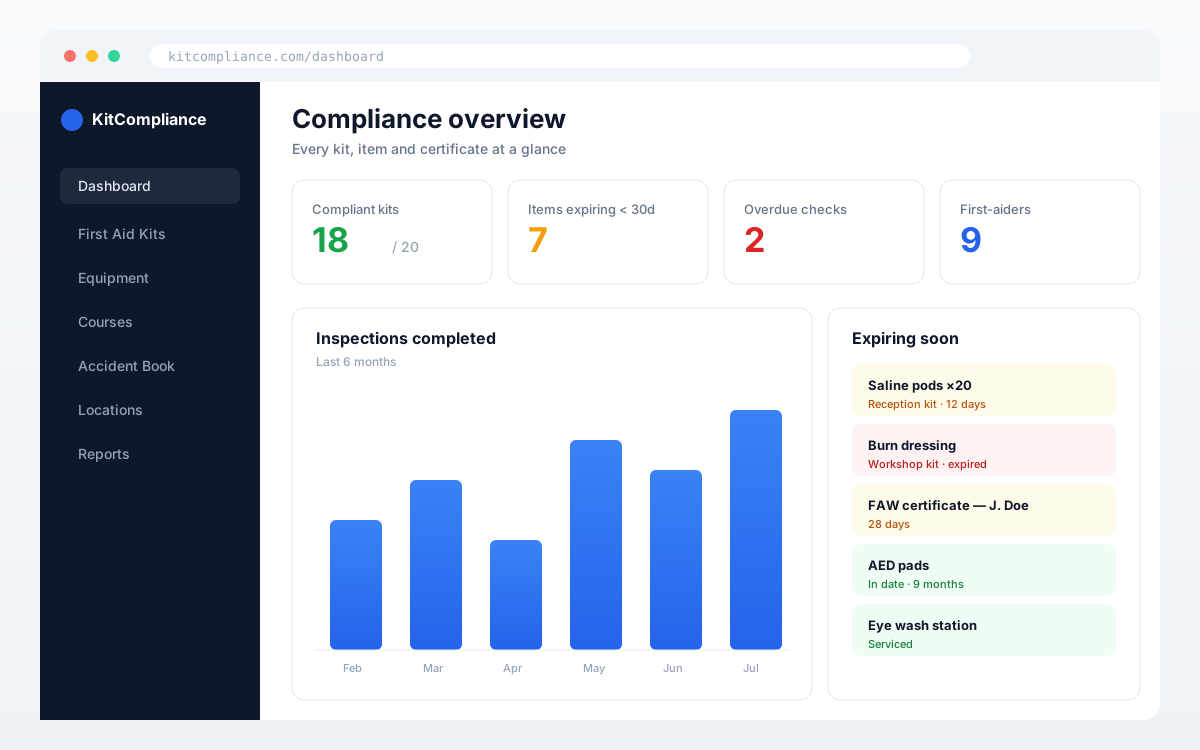
A policy is only as good as the arrangements behind it. KitCompliance keeps the live detail your policy points to — every kit stocked, every first-aider certificate in date, every inspection logged — and reminds you before anything lapses, with a one-click report that proves your provision. See the getting-started guide to set it up.
Frequently asked questions
Is a workplace first aid policy a legal requirement?
No single law names it, but the 1981 Regulations require adequate first-aid arrangements and the Health and Safety at Work Act requires a written health-and-safety policy for employers with five or more staff. A first aid policy is how you record and evidence your arrangements.
What should a first aid policy include?
Purpose and scope, roles and responsibilities, the number and location of kits and AEDs, emergency and reporting procedures, accident-book and RIDDOR arrangements, and a review date.
What's the difference between a first aid policy and a needs assessment?
The needs assessment works out what provision you need; the policy is the standing document that records those decisions and the procedures around them. The assessment feeds the policy.
How often should a first aid policy be reviewed?
At least once a year, and immediately after any material change — a new hazard, a change in headcount or site, a first-aider leaving, a certificate expiring, or an incident that revealed a gap.