Not every workplace needs a trained first-aider — but every workplace needs someone in charge if a person is injured or falls ill. That someone is the appointed person. It's the minimum level of first aid cover the law expects, and one of the most misunderstood roles in workplace health and safety. This guide explains exactly what an appointed person does, whether they need training, and how to tell if an appointed person is enough for your site or whether you actually need a qualified first-aider.
What is an appointed person?
An appointed person is someone an employer nominates to take charge of the first aid arrangements when someone is injured or becomes unwell at work. Under the Health and Safety (First-Aid) Regulations 1981, every employer must provide "adequate and appropriate" first aid — and HSE guidance is clear that even the smallest, lowest-risk workplace must, as an absolute minimum, have an appointed person available whenever people are at work.
The key thing to understand is what an appointed person is not: they are not a first-aider. They aren't required to hold any first aid qualification, and they should never attempt treatment they haven't been trained to give. Their job is to manage the situation and get the right help, fast.
What are an appointed person's duties?
The role has three core responsibilities:
- Take charge in an emergency — stay calm, keep the casualty and others safe, and coordinate what happens next until help arrives.
- Call the emergency services — dial 999, give clear information about the casualty and location, and make sure the ambulance can find its way in.
- Look after the first aid equipment — make sure every first aid kit is stocked, in date and accessible, and that any restocking happens promptly.
That third duty is where appointed persons most often get caught out: taking charge is easy to explain, but keeping every kit stocked, in date and provable is an ongoing job that quietly slips when nobody owns it (more on that here).
Does an appointed person need training?
No — there is no legal requirement for an appointed person to hold a first aid certificate. This is the single biggest difference between an appointed person and a first-aider, and the point employers most often get wrong.
That said, training is a good idea. Many providers run a short appointed person course — typically around half a day — covering emergency action, what to do while waiting for an ambulance, and basic life support such as CPR. It doesn't make the person a qualified first-aider, but it means the person "in charge" actually knows what to do in the first few minutes, which is exactly when it matters. It's optional, not a certificated EFAW or FAW qualification.
Appointed person vs first aider
The two roles sit at different levels of provision. Here's how they compare (for the full role, see first aider duties and responsibilities):
| Appointed person | First-aider (EFAW / FAW) | |
|---|---|---|
| Training required | None required (optional ½-day appointed-person course) | Certificated 1-day EFAW or 3-day FAW course, valid 3 years |
| Can give first aid treatment? | No — basic emergency action only | Yes, to the level they're trained |
| Call 999 & take charge | Yes | Yes |
| Look after the first aid kit | Yes | Yes |
| When it's appropriate | Small, low-risk workplaces | Higher-risk work, larger workforces, or wherever the needs assessment calls for it |
When is an appointed person enough?
An appointed person is only appropriate at the low end of risk. HSE guidance gives a widely used rule of thumb for the minimum provision by risk level and headcount — but remember the real answer always comes from your needs assessment:
| Risk level | Numbers employed | Suggested minimum provision |
|---|---|---|
| Low (offices, shops) | Fewer than 25 | At least an appointed person |
| Low | 25–50 | At least one EFAW-trained first-aider |
| Low | More than 50 | One EFAW/FAW first-aider, plus one more per extra 100 employees |
| Higher (warehousing, manufacturing, catering) | Fewer than 5 | At least an appointed person |
| Higher | 5–50 | At least one EFAW or FAW first-aider (as appropriate) |
| Higher | More than 50 | One FAW first-aider, plus one more per extra 50 |
So an appointed person covers the smallest, lowest-risk situations only. If your work involves machinery, chemicals, working at height, driving or catering — or you employ more than a handful of people — you almost certainly need a trained first-aider. For a full breakdown by headcount, see how many first aiders you need, and for who carries the legal duty overall, see who is responsible for first aid at work.
How to put an appointed person in place
- Confirm one is enough. Run your needs assessment first. An appointed person is only defensible if the assessment shows genuinely low risk and small numbers.
- Choose a reliable person who is normally on site during working hours and willing to take charge in an emergency.
- Brief them on the three duties — take charge, call 999, look after the kit — and make clear they must not attempt treatment they aren't trained for.
- Give them the tools: a stocked first aid kit, the location of every kit and AED, and emergency contact information. Consider the short appointed-person course.
- Arrange cover and record it. Name enough people that one is always available, and write the arrangement into your needs assessment so you can evidence it.
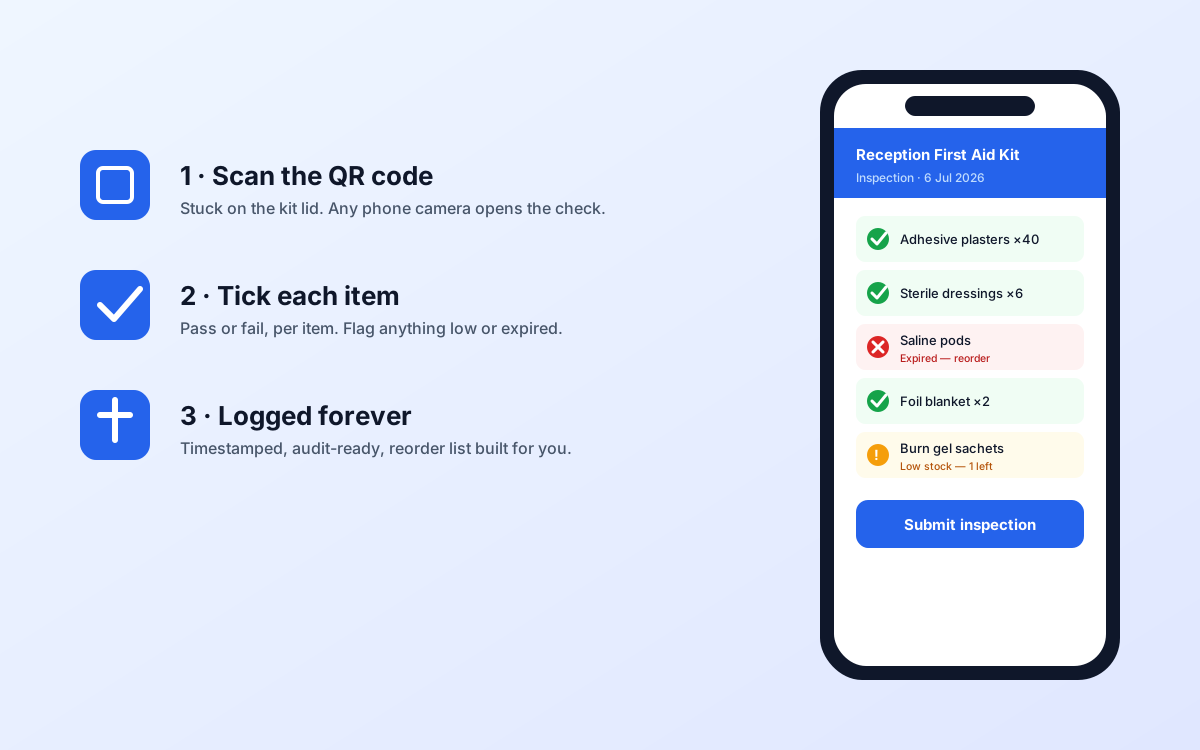
One duty follows the appointed person around no matter how small the workplace: keeping the first aid equipment stocked, in date and ready. That's exactly what KitCompliance takes off their plate — build each kit from the suggested contents list, record inspections in seconds, and get reminders before anything expires, with a one-click report that proves your provision. See the getting-started guide to set it up.
Frequently asked questions
Does an appointed person need first aid training?
No. There's no legal requirement for an appointed person to hold a first aid qualification. Their role is to take charge, call the emergency services and manage the kit — not to treat casualties. A short (usually half-day) appointed-person course covering emergency action and CPR is optional but sensible.
Can an appointed person give first aid?
They should not attempt first aid they haven't been trained to give. They can take basic emergency action — call 999, keep the casualty safe, and give CPR if trained — but where casualties are likely to need hands-on treatment you need a qualified first-aider instead.
What's the difference between an appointed person and a first aider?
A first-aider holds a current EFAW or FAW certificate and can treat injuries to that level. An appointed person holds no required qualification and only takes charge, calls for help and looks after the kit. Appointed persons suit small, low-risk workplaces only.
How many appointed persons do I need?
At least one available whenever anyone is at work. Because the role can't be left uncovered, most employers name two or more so there's always someone on site through breaks, holidays and sickness — see first aid cover during holidays and staff absence.