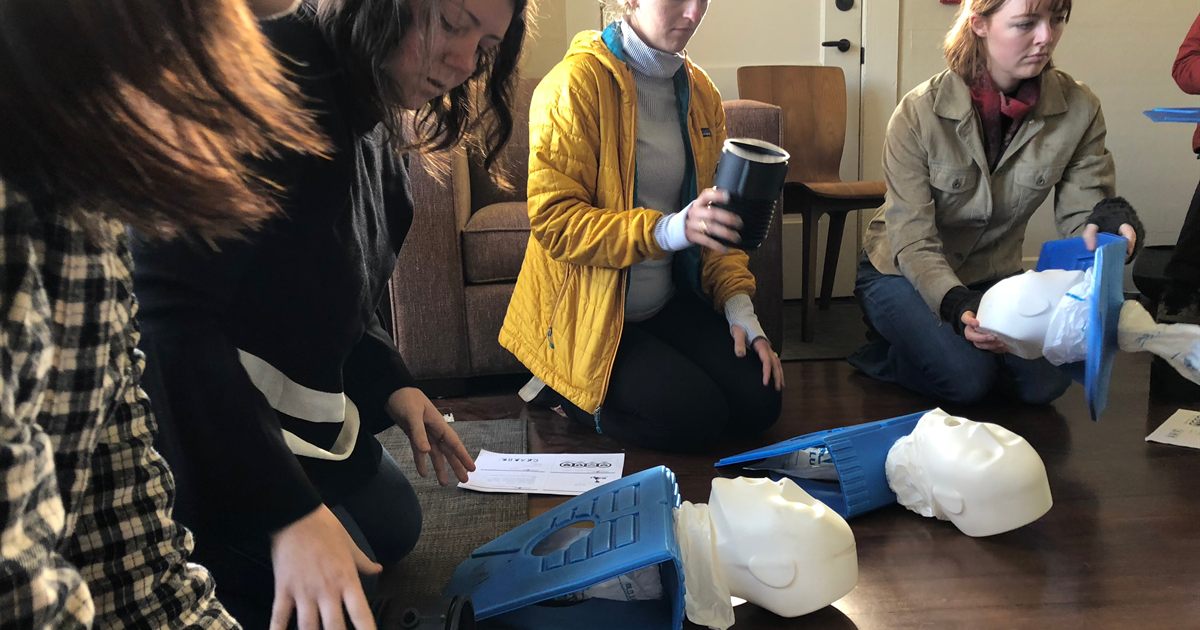
The first thing most small employers ask about first aid is: "do I actually need to do all this with only a few staff?" The honest answer is that the law applies to every employer regardless of size — but for a small, low-risk business it usually adds up to far less than people fear. No dedicated first aid room, often no formal first-aider, and a single kit on the wall. This guide sets out exactly what a small UK business needs, and what you can safely skip.
Does the law apply to small businesses?
Yes. The Health and Safety (First-Aid) Regulations 1981 require every employer to provide "adequate and appropriate" first-aid equipment, facilities and people — from a one-person shop to a factory. There is no small-employer exemption. What changes with size and risk is how much you need, not whether you need it. For a small low-risk workplace, "adequate and appropriate" is deliberately light.
The three things nearly every small business needs
| What | What it means for a small business |
|---|---|
| A first aid kit | At least one suitably stocked BS 8599-1 kit within easy reach of everyone. A small kit covers most low-risk sites of up to 25 people. |
| An appointed person | Someone to take charge in an emergency, call the ambulance and look after the kit. No formal training is required — see appointed person duties. |
| Information for staff | Tell everyone where the kit is and who the appointed person or first-aider is. A single first-aid notice on the wall does the job. |
Do you need a trained first-aider?
This is the question that worries most small employers, and the answer for a genuinely low-risk business is often "no". As a widely used HSE rule of thumb (your assessment sets the exact number — see how many first-aiders you need):
- Low-risk, fewer than 25 staff (small office, shop, professional practice): an appointed person is usually enough.
- Low-risk, 25–50 staff: at least one EFAW-trained first-aider (a one-day course).
- Higher-risk work (catering, workshops, warehousing, machinery) — even with only a handful of people: consider a FAW-trained first-aider (three-day course) regardless of headcount.
So a five-person marketing agency probably needs no formal first-aider, while a five-person joinery workshop likely does. Risk, not just size, is the deciding factor.
Self-employed and sole traders
If you are genuinely self-employed and work alone, the Regulations still require provision "adequate for your own work" — in practice a personal first aid kit matched to your hazards (a vehicle kit if you drive for work, for example). The moment you employ anyone — even part-time, casual or family — the full employer duties above apply to them. For the detail on the sole-trader duty, kit and the hiring threshold, see first aid requirements for the self-employed.
What small businesses can usually skip
Being clear about what you don't need is as useful as knowing what you do:
- A first aid room — only expected on larger or higher-hazard sites (see first aid room requirements).
- A defibrillator — not legally required, though increasingly recommended and worth considering if you're remote from emergency services.
- Multiple first-aiders — one, or none, may be correct for a small low-risk team.
- Registering with anyone — there is no first-aid register to join and no form to file; you just have to be able to show what you decided and why.
Keeping it compliant over time
Small businesses rarely fail the "do we have a kit?" test — they fail the "is it still stocked and in date?" one. Plasters get used, items reach their expiry date, and nobody notices until it matters. Set a simple routine to check the kit, replace what's missing, and keep a dated record of each check plus any training certificates.
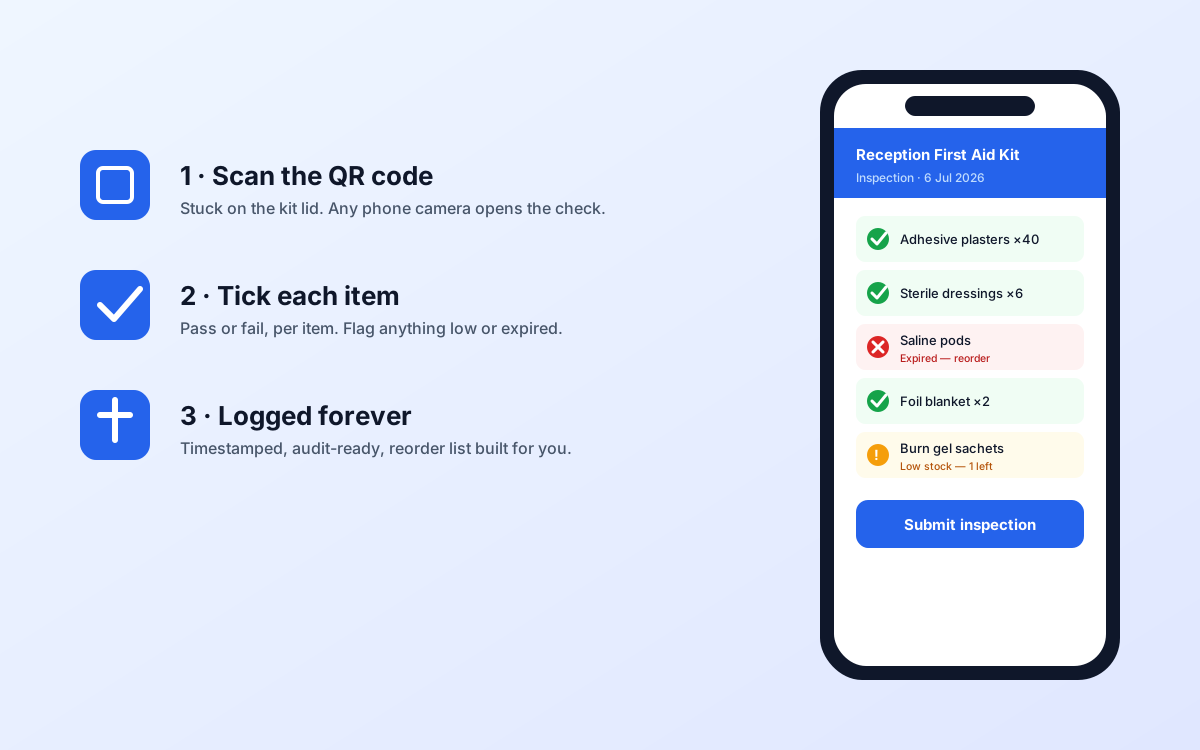
That record-keeping is exactly where a small business is most exposed and where KitCompliance helps most: build your kit from the BS 8599-1 / ISO 45001 suggested list, log an inspection in seconds from your phone, and get a reminder before anything expires — with a one-click report that proves your provision if you're ever asked. No spreadsheet, no clipboard. See the getting-started guide to set it up in minutes.
Frequently asked questions
Does a small business legally need a first aider?
Not always. There's no headcount below which first-aid law stops applying, but a small, low-risk business with fewer than 25 employees usually only needs an appointed person, not a trained first-aider. A trained first-aider is needed where the team is larger or the work is higher-risk. Your needs assessment decides which applies.
What first aid do I need for fewer than 10 employees?
As a minimum: a suitably stocked first aid kit, an appointed person to take charge and look after it, and information for staff on the arrangements. You don't have to send anyone on a course unless your assessment shows the risk requires it.
Do self-employed people need first aid provision?
If you work alone and are genuinely self-employed, you must have provision adequate for your own work — usually a personal kit suited to your hazards. If you employ anyone at all, the full employer duties apply to them.
How much does first aid compliance cost a small business?
Modest. A compliant BS 8599-1 kit is roughly £20–£40, and an EFAW or appointed-person course, if you choose to train someone, is a half to full day. The ongoing cost is really just keeping kits stocked and records current — which is where a simple system pays off.