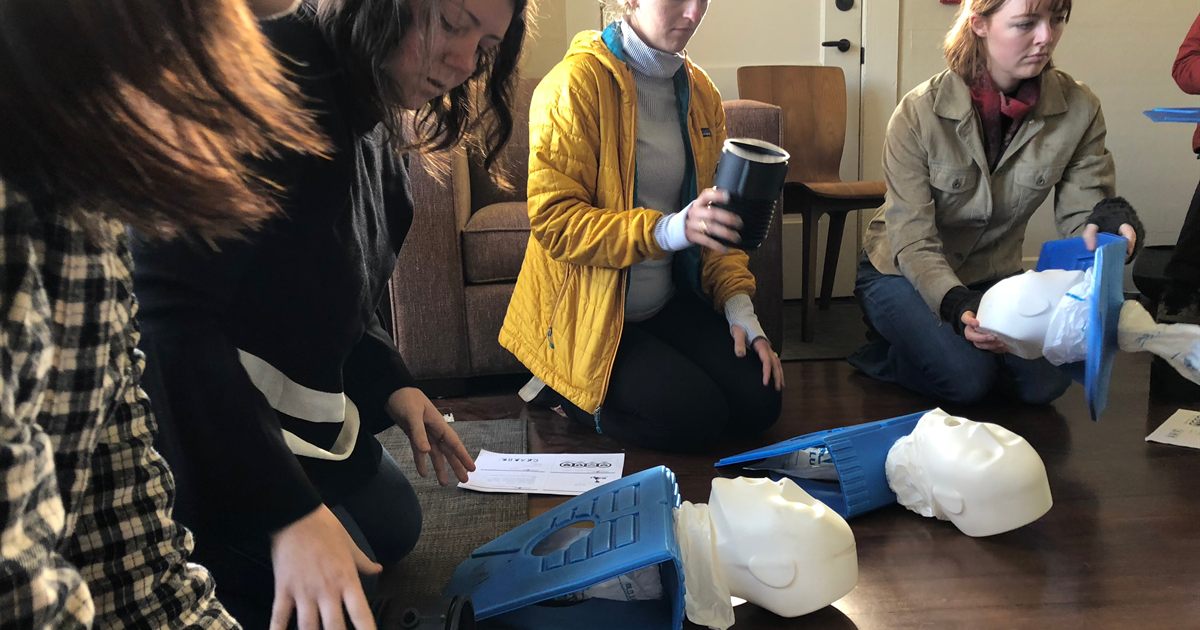
A workplace first aid certificate lasts three years — but skills fade long before that. That's why the HSE recommends a short annual refresher in the two years between requalification courses. It isn't a legal duty in its own right, but it's one of the clearest ways to show your first-aiders are still competent, and it costs very little. This guide explains what the refresher covers, who needs it, and how it fits alongside the three-yearly requalification.
Is annual refresher training a legal requirement?
No. The Health and Safety (First-Aid) Regulations 1981 require "adequate and appropriate" provision, and HSE guidance is explicit that this includes keeping first-aiders competent — but it stops short of mandating an annual course. What the HSE actually says is that it strongly recommends first-aiders attend a refresher of around half a day in each of the two years between their full three-yearly course.
In practice that recommendation carries weight. If a first-aider hasn't practised CPR in eighteen months and something goes wrong, "we only did the legal minimum" is a weak position. The refresher is cheap insurance for skills that genuinely decay — and good evidence of a serious approach to first aid provision.
How it fits with the three-year cycle
A qualification and its refreshers work on a simple rhythm. The full course sets the clock; the refreshers keep skills alive in between:
| When | What happens | Typical length |
|---|---|---|
| Year 0 | Full course — FAW or EFAW — certificate issued, valid 3 years | 1–3 days |
| Year 1 | Annual refresher (skills update) | ~3 hours |
| Year 2 | Annual refresher (skills update) | ~3 hours |
| Year 3 | Requalification course before the certificate expires — clock resets | 1–2 days |
What the annual refresher covers
A refresher concentrates on the skills that fade fastest without practice — the "perishable" ones — rather than re-teaching the whole syllabus. A typical half-day covers:
- CPR — chest compressions and rescue breaths, practised on a manikin.
- Using an AED — how and when to apply a defibrillator, if you have one on site.
- The recovery position and managing an unresponsive casualty.
- Choking, bleeding and shock — the highest-stakes everyday emergencies.
- Workplace-specific risks — for example burns in catering, eye injuries where eye wash is needed, or machinery injuries in manufacturing.
Good practice is to shape the session around what your first-aiders actually face day to day. The hazards in your needs assessment are the natural checklist.
Who needs it?
Annual refreshers are for people holding a current FAW or EFAW certificate and acting as workplace first-aiders. It's part of keeping them competent for their first-aider duties. An appointed person — who isn't a trained first-aider — doesn't requalify or refresh in the same way, although basic awareness is still worthwhile. If you're unsure who in your business should hold what, see how many first-aiders you need.
How to run it — five practical steps
- Diarise it each year. Book a session for each first-aider in years one and two of their certificate, before skills drift.
- Cover the perishable skills. CPR, AED use and the recovery position first — these are the ones that decay.
- Add your workplace's own risks. Tailor part of the session to the hazards and equipment your first-aiders meet on site.
- Record attendance. Note the date, who attended and what was covered, so you can evidence it later — ideally alongside your first aid training records.
- Track the certificate expiry. Keep the three-year date visible so the full requalification is booked in time — a lapsed certificate can't be "refreshed" back to life.
Cost and delivery
Because it's short, an annual refresher is inexpensive — often a fraction of the full course, and frequently delivered on-site to a group, or increasingly as a blended online-plus-practical session. When you're choosing who runs it, the same due-diligence applies as for any course: see choosing a first aid training provider for what to check. Whoever delivers it, keep the certificate of attendance with your first aid records.
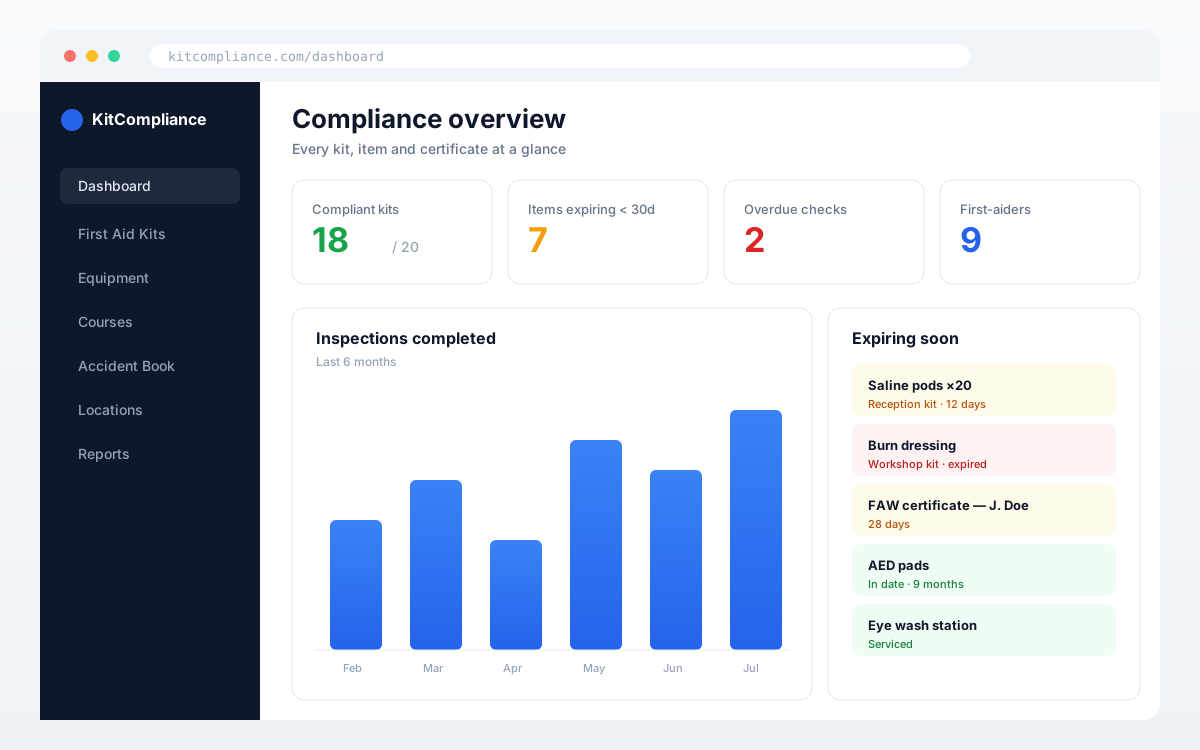
The hardest part of refresher training isn't the training — it's remembering it's due. Certificates expire quietly, refreshers slip a year, and the gap only shows up when someone checks. That's what KitCompliance is built to prevent: record each first-aider's certificate and expiry date, get reminders before anything lapses, and pull a one-click report that proves your people — and your kits — are in date. See the getting-started guide to set it up.
Frequently asked questions
Is annual first aid refresher training a legal requirement?
No — it isn't legally mandated, but the HSE strongly recommends a refresher of around half a day in each of the two years between the three-yearly requalification. It keeps perishable skills like CPR sharp and evidences a serious approach to competence.
How long is a first aid annual refresher course?
About three hours — roughly half a day. It updates existing skills rather than teaching them from scratch, so it's far shorter than the full FAW (three days) or EFAW (one day) courses.
Does an annual refresher extend my first aid certificate?
No. The certificate is valid for three years whatever refreshers you do. You still need to complete a full requalification course before it expires to stay qualified.
Who needs to do first aid refresher training?
Anyone acting as a workplace first-aider on a current FAW or EFAW certificate. Appointed persons don't refresh or requalify in the same way, though basic awareness still helps.