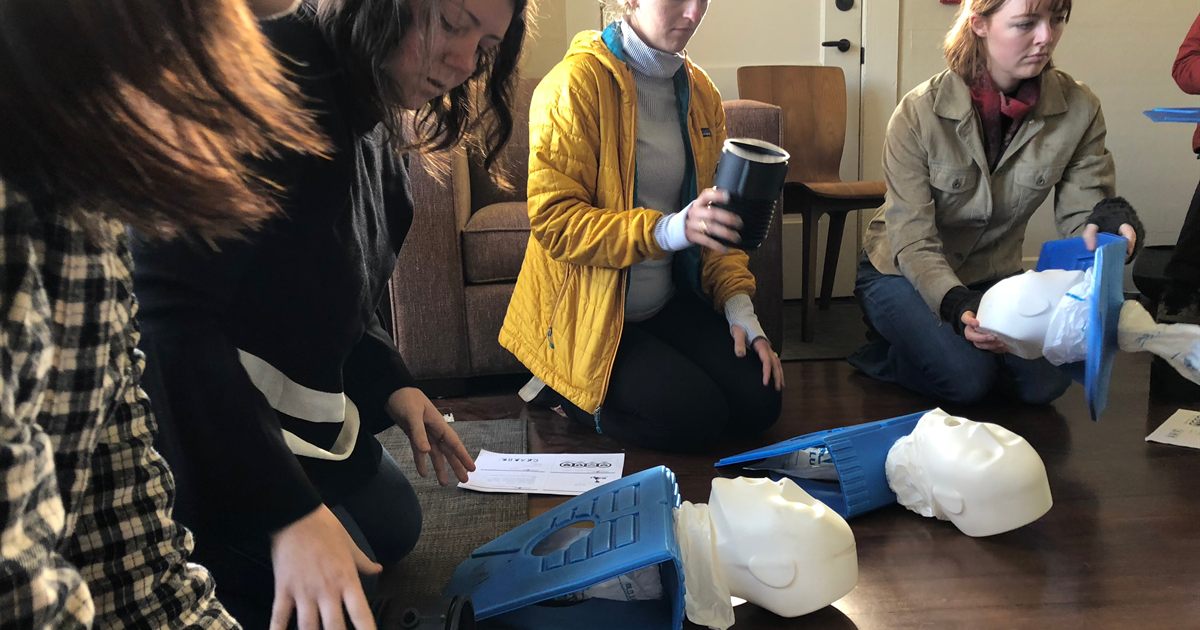
Here's a fact that catches a lot of employers out: the HSE does not approve first aid training providers. It hasn't since 2013. So when a provider's website says "HSE approved", it's either out of date or misleading — and the job of picking a competent trainer, and being able to justify that choice, has quietly landed on you. This guide explains the four routes to a trustworthy provider and the due-diligence checks the HSE expects you to make.
Why "HSE approved" no longer exists
Until October 2013 the HSE ran an approval scheme for first aid training organisations. It was withdrawn to open up the market and put responsibility where the duty already sat — with the employer. The underlying law didn't change: the Health and Safety (First-Aid) Regulations 1981 still require you to provide adequately trained first-aiders. What changed is that you now decide who is competent to deliver that training, rather than picking from an HSE list.
This is the same shift that made a written first aid needs assessment so central: the HSE sets the outcome ("adequate and appropriate" provision) and expects you to show the reasoning behind how you meet it — including which training provider you used and why.
Step one: know what you're buying
Before you compare providers, your needs assessment should already have told you two things: which qualification your staff need, and how many people to keep trained (the first aid at work training requirements guide sets out both, plus how certificates stay valid).
- The level — a one-day EFAW or a three-day FAW course, plus any specialist add-ons (paediatric, catering, forestry, etc.).
- The numbers — how many first-aiders you must keep qualified, with enough spare cover for holidays and sickness so you're never below your assessed level.
Nail this down first. It stops a provider up-selling you a course you don't need, and it's the yardstick you'll judge their syllabus against.
The four routes to a competent provider
The HSE's guidance for employers describes provider "routes". Three of them come with assurance built in; the fourth is where your own due diligence does the work.
| Route | What it means & the assurance it gives |
|---|---|
| Regulated qualification | The course is a regulated qualification overseen by Ofqual (England), Qualifications Wales or SQA Accreditation (Scotland), delivered by an approved centre of a recognised awarding organisation. External oversight is built in. |
| Voluntary Aid Society | St John Ambulance, the British Red Cross and St Andrew's First Aid are named in HSE guidance and can deliver FAW/EFAW without further checks on your part. |
| Accredited trade-body member | The provider belongs to a trade body that operates a code of practice and independent quality checks. Membership gives a level of assurance — confirm it's current. |
| Independent provider | Any provider outside the above. Legal to use, but you must carry out and record your own due diligence on competence, quality assurance, syllabus and insurance. |
Due diligence on an independent provider
If a provider isn't in one of the assured routes, the HSE expects you to satisfy yourself they're competent. Work through four areas:
- The trainers and assessors — do they hold a relevant first aid qualification and a teaching/assessing qualification? Do they keep their own first aid skills current, and have recent experience?
- Quality assurance — is there a real system of internal verification and external monitoring of the training and assessment, not just a certificate printer?
- The syllabus — does the course content and duration match the HSE-recommended content for the qualification (for example the full FAW three-day / EFAW one-day syllabus)? Ask to see it.
- Insurance and standing — does the provider carry appropriate insurance, and can they show they're an established, financially stable operation?
You don't need to audit them like an ISO assessor — a proportionate set of questions and a couple of documents is enough. The point is to make a reasonable, informed choice and to be able to say why.
Check the certificate before you commit
Whatever route you pick, the qualification your staff walk away with should be clear and time-limited. Both FAW and EFAW certificates are valid for three years, and the HSE recommends a short annual refresher in between. Make sure the provider issues a proper dated certificate naming the qualification — that piece of paper is what proves the person counts towards your provision until it expires.
Keep the evidence
Choosing well is only half the job; you also have to be able to show it. Keep a short record of which provider you used and why (route, accreditation, the checks you made), plus every first-aider's certificate and expiry date. If an inspector or auditor asks how you know your first-aiders are properly trained, that record is your answer.
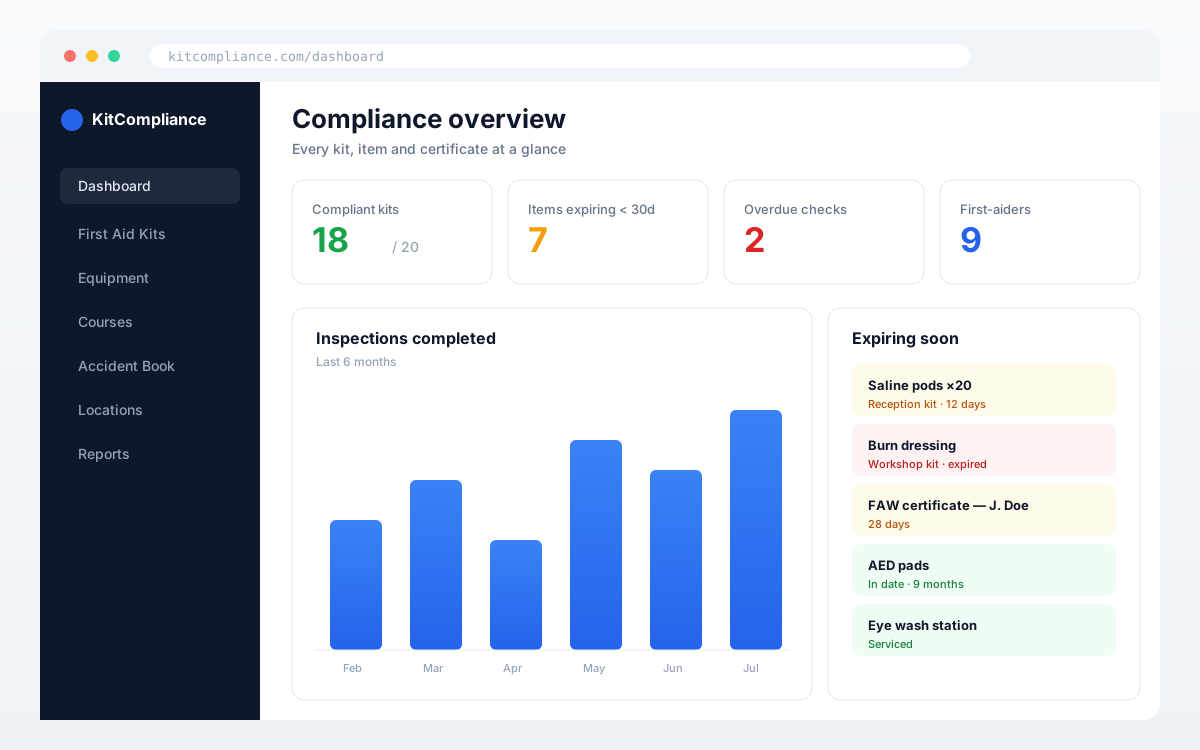
A good provider gets your people trained; keeping track of who is qualified, in what, and until when is the part that slips. That's what KitCompliance handles alongside your kits and inspections — a live record of every certificate and its expiry, with reminders before requalification is due, so a lapsed certificate never quietly drops you below your assessed cover. See the getting-started guide to set it up.
Frequently asked questions
Does a first aid training provider need to be HSE approved?
No. Since 1 October 2013 the HSE no longer approves first aid training providers — it's the employer's job to choose a competent one and evidence that choice. A provider still advertising itself as "HSE approved" is misrepresenting the position.
How do I know a provider is competent?
The simplest assurance comes from a regulated qualification (Ofqual / Qualifications Wales / SQA), a Voluntary Aid Society, or an accredited trade-body member. Outside those, check the trainers' competence, quality assurance, syllabus and insurance yourself.
What should I check on an independent trainer?
That trainers and assessors hold both first aid and teaching/assessing qualifications and keep their skills current; that there's genuine internal and external quality assurance; that the syllabus matches the HSE-recommended content; and that the provider is insured.
Is online first aid training acceptable for FAW or EFAW?
Not on its own — practical skills must be assessed in person. Blended courses that pair online theory with a face-to-face practical assessment can be acceptable; a course with no assessed practical element is not.
Who is responsible for choosing the provider?
The employer. Providing adequately trained first-aiders is part of the employer's duty under the 1981 Regulations, and that includes making a reasonable, evidenced choice of training provider.