A vehicle workshop packs more hazards into a small space than almost any other small business: cars up on ramps, hot exhausts and welding, battery acid, solvents and brake cleaner, tyres under pressure and vehicles being driven in and out. First aid provision built for an office won't cover it. This guide sets out what a UK garage, MOT centre or dealership workshop actually needs to be "adequate and appropriate" under the law — and how to prove it.
The hazards that shape a workshop's first aid
Because there's no fixed legal list, your provision has to match your actual risks. In a typical garage those are:
| Hazard | What it means for first aid |
|---|---|
| Crush & impact (lifts, jacks, falling parts) | Serious trauma is possible. You need trained first-aiders who can manage bleeding and shock, and fast access to emergency services — the same profile as a factory or construction site. |
| Chemicals (battery acid, brake & parts cleaner, fuel) | Splashes to eyes and skin. Drives the need for eyewash provision and skin decontamination near the battery and parts-washing areas. |
| Hot work (welding, exhausts, engines) | Burns and scalds. Keep burns dressings and clean cool running water within reach of the welding bay. |
| Lone & mobile working | A mechanic finishing a job alone, or a mobile/breakdown technician roadside, can't reach the workshop kit — see lone worker first aid. |
| Members of the public on site | Customers in the reception or waiting area should be factored in too — HSE recommends including non-employees in your assessment. |
What to put in a workshop first aid kit
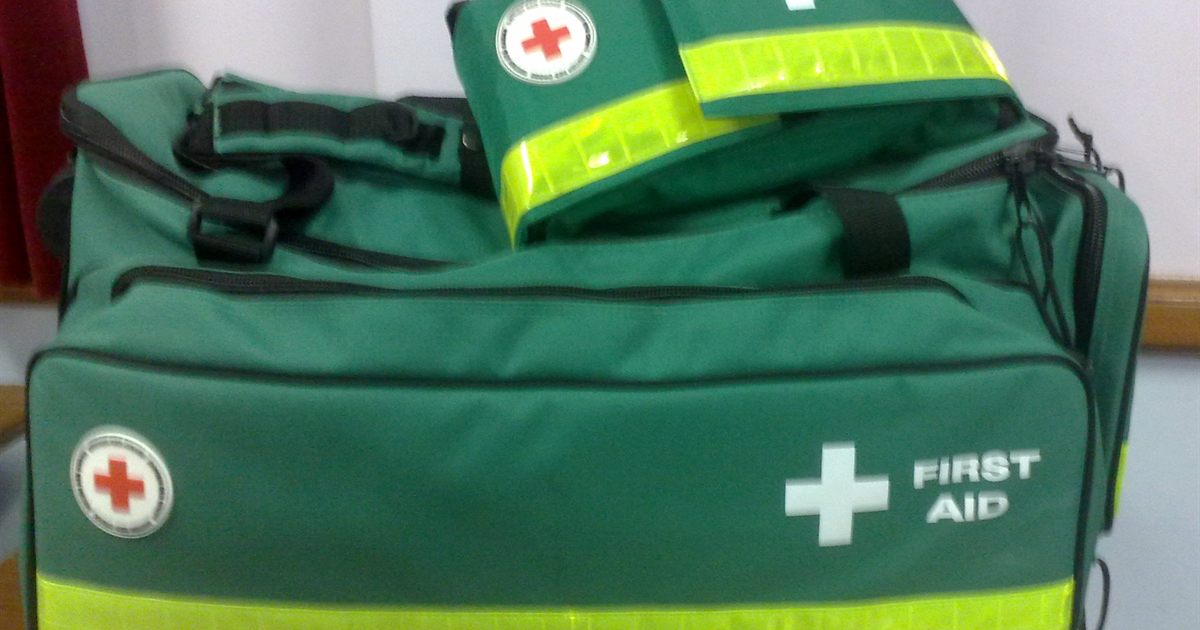
Start with a workshop-grade BS 8599-1 kit — a Medium or Large depending on headcount and layout — sited within easy reach of the ramps, not locked in the office. On top of the standard contents, a garage typically adds:
- Eyewash — sterile eyewash pods or bottles near the battery and parts-washing areas, plus mains-fed eyewash where corrosive chemicals are handled.
- Burns dressings — sterile gel dressings for welding and hot-exhaust burns, kept by the hot-work area.
- Larger wound dressings — cuts from sharp metal and tools tend to be deeper than a plaster covers.
- A vehicle kit — a BS 8599-2 motoring kit in every recovery, breakdown or mobile-mechanic vehicle.
How many first-aiders does a garage need?
There's no set legal ratio — it comes out of your assessment. Because a workshop is higher-risk, the HSE rule of thumb points to at least one First Aid at Work (FAW) trained first-aider for 5–50 staff, and one more for every extra 50 — not the emergency-only (EFAW) level that suits a low-risk office. Two practical points:
- Even a two- or three-person independent garage needs at least an appointed person, and most sensibly train a first-aider given the machinery and chemicals on site.
- First-aiders take holidays and go off sick — build in enough that a single absence never leaves the shop floor with no cover. See first aid cover for holidays and absence.
Setting it up: five steps
- Assess the workshop's real hazards — lifts, hot work, chemicals, lone working — rather than copying an office template.
- Provide the right kit and equipment — workshop kit by the ramps, eyewash, burns dressings, vehicle kits.
- Train enough FAW first-aiders to cover every shift and lone-working period.
- Signpost and tell everyone — put up first-aid signs, and brief agency and weekend staff too.
- Inspect, restock and record — check kits and eyewash on a schedule and keep a dated log (see how often to inspect first aid kits).
Write the conclusions into a short workplace first aid policy so the arrangements are clear and you can evidence them at a glance. Larger sites may also assess that they need an AED (defibrillator) — worth considering where the workforce is older or an ambulance is minutes away.
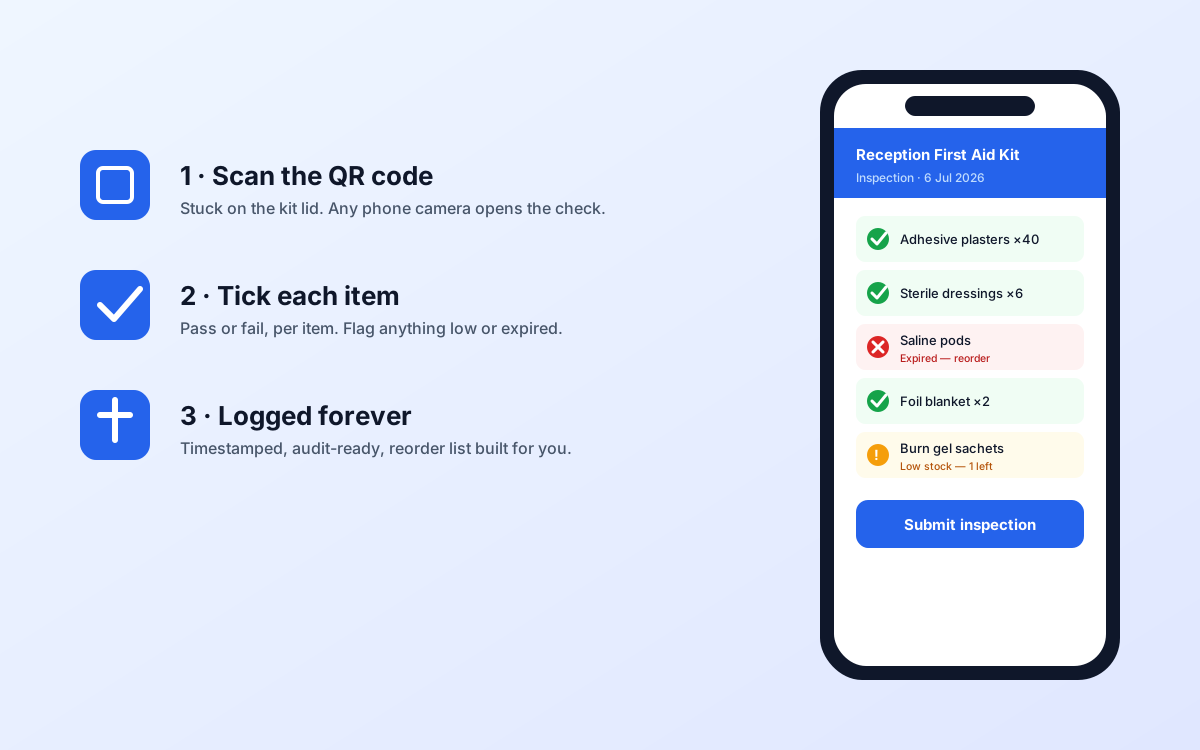
Workshops rarely fall short on the assessment — they slip on keeping it true day to day: an eyewash bottle past its date, a burns dressing used and never replaced, a vehicle kit no one has checked in a year. That's exactly what KitCompliance automates: build each workshop and vehicle kit from the suggested list, log inspections in seconds, and get reminders before anything lapses — with a one-click report that proves your provision to an HSE inspector or insurer. See the getting-started guide to set it up.
Frequently asked questions
What first aid does a garage legally need?
The 1981 Regulations require "adequate and appropriate" provision. There's no fixed list, but a needs assessment for a workshop almost always concludes you need a workshop-grade kit within reach of the ramps, eyewash, burns provision and at least one trained first-aider on every shift.
How many first aiders does a workshop need?
There's no single ratio. As a higher-risk site, the HSE guide points to at least one FAW-trained first-aider for 5–50 staff and one more per extra 50. Small garages still need at least an appointed person, and most train a first-aider.
Does a garage need an eyewash station?
No rule names one, but battery acid, parts cleaners and airborne debris make eye injuries a real risk, so most garages provide sterile eyewash near the battery and washing areas, and mains-fed eyewash where corrosives are handled.
Do lone or mobile mechanics need their own kit?
Yes — they can't reach the workshop kit. Give lone and mobile technicians a personal or BS 8599-2 vehicle kit and a reliable way to raise the alarm if injured while working alone.