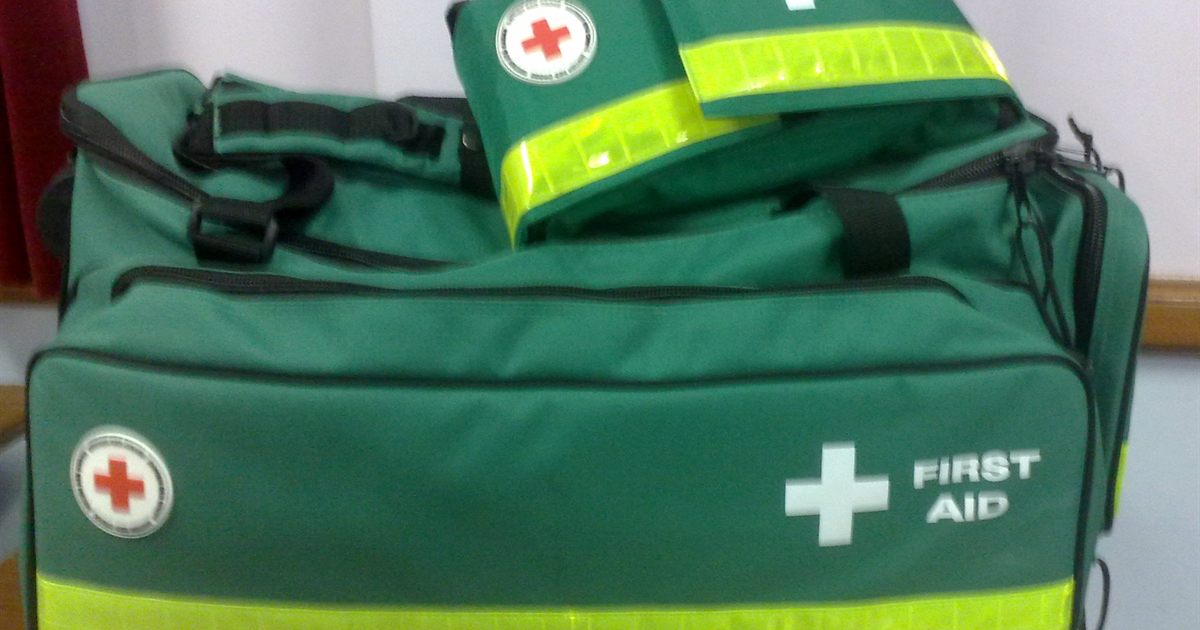
A warehouse is not an office. Forklifts, racking three storeys high, heavy manual handling and a floor that can run to tens of thousands of square feet all push a warehouse firmly into higher-risk territory for first aid. The same law applies — the Health and Safety (First-Aid) Regulations 1981 — but the answer it gives for a warehouse is bigger: more first-aiders, higher training, kits spread across the site, and usually a defibrillator. This guide walks through exactly what a UK warehouse needs and how to prove it.
Why a warehouse counts as higher-risk
The Regulations require every employer to provide "adequate and appropriate" first-aid equipment, facilities and people. What counts as adequate depends on the hazards — and a warehouse has plenty that a low-risk workplace does not. The same higher-risk logic applies on a factory or manufacturing site, and shows up on a smaller scale in a shop stockroom, which is why retail can't be treated as low-risk throughout:
| Hazard | Why it matters for first aid |
|---|---|
| Forklifts & mechanical handling | Impact, crush and run-over injuries — often serious and time-critical, needing a trained first-aider fast. |
| Racking & work at height | Falls from ladders, order pickers and mezzanines, plus objects falling from height onto people below — a common cause of fractures and broken bones. |
| Manual handling | Strains, back injuries and cuts from repeated lifting, cutting straps and breaking down pallets. |
| Site size & spread | A casualty in a far aisle or on a mezzanine may be minutes from the nearest kit or first-aider unless cover is planned. |
| Chemicals, dust & temperature | Stored substances, cold-store or hot areas, and dusty environments can mean eye injuries, burns or collapse. |
Because of these, most warehouses need First Aid at Work (FAW)-trained first-aiders — the fuller three-day qualification — rather than the shorter EFAW, and more of them than an office of the same headcount.
How many first-aiders does a warehouse need?
There is no fixed legal number; it falls out of your needs assessment. As a widely used HSE rule of thumb for higher-risk sites:
- At least one FAW-trained first-aider for 5–50 employees.
- One more FAW first-aider for every additional 50 employees beyond that.
- More again where a specific hazard needs it (for example additional training for chemical or confined-space risks).
How many kits, and where
One kit by the office door does not cover a warehouse. Distribute kits so one is within easy reach of every work area — aisles, the pick-and-pack zone, the loading dock, any mezzanine and the yard. Size them to BS 8599-1 and headcount: a busy warehouse typically wants large (100-person) BS 8599-1 kits, several of them, rather than a single small box.
- How many kits you need is decided by area and travel distance, not just people.
- Kit size — small, medium or large — is set by BS 8599-1 and how many people the kit covers.
- What goes in each kit follows the British Standard, with extras for the hazards you found.
Extra equipment warehouses often need
Beyond the standard kits, a warehouse needs assessment frequently calls for:
- A defibrillator (AED) — not legally compulsory, but strongly encouraged on large, physically demanding sites and where an ambulance could take a while. See workplace defibrillator requirements.
- Eye wash — where dust, chemicals or foreign bodies can get into eyes and mains water is not immediately to hand (see eyewash station requirements).
- Burns dressings and, for shrink-wrap or hot processes, additional burns cover.
- Vehicle / travel kits for yard shunters, delivery drivers and lone workers on the far side of the site.
Signage, records and the accident book
Once provision is in place, make it findable and keep it evidenced:
- First-aid signs at every kit and at height on tall racking so they are visible from a distance, plus a notice listing first-aiders per shift.
- An accident book, with the more serious injuries reportable to the HSE under RIDDOR — forklift and racking incidents often cross that threshold.
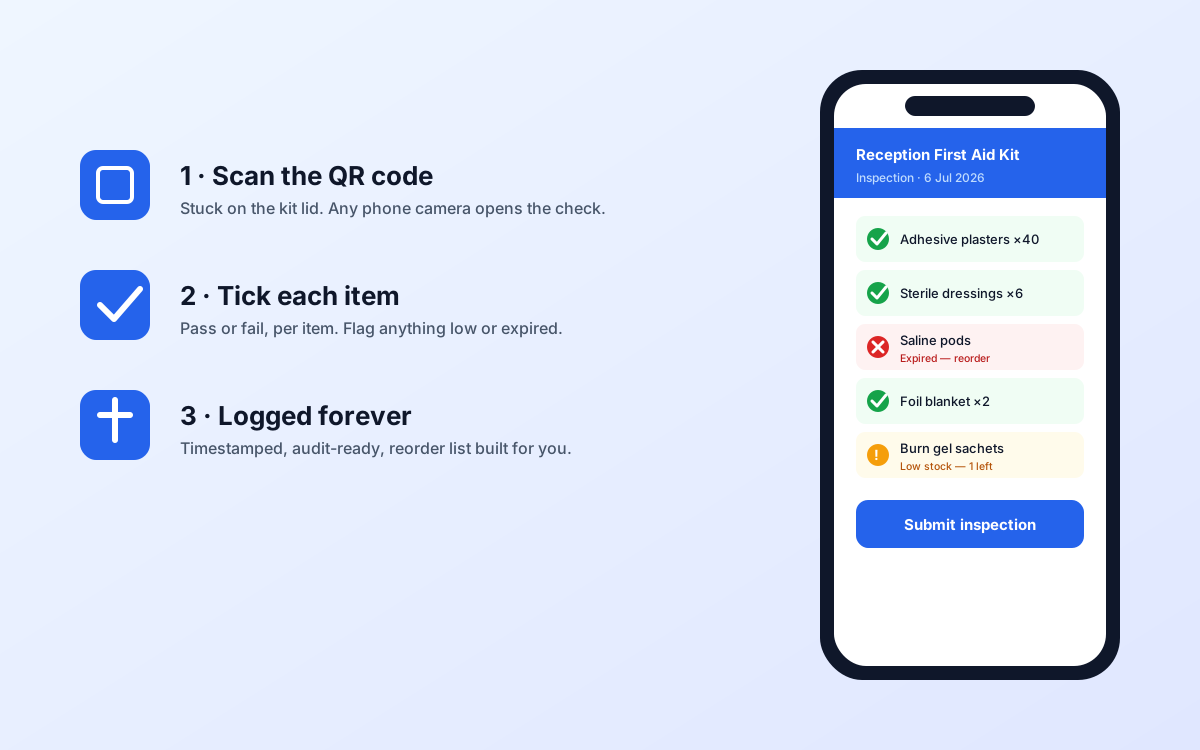
- Regular kit inspections so nothing is expired or used-up when it is needed.
Warehouse first aid checklist
Use this as a quick self-check for the site:
| Item | In place? |
|---|---|
| Written needs assessment covering all shifts | … |
| FAW-trained first-aiders on every shift, with spare cover | … |
| BS 8599-1 kits distributed across all work areas | … |
| AED provided / considered and recorded | … |
| Eye wash and burns cover where hazards need it | … |
| First-aid signage visible across the floor | … |
| Accident book in place, RIDDOR process understood | … |
| Kit inspection schedule running, nothing expired | … |
The hard part in a warehouse is not deciding what you need — it is keeping many kits, across a big site and several shifts, all stocked and in date. That is exactly what KitCompliance automates: build each kit from the ISO 45001 suggested list, log inspections in seconds from a phone on the floor, and get reminders before anything lapses, with a one-click report that proves your provision. See the getting-started guide to set it up.
Frequently asked questions
Is a warehouse high-risk for first aid purposes?
Usually yes. Forklifts, racking and work at height, heavy manual handling and crush injuries put most warehouses above the low-risk bracket, which means more first-aiders, FAW-level training, and often extra equipment such as an AED.
How many first-aiders does a warehouse need?
There is no fixed ratio — your needs assessment sets it. As a guide for higher-risk sites: at least one FAW first-aider for 5–50 staff and one more per extra 50, counted per shift so nights and weekends are covered too.
Does a warehouse legally need a defibrillator?
No law makes an AED compulsory, but the HSE strongly encourages one where the assessment supports it — large sites, physical work and long ambulance times all point towards providing one.
What size first aid kit does a warehouse need?
Base size on BS 8599-1 and headcount — usually large (100-person) kits — and provide several, spread so one is within easy reach of every work area, plus a travel kit for the yard and lone workers.