Broken bones are among the most serious injuries a workplace first-aider meets — a fall from a ladder, a crush from a load, a trip on a cluttered floor, a hand caught in machinery. The treatment is rarely dramatic: you are not setting the bone. The skill is keeping the injury still, controlling any bleeding, watching for shock, and knowing which fractures mean calling 999 and which can be taken to A&E. Do those well and you spare the casualty pain and prevent a bad break getting worse.
What counts as a fracture
A fracture is any break or crack in a bone, from a hairline crack to a bone snapped clean through. First-aiders usually talk about two kinds:
- Closed fracture — the bone is broken but the skin is intact. Most workplace fractures are closed.
- Open (compound) fracture — the skin is broken, by the bone itself or by the force of the injury, so there is a wound and a risk of heavy bleeding and infection. These are a medical emergency.
You rarely know for certain it is broken rather than a bad sprain or strain without an X-ray — so the golden rule is simple: if in doubt, treat it as a fracture. How the injury happened is a strong clue. High-energy incidents — a fall from height or moving vehicles and loads, common on construction sites and in warehouses — are far more likely to break bones and can injure the spine at the same time.
Signs of a broken bone
A fracture will usually show several of these. The more that are present, the more likely it is a break:
- Pain at the site that worsens with movement
- Swelling and bruising around the injury
- Deformity — a limb that looks bent, twisted, shortened or out of shape
- Loss of normal movement, or being unable to bear weight
- A snap heard at the time, or a grating feeling (do not test for this)
- Bone visible through a wound, in an open fracture
- The limb feeling cold, numb or looking pale or blue below the injury
Fracture first aid: what to do, step by step
- Make it safe and keep them still. Stop the task and remove any ongoing hazard. Tell the casualty to stay still and not to try to move or use the injured part. Only move them if staying put puts them in danger.
- Support the injury where it is. Steady and support the injured part with your hands, or ask the person to support it themselves, keeping it in the position you found it. Do not try to straighten a limb or push a displaced bone back — that can damage nerves and blood vessels.
- Treat an open fracture. Cover the wound with a clean, sterile dressing. Control bleeding by pressing around the wound, never directly on protruding bone. Build up padding around the bone and bandage over it without pressing down.
- Immobilise and cool. Keep the part supported and still while you wait for help. For a closed injury, a wrapped cold pack held against it for up to 20 minutes can ease pain and swelling. Never put ice straight onto the skin.
- Watch for shock. A big fracture can cause life-threatening shock from blood loss and pain. Keep the person warm and reassured, lay them down if they feel faint, keep checking response and breathing, and give them nothing to eat or drink in case they need an operation.
- Arrange the right help. Call 999 for serious fractures and open fractures; for a suspected broken arm, wrist, hand or finger with no other concern, support the limb and take them to A&E or an urgent treatment centre.
When to call 999
Not every break needs an ambulance — a broken finger can go to A&E in a car. But call 999 straight away if any of these apply:
| Call 999 if… | Why |
|---|---|
| It is an open fracture — bone or a wound is exposed | High risk of heavy bleeding and infection; needs urgent surgical care. |
| You suspect a broken leg, hip or pelvis | These cannot be moved safely without the right equipment and can bleed heavily inside. |
| You suspect a spine, neck or skull injury | Moving the casualty risks permanent damage — keep them still and wait for the ambulance. |
| There are signs of shock | Pale, cold, clammy skin, fast shallow breathing or a falling level of response is a medical emergency. |
| The limb is cold, blue or numb below the injury | The blood supply or a nerve may be affected — time matters to save the limb. |
| You cannot move the person without causing more harm | Let the ambulance crew move and splint them with proper equipment. |
Open fractures and bleeding
An open fracture combines two emergencies — a broken bone and a wound that can bleed heavily. The order matters: control the bleeding first, but never press directly on exposed bone. Cover the wound with a sterile dressing, then press on either side and build up soft padding around the protruding bone until it is higher than the bone, so a bandage holds pressure on the wound without forcing the bone down. Where catastrophic bleeding is a known risk — on high-hazard sites and anywhere with cutting machinery — a bleed-control kit with a tourniquet and haemostatic dressings should be part of your provision and your first-aiders trained to use it.
What UK employers should have in place
No regulation names "fractures", but the duty to be ready for them flows from the Health and Safety (First-Aid) Regulations 1981, which require "adequate and appropriate" provision. Your first aid needs assessment is where you weigh the risk — a site with work at height, moving vehicles, loads or machinery needs far more than a low-risk office:
| Provision | What to put in place |
|---|---|
| Trained first-aiders | Enough first-aiders who can support a fracture, manage bleeding and recognise shock, covering every shift. |
| A stocked kit | Large dressings, triangular bandages, gloves and — where the assessment supports it — cold packs, kept in date and full. |
| Bleed and trauma cover for higher-risk sites | A bleed-control kit where crush, cutting or high-energy injuries are foreseeable. |
| A way to summon help fast | Clear emergency arrangements so a 999 call and site access for an ambulance are not a scramble when minutes count. |
| Recording & reporting | Log every injury in your first aid record and accident book, and check whether it is reportable under RIDDOR. |
After the injury: recording and RIDDOR
Fractures have some of the clearest RIDDOR triggers of any workplace injury. Under RIDDOR 2013 a fracture to any bone other than the fingers, thumbs or toes is a specified injury and must be reported to the HSE without delay when it happens to a worker from a work-related accident. A broken finger, thumb or toe is not specified, but if it keeps the worker off their normal duties for more than seven consecutive days it is reportable as an over-seven-day injury; and a member of the public who breaks a bone and is taken straight to hospital for treatment is reportable too. Whatever the outcome, write down what happened while it is fresh — how it occurred, what you saw and what you did — in your first aid treatment record and the accident book, and restock anything you used.
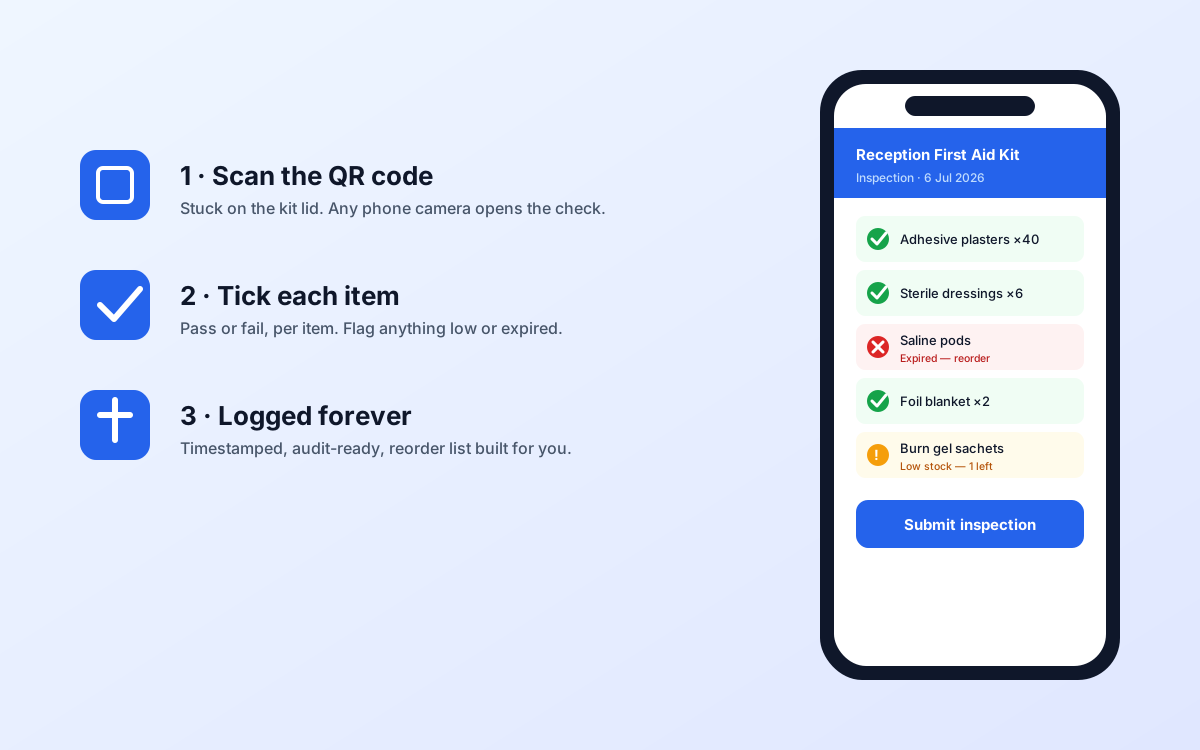
Managing a fracture is a skill; keeping the provision behind your first-aiders in order is a routine. That is what KitCompliance does: track every first aid kit and its contents, every certificate and refresher due date, and log your checks in seconds — with reminders before anything lapses and a one-click report that proves your provision. See the getting-started guide to set it up.
Frequently asked questions
What should you do if someone breaks a bone at work?
Stop the task and tell the person to keep still and not use the injured part. Support the injury in the position you found it — do not try to straighten it or move the casualty unless they are in danger. If the skin is broken, cover the wound with a sterile dressing and control bleeding by pressing around it, not on any protruding bone. Keep the person warm and watch for shock, and do not give them anything to eat or drink. Call 999 for any suspected fracture of the leg, hip, pelvis, spine, neck or skull, any open fracture, or signs of shock; for a suspected broken arm, wrist, hand or finger, support the limb and take them to A&E.
When should you call 999 for a suspected fracture?
Call 999 for any open fracture where bone or a wound is exposed, any suspected break of the leg, hip, pelvis, spine, neck or skull, a casualty you cannot move without causing more injury, severe bleeding, or any sign of shock such as pale, cold, clammy skin, rapid shallow breathing or a falling level of response. Also call if the limb is cold, blue or numb below the injury. If you are unsure how serious it is, call.
Should you try to straighten a broken bone or push it back in?
No. Never try to straighten a suspected fracture, realign a deformed limb, or push a protruding bone back under the skin. It can cause more damage to muscles, nerves and blood vessels and a lot of pain. Support the injury in the position you found it and let medical professionals carry out any realignment. For an open fracture, dress the wound and build up padding around the bone rather than pressing on it.
Is a broken bone at work reportable under RIDDOR?
Usually yes. A fracture to any bone other than the fingers, thumbs or toes is a specified injury and must be reported to the HSE without delay when a worker breaks it in a work-related accident. A broken finger, thumb or toe is not specified, but if it keeps the worker off their normal duties for more than seven consecutive days it is reportable as an over-seven-day injury. A member of the public who breaks a bone and is taken straight to hospital is reportable too. Whatever the outcome, record it in your first aid treatment record and accident book.
How do you tell a fracture from a sprain?
You often cannot be certain without an X-ray, so when in doubt treat it as a fracture. A break is more likely if there is deformity, a limb that looks out of shape or shortened, a grating feeling, a snap heard at the time, bone visible through the skin, or the person cannot bear weight or use the part at all. Sprains and strains tend to cause swelling and bruising around a joint with some movement still possible. If the signs are unclear or the pain is severe, support the injury and get it checked rather than assuming it is only a sprain.