A bang to the head is one of the most common injuries at work — a low doorway, a falling tool, a slip on a wet floor, a forklift near miss. Most are minor, but the head is the one part of the body where "they seemed fine" can turn serious hours later. The skill is not dramatic treatment; it is knowing how to keep the person safe, spotting the handful of red-flag signs that mean call 999, and never letting a knocked head brush it off and carry on.
What counts as a head injury
A head injury covers anything from a minor bump to a serious brain injury. The outside can look trivial while the injury that matters is inside the skull — and the two do not always match. Three things guide how worried to be: whether the person lost consciousness (even for a second), how the injury happened, and how they are afterwards.
Mechanism is a big clue. A knock walking into a shelf is very different from a fall from height, a heavy object dropped from above, or being struck by a vehicle. These "high-energy" injuries — common on construction sites and in warehouses — carry a real risk of skull fracture, bleeding inside the skull, or a spinal injury, and should always be assessed medically — and often come with fractures elsewhere that need supporting too.
Head injury: what to do, step by step
- Make it safe and check response. Stop the task and remove any ongoing hazard. Check whether the person responds. If they are unconscious and not breathing normally, call 999 and start CPR. If they are unconscious but breathing, keep the airway open and — where a fall or heavy blow makes a neck injury possible — try not to move them.
- Sit them down and keep them still. Help a conscious person rest, reassure them, and tell them not to carry on working, drive or wander off — even if they insist they are fine.
- Control any bleeding. Scalp wounds bleed a lot, which looks alarming but is often not serious. Press a clean dressing firmly over the wound. If you suspect a skull fracture or feel a dent, do not press hard — pad gently around the wound instead.
- Apply a cold compress to a bump. For a closed lump with no open wound, hold a cold pack or wrapped ice against it for up to 20 minutes to ease pain and swelling. Never put ice straight onto the skin.
- Watch level of response. Stay with the person and keep checking how alert and oriented they are. A casualty who is getting more drowsy or confused is the single most important warning sign of a serious injury.
- Call 999 or arrange assessment. Call 999 if any red-flag sign appears. For a milder knock with no red flags, advise them to be checked by a medical professional, not to drive, and not to be left alone in case symptoms develop.
When to call 999
Most minor bumps do not need an ambulance. But call 999 straight away if any of these apply:
| Call 999 if… | Why |
|---|---|
| They are, or have been, unconscious — even briefly | Any loss of consciousness after a head injury needs urgent assessment for bleeding or swelling inside the skull. |
| They are drowsy, confused or hard to wake | A falling level of response is the clearest sign of a serious brain injury developing. |
| They vomit repeatedly, or have a fit or seizure | Both can signal rising pressure inside the skull and need emergency care — see seizure first aid. |
| Clear fluid or blood leaks from the ears or nose | This can indicate a skull fracture at the base of the skull. |
| Weakness, numbness, slurred speech or vision problems appear | Stroke-like signs after a head injury point to brain injury — treat as an emergency, as with a suspected stroke. |
| High-energy injury, or they take blood-thinners | A fall from height, a vehicle or heavy-object strike, or anticoagulant medication all raise the risk of serious bleeding. |
Concussion and delayed signs
Concussion is a temporary disturbance of how the brain works after a knock — and its warning is that the signs can be subtle and can come on hours after the injury, long after the person has gone back to their desk or been sent home. Watch for:
- Headache that does not ease, or gets worse
- Dizziness, feeling sick or being off balance
- Feeling dazed, "not quite right", or slow to answer
- Confusion or gaps in memory of the event
- Blurred or double vision, or sensitivity to light and noise
- Unusual tiredness or difficulty concentrating
Anyone with a suspected concussion should stop work, be assessed medically, and not be left alone for the first 24 hours. They should not drive themselves, should avoid alcohol, and should return for urgent help if symptoms appear or worsen. The simple rule used across UK workplaces and sport: if in doubt, sit them out.
What UK employers should have in place
No regulation names "head injuries", but the duty to be ready for them flows from the Health and Safety (First-Aid) Regulations 1981, which require "adequate and appropriate" provision. Your first aid needs assessment is where you weigh the risk — a site with work at height, moving vehicles or overhead loads needs more than a low-risk office:
| Provision | What to put in place |
|---|---|
| Trained first-aiders | Enough first-aiders who can assess a head injury and monitor level of response, covering every shift. |
| A stocked kit | Dressings for bleeding, gloves and — where the assessment supports it — cold packs, kept in date and full. |
| A place to rest and recover | A quiet first aid room or calm space where a casualty can be watched and rested rather than sent straight back to work. |
| A "sit them out" culture | Staff who know that a knock to the head means stopping the task, not powering through — and that reporting it is expected, not a fuss. |
| Recording & reporting | Log every head injury in your first aid record and accident book, and check whether it is reportable under RIDDOR. |
After the injury: recording and RIDDOR
Write down what happened while it is fresh — how the injury occurred, whether the person lost consciousness, what you saw and what you did — in your first aid treatment record and the accident book. Head injuries have specific RIDDOR triggers: a loss of consciousness caused by a head injury is a specified injury reportable to the HSE without delay; a head injury that keeps a worker off their normal duties for more than seven consecutive days is reportable as an over-seven-day injury; and a member of the public taken directly to hospital for treatment is reportable too. Restock anything you used so the kit is ready for next time.
Dealing with a head injury — especially one that turns out serious — is stressful for the responder too. Offer a quiet debrief and check in on both the casualty and the first-aider afterwards; looking after the responder is part of a first-aider's duties and responsibilities.
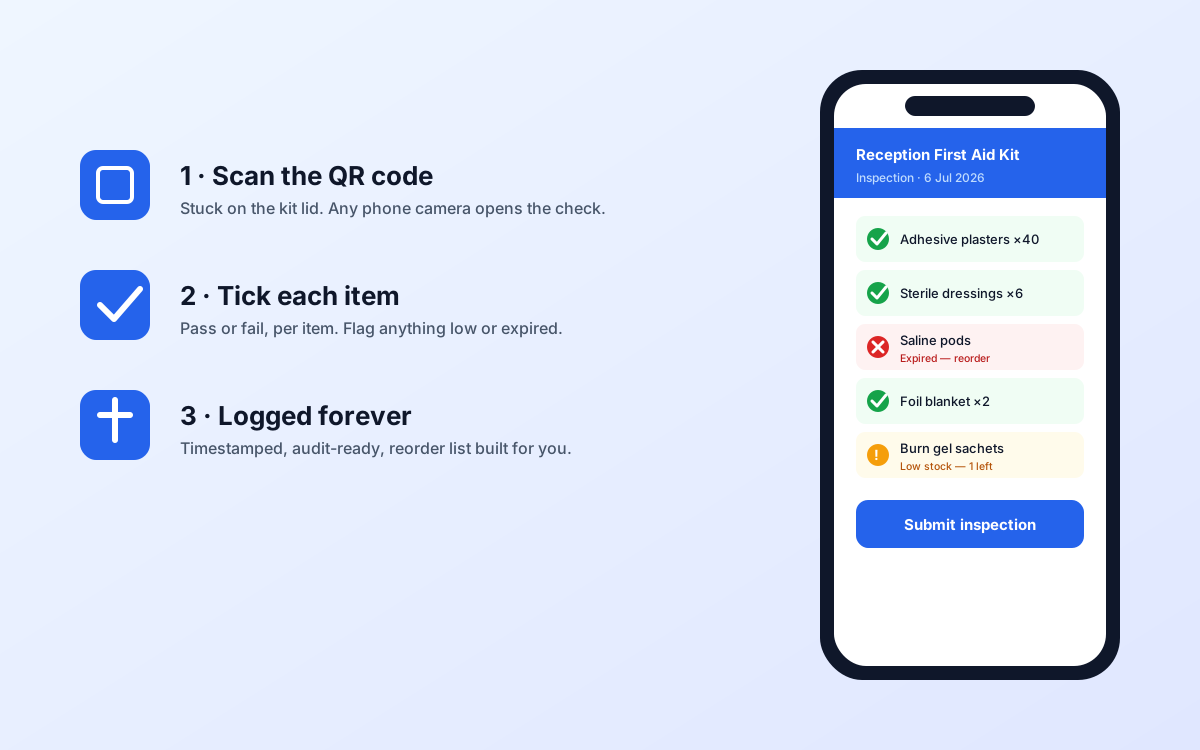
Managing a head injury is a skill; keeping the provision behind your first-aiders in order is a routine. That is what KitCompliance does: track every first aid kit and its contents, every certificate and refresher due date, and log your checks in seconds — with reminders before anything lapses and a one-click report that proves your provision. See the getting-started guide to set it up.
Frequently asked questions
What should you do if someone hits their head at work?
Stop the task and check whether the person is responsive. If they are unconscious and not breathing normally, call 999 and start CPR. If they are conscious, sit or lie them down and keep them still. Control any bleeding with firm pressure on a clean dressing, and hold a cold compress against a closed bump. Stay with them and keep checking how alert they are. Call 999 if they lose consciousness or show any red-flag sign such as confusion, drowsiness, repeated vomiting, a seizure, weakness, or fluid leaking from the ears or nose. For a milder knock, advise them to be checked medically, not to drive and not to be left alone.
When should you call 999 for a head injury?
Call 999 if the person is or has been unconscious, is hard to wake or increasingly drowsy, is confused, vomits repeatedly, has a fit, has clear fluid or blood coming from the ears or nose, has weakness, slurred speech or vision problems, or has a severe headache. Also call for any high-energy injury such as a fall from height or being struck by a vehicle or heavy object, and if the person takes blood-thinning medication. If you are ever unsure, call.
What are the signs of concussion after a head injury?
Concussion signs can appear straight away or come on over the following hours: headache, dizziness, nausea, feeling dazed or confused, memory problems, blurred vision, sensitivity to light or noise, and unusual tiredness. Anyone with a suspected concussion should stop work, be assessed medically, not be left alone for 24 hours, not drive, and avoid alcohol. If in doubt, sit them out.
Is a head injury at work reportable under RIDDOR?
It can be. A loss of consciousness caused by a head injury is a specified injury and must be reported to the HSE without delay. A head injury that keeps a worker off their normal work for more than seven consecutive days is reportable as an over-seven-day injury, and a member of the public taken directly to hospital for treatment is reportable too. Whatever the outcome, always record it in your first aid treatment record and the accident book.
Can someone go back to work after banging their head?
Not straight away if there is any suspicion of concussion. Even someone who says they feel fine should stop the task, rest and be monitored, because symptoms often develop over the following hours. They should not drive themselves home or operate machinery, and should return to normal duties only once they have been assessed and any concussion symptoms have cleared.