Watching someone have a seizure at work is frightening if you have never seen one — but the help they need is simple, and most of it is about keeping them safe and staying calm until it passes. Around one in every hundred people in the UK has epilepsy, so a seizure at work is far from rare. The good news is that you do not need to stop a seizure or treat it. Your job is to protect the person, time it, and know the handful of situations where you must call 999.
What a seizure is
A seizure is a sudden burst of abnormal electrical activity in the brain. It can look very different from person to person. The type most people picture — and the one that needs the most hands-on help — is a tonic-clonic (convulsive) seizure: the person becomes unconscious, goes stiff, then their body jerks and shakes. They may cry out, go blue around the lips, bite their tongue or lose control of their bladder. It usually stops on its own within a couple of minutes.
Other seizures are quieter and easy to miss. In a focal seizure the person may stay conscious but seem confused, pluck at their clothes, wander, or be unable to respond normally for a short time. Not every seizure is caused by epilepsy — they can also follow a head injury, low blood sugar, a high fever, or other medical causes — which is one reason a first-ever seizure always needs an ambulance.
Convulsive seizure: what to do, step by step
- Note the time it starts. How long it lasts is what decides whether you call 999, so glance at the clock straight away.
- Protect them from injury. Move hard or sharp objects, furniture and hot drinks out of reach, and cushion their head with something soft — a folded coat or jumper. Do not move the person unless they are in immediate danger (near machinery, a road or water).
- Do not restrain them. Never hold them down or try to stop the movements — you cannot, and you may hurt them or yourself.
- Put nothing in their mouth. A person cannot swallow their tongue. Forcing anything in risks broken teeth, a blocked airway or a bitten finger.
- Ease breathing when the jerking stops. Gently roll them onto their side into the recovery position, tilt the head back to keep the airway clear, and loosen tight clothing around the neck.
- Stay, reassure and monitor. They may be confused, exhausted or embarrassed as they come round. Stay with them, tell them calmly what happened, keep onlookers back, and watch their breathing and response until they have fully recovered.
For a focal seizure where the person is conscious but confused, do not grab or restrain them. Guide them gently away from any hazard, speak calmly, and stay with them until they are fully aware again.
When to call 999
Many people with diagnosed epilepsy do not need an ambulance for a typical seizure that follows their usual pattern and settles on its own. But call 999 straight away if any of these apply:
| Call 999 if… | Why |
|---|---|
| The seizure lasts more than 5 minutes | A prolonged seizure (status epilepticus) is a medical emergency that needs urgent hospital treatment. |
| One seizure follows another without recovery | Repeated seizures without the person coming round in between are treated the same as a prolonged seizure. |
| It is their first-ever seizure | A new seizure needs assessment to find the cause — it may not be epilepsy at all. |
| They are injured, or have trouble breathing afterwards | A fall, a head injury or breathing difficulty needs medical attention. |
| You don't know the person or the cause | If there is no known epilepsy or seizure plan, treat it as an emergency. |
| It happens in water, or they are pregnant | Both carry extra risk and always warrant an ambulance. |
If the person becomes unresponsive and stops breathing normally after a seizure, be ready to start CPR and send for the nearest defibrillator — though this is uncommon.
What UK employers should have in place
No regulation names "seizures" or "epilepsy", but the duty to be ready for a medical emergency falls out of the Health and Safety (First-Aid) Regulations 1981, which require "adequate and appropriate" provision. Your first aid needs assessment is where you decide what that looks like — and where any known health conditions in your workforce should be weighed:
| Provision | What to put in place |
|---|---|
| Trained first-aiders | Enough first-aiders who know how to help during a seizure, covering every shift. |
| Awareness for everyone | The basics — protect the head, don't restrain, time it, call 999 if it's long — are simple enough for all staff to learn so anyone can act. |
| Individual seizure-management plans | Where an employee discloses epilepsy, agree a short, confidential plan: what a typical seizure looks like, what help they want, and when to call 999. This is a reasonable adjustment under the Equality Act 2010. |
| A calm, private space | Somewhere the person can recover and rest afterwards — a first aid room or quiet area — as a seizure is exhausting. |
| Recording & reporting | Log the incident in your first aid record and accident book, and check whether it is reportable under RIDDOR. |
After the seizure
Once the person has recovered or been handed to the ambulance crew, write down what happened while it is fresh — when it started, how long it lasted, what you saw and what you did — in your first aid treatment record. A seizure from a personal medical cause is generally not reportable under RIDDOR, but always log it, and report it if a work activity caused or contributed to it or the person was injured. Restock anything you used so the kit is ready for the next incident.
Supporting a colleague through a medical emergency is stressful, even when it goes well. Offer a quiet debrief to everyone involved and check in on the person once they are back — looking after the responder is part of a first-aider's duties and responsibilities.
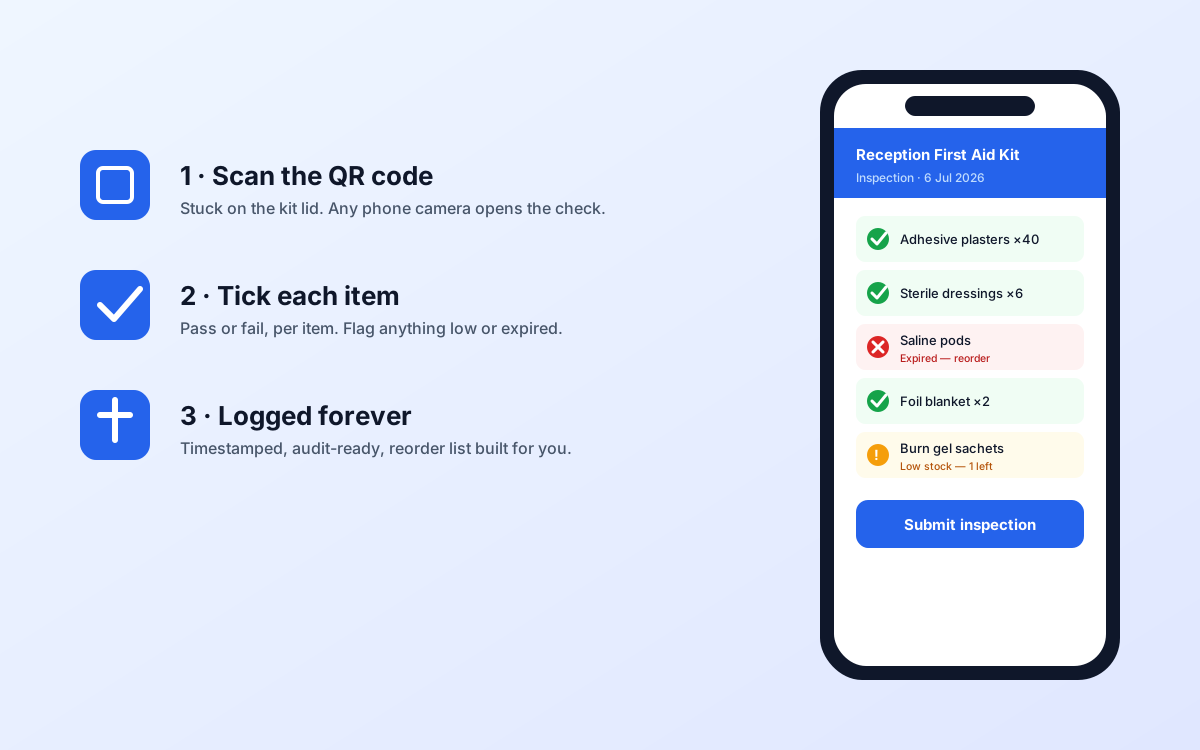
Helping someone through a seizure is a skill; keeping the provision behind your first-aiders in order is a routine. That is what KitCompliance does: track every first aid kit and its contents, every certificate and refresher due date, and log your checks in seconds — with reminders before anything lapses and a one-click report that proves your provision. See the getting-started guide to set it up.
Frequently asked questions
What should you do if someone has a seizure at work?
Stay calm and note the time it starts. Clear hard or sharp objects away and cushion their head — do not move them unless they are in danger, do not restrain them, and never put anything in their mouth. When the convulsions stop, roll them gently onto their side into the recovery position, keep the airway open, and stay with them, reassuring them as they come round. Call 999 if it lasts more than five minutes, repeats without recovery, causes injury, or is their first seizure or the cause is unknown.
When should you call 999 for a seizure?
Call 999 if the seizure lasts longer than five minutes, one follows another without recovery, the person is injured or has trouble breathing afterwards, it is their first-ever seizure, you do not know them or the cause, it happens in water, or they are pregnant. If you're ever unsure, call.
Should you put something in the person's mouth during a seizure?
No — never. It is a myth that a person can swallow their tongue. Forcing an object or your fingers into the mouth risks broken teeth, a blocked airway or a bitten finger. Leave the mouth alone and protect the head instead.
Is a seizure at work reportable under RIDDOR?
Usually not. A seizure from a personal medical condition such as epilepsy, unconnected to the work, is not reportable. It becomes reportable only if a work activity caused or contributed to it, or it leads to a specified injury or more than seven days off work. Whatever the cause, always record it in your first aid treatment record and the accident book.
Do employees have to tell their employer they have epilepsy?
There is no blanket duty to disclose, though safety-critical roles may require it. Where an employee does tell you, epilepsy is generally a disability under the Equality Act 2010, so make reasonable adjustments, handle the information confidentially, and factor it into your first aid needs assessment.