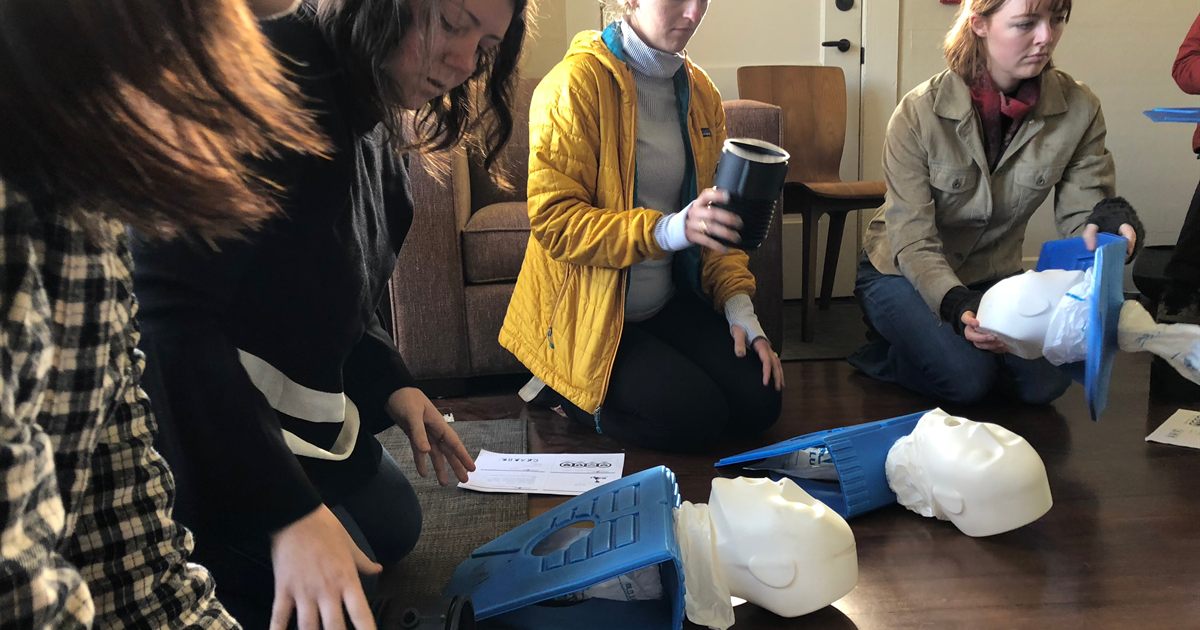
The recovery position is one of the most useful things a workplace first-aider ever learns, and one of the easiest to get wrong under pressure. It is what you use for someone who is unconscious but still breathing — after a faint, once a seizure has stopped, or when someone can't be roused. Done right, it keeps the airway open and stops the casualty choking while you wait for the ambulance. This guide walks through when to use it, how to do it step by step, and the situations where you should not.
What is the recovery position and why it matters
An unconscious person lying flat on their back is in danger even if they are breathing. The muscles that normally hold the airway open relax, the tongue can fall back and block it, and if they vomit they can inhale it. The recovery position solves both problems at once: it turns the casualty onto their side so the tongue falls forward and gravity drains fluid out of the mouth rather than into the lungs. It buys time — often the time that keeps someone alive until paramedics arrive.
Recognising when it's needed is part of your wider workplace first aid procedure. Any trained first-aider should be confident with it, which is one reason it features in both EFAW and FAW courses — see FAW vs EFAW for what each covers.
When to use it (and when not to)
| Use the recovery position | Do something else |
|---|---|
| Unconscious and breathing normally | Not breathing → call 999 and start CPR |
| After a seizure has ended and they are unresponsive | Conscious and able to protect their own airway → keep them still and reassure |
| Fainted and slow to come round, or drowsy from alcohol or medication | Choking while conscious → give back blows and abdominal thrusts (see choking) |
| Breathing but can't be left on their back safely while you get help | Suspected spinal injury and breathing is fine → keep still unless the airway is at risk |
How to put someone in the recovery position — step by step
First check the scene is safe, check for a response, open the airway and confirm the casualty is breathing normally. Once you're sure they're unconscious and breathing, kneel beside them and work through these steps:
- Position the near arm. Place the arm nearest you out at a right angle to their body, elbow bent, palm facing upwards.
- Bring the far hand to the cheek. Take their far arm across the chest and hold the back of that hand against the cheek nearest you. Keep it there to support the head as you turn them.
- Raise the far knee. With your other hand, grasp the far leg just above the knee and pull it up, keeping the foot flat on the floor.
- Roll them towards you. Pull on the raised knee to roll the casualty onto their side, facing you. The hand under the cheek cushions the head as it comes down.
- Adjust the leg. Position the upper leg so the hip and knee are both bent at right angles — this stops them rolling onto their front.
- Open the airway and monitor. Gently tilt the head back so the airway stays open and the mouth points slightly down. Call 999 if you haven't already, and keep checking breathing until help arrives.
If the casualty has to stay in the recovery position for more than 30 minutes, turn them onto the opposite side to relieve pressure on the lower arm. Keep checking breathing the whole time — if it stops or becomes abnormal, roll them onto their back and start CPR.
Where this fits your compliance duties
Under the Health and Safety (First-Aid) Regulations 1981, every employer must provide "adequate and appropriate" first-aid people, equipment and facilities. Knowing how to manage an unconscious casualty is core to the "people" part: your needs assessment decides how many trained first-aiders you need, and their certificate proves they can do exactly this. Record any incident where the recovery position was used in your accident book, and make sure first-aiders keep their skills current with an annual refresher — a skill you only practise once every three years is a skill you lose.
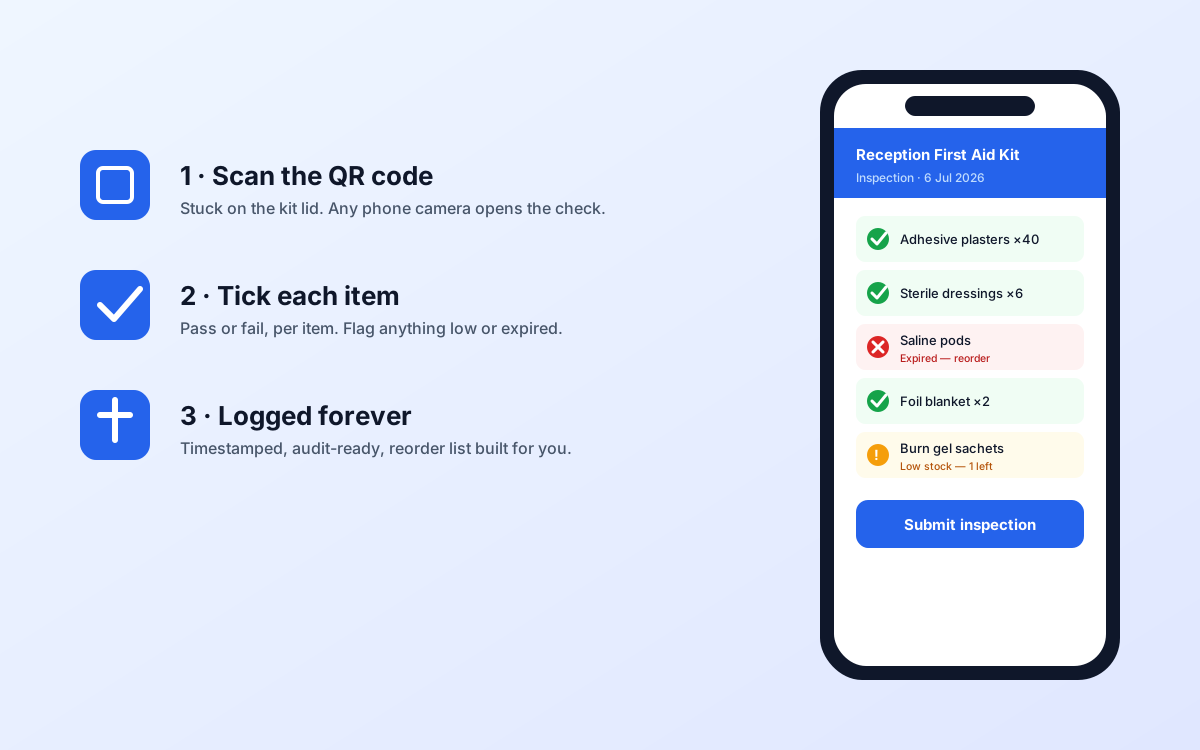
The recovery position costs nothing and needs no equipment — but the trained, in-date first-aider who performs it is a compliance requirement you have to evidence. That's what KitCompliance handles: track every first-aider's certificate and refresher date, keep each kit stocked and inspected, and get reminders before anything lapses, with a one-click report that proves your provision. See the getting-started guide to set it up.
Frequently asked questions
When should you use the recovery position?
For anyone unconscious but breathing normally — after a faint, once a seizure has ended, or when someone is drowsy and can't be roused. It keeps the airway open and lets vomit drain. Don't use it if they aren't breathing (start CPR) or, generally, if you suspect a spinal injury unless the airway is at risk.
What is the recovery position for?
It stops an unconscious casualty losing their airway. On their back the tongue can fall back and block breathing, or they can choke on vomit. On their side, the tongue falls forward and fluids drain out of the mouth.
Should you put someone in the recovery position after a seizure?
Yes. Never restrain someone mid-seizure, but once the convulsions stop and they're unconscious and breathing, roll them into the recovery position and stay with them until they recover or help arrives.
When should you not use the recovery position?
If the casualty is not breathing, call 999 and start CPR instead. Take care with a suspected spinal injury, but remember a clear airway always takes priority. For a pregnant casualty, roll onto the left side.