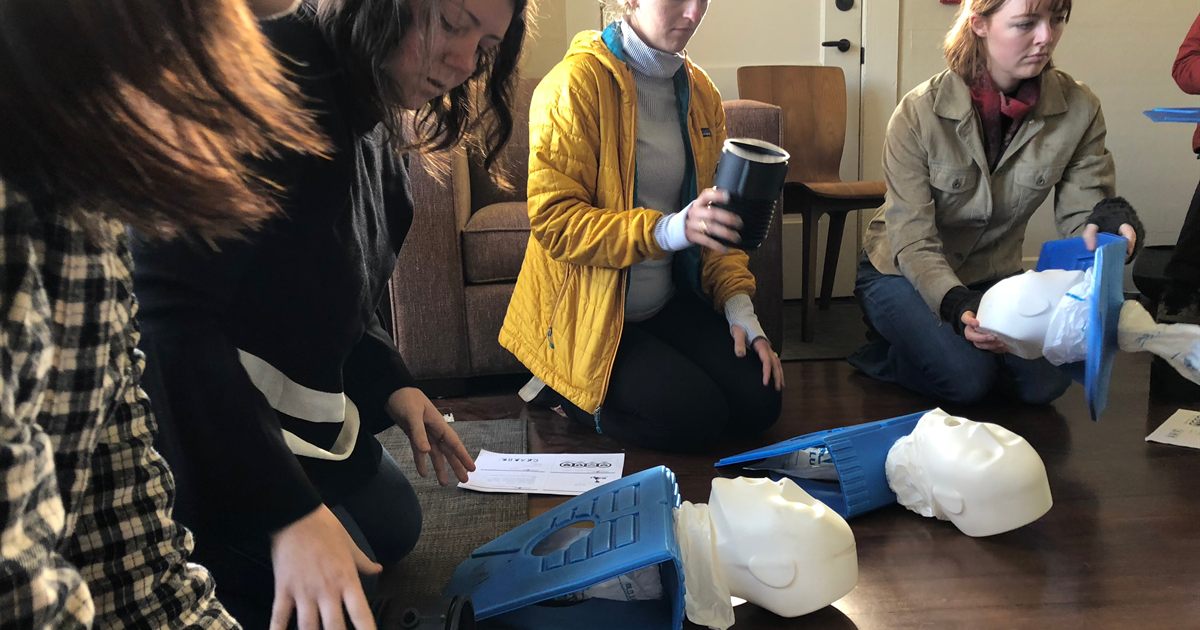
Choking is one of the few workplace emergencies that turns fatal in minutes if no one acts — and it happens most in exactly the places you share food and eat in a hurry: canteens, staff kitchens, cafés, restaurants and care homes. A completely blocked airway gives you only a few minutes before the person loses consciousness, so the value of first aid here is entirely about a trained colleague acting straight away. This guide covers how to help a choking adult step by step, when to call 999, and what UK employers need in place so someone on site actually knows what to do.
Mild vs severe choking — the first thing to check
Before you touch anyone, work out how bad the blockage is, because it changes what you do. Ask: "Are you choking?"
- Mild (partial) blockage — they can still cough, speak, cry or breathe. Their own cough is the most powerful tool there is. Encourage them to keep coughing, stay with them, and don't slap their back or interfere.
- Severe (complete) blockage — they can't speak, can't cough effectively, are silent, may clutch their throat, go red then blue, or nod when you ask if they're choking. This is the emergency — act now.
How to help a choking adult step by step
The UK sequence, from the Resuscitation Council UK, is back blows first, then abdominal thrusts, alternating until the airway clears or the person collapses.
- Encourage coughing if the blockage is mild — it clears most obstructions on its own.
- Give up to 5 back blows. Lean the person well forwards so the object comes out of the mouth rather than going further down. Give up to five sharp blows between the shoulder blades with the heel of your hand, checking after each one to see if it's cleared. Stop as soon as it clears.
- Give up to 5 abdominal thrusts. If back blows fail, stand behind them, wrap your arms round their waist, make a fist just above the navel (below the breastbone), grasp it with your other hand and pull sharply inwards and upwards up to five times.
- Alternate and call 999. Keep repeating five back blows and five abdominal thrusts. If the blockage hasn't cleared after three cycles, call 999 (send someone to call sooner if you can) and continue until help arrives.
- Start CPR if they go unresponsive. Lower them gently to the floor, call 999, send for the nearest defibrillator and begin CPR — 30 chest compressions to 2 rescue breaths — until the ambulance crew take over.
When to call 999
Call 999 for a choking casualty if any of these apply:
- The blockage hasn't cleared after three cycles of back blows and abdominal thrusts.
- The person becomes unresponsive — start CPR immediately.
- You're not sure it's fully cleared, or they're still struggling to breathe, coughing badly or distressed.
Even after a good outcome, anyone who received abdominal or chest thrusts must be seen by a doctor, because the force can cause internal injury. A choking incident serious enough to need first aid should go in your accident book, and if it led to unconsciousness or hospital treatment it may be reportable under RIDDOR.
Does a first aid kit help with choking?
Not really — and that's the key point. Choking is treated with technique, not equipment, so there's no specific choking item in a standard BS 8599-1 kit. Anti-choking suction devices exist and some care settings choose to buy them, but they are not part of UK resuscitation guidance and never replace back blows and thrusts. What actually saves someone is a colleague who has been trained and can act in the first minute.
That makes choking a people problem, not a kit problem. Both the practical skills and the recognised sequence are taught on an accredited First Aid at Work (FAW) or Emergency First Aid at Work (EFAW) course, which also covers the related life-threatening emergencies your first-aiders need to handle:
- Anaphylaxis and severe allergic reactions — which can look like choking but need adrenaline, not thrusts.
- Burns and scalds — common in the same kitchens where choking happens.
- The full workplace first aid procedure for making the scene safe, treating and recording.
What employers must have in place
Under the Health and Safety (First-Aid) Regulations 1981, employers must make "adequate and appropriate" first aid provision, decided by a first aid needs assessment. For choking specifically that means asking:
- Do we have enough trained first-aiders, on every shift and location, to reach a choking casualty within a minute? Canteens, cafés and care homes carry a higher risk and usually justify more cover. See how many first-aiders you need.
- Is their training in date? FAW and EFAW certificates last three years, and the technique is easy to forget — an annual refresher keeps the choking sequence sharp.
- Can we prove it? Keep first aid training records showing who is qualified and when their certificates expire.
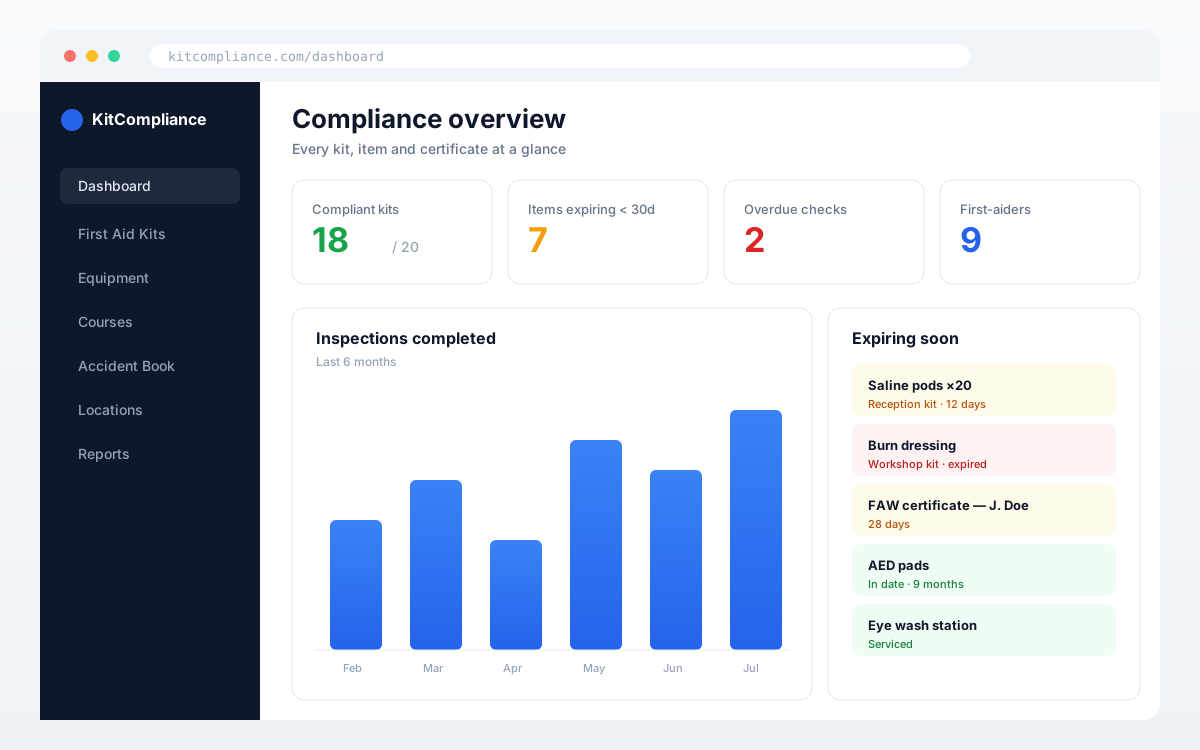
You can't put choking rescue in a box on the wall, but you can make sure the people behind it are ready. KitCompliance keeps your whole first-aid picture in one place: kits and their expiry dates, inspections, and the first-aiders whose training keeps you legal — with reminders before a certificate lapses and one-click reports that prove your provision. See the getting-started guide to set it up.
Frequently asked questions
What is the first aid procedure for choking at work?
For a mild blockage, encourage the person to keep coughing. For a severe blockage where they can't speak, cough or breathe, give up to five sharp back blows between the shoulder blades, then up to five abdominal thrusts, and alternate the two. Call 999 if it doesn't clear after three cycles, and start CPR if the person becomes unresponsive.
Should you do back blows or abdominal thrusts first?
Back blows first. UK guidance is up to five back blows between the shoulder blades, and only if those fail do you move on to up to five abdominal thrusts, then alternate the two. Abdominal thrusts aren't used on babies under one, and are replaced by chest thrusts for pregnant or very large casualties.
Do you need to go to hospital after abdominal thrusts?
Yes. Anyone who has received abdominal thrusts should be seen by a doctor, because the technique can cause internal injury. Advise them to seek medical assessment even if they feel fine, and record the incident in the accident book.
Does a workplace first aid kit contain anything for choking?
No — choking is treated with technique, not equipment, so a standard BS 8599-1 kit has no specific choking item. What matters is having enough trained first-aiders on site who know the back blows and abdominal thrusts sequence, which your needs assessment should determine.