Anaphylaxis is the most time-critical emergency most workplaces will ever face. A severe allergic reaction can close someone's airway in minutes, and the single thing that saves lives — adrenaline — has to be given fast. Yet it sits in an awkward gap: it isn't in a standard first aid kit, it usually can't be bought without a prescription, and many managers assume it's "not their problem" until an employee with a nut or bee-sting allergy joins the team. This guide explains how to recognise and treat anaphylaxis, and — just as important — what UK employers are expected to plan for.
What is anaphylaxis?
Anaphylaxis is a severe, potentially fatal allergic reaction that affects the whole body. It differs from a mild allergy — a bit of sneezing or a localised rash — because it involves the airway, breathing or circulation. Common workplace triggers are foods (peanuts, tree nuts, shellfish, milk, eggs), insect stings, some medicines, and — in clinical, cleaning or laboratory settings — latex and certain chemicals. A reaction can begin within seconds or take up to an hour or two, and it can escalate very quickly.
Recognising the signs
The key thing first-aiders are taught is to look for airway, breathing and circulation problems. Warning signs include:
| System | Signs to watch for |
|---|---|
| Airway | Swelling of the tongue, lips, throat or mouth; a hoarse voice; difficulty swallowing. |
| Breathing | Wheezing, coughing, shortness of breath, noisy breathing or a sense of the chest tightening. |
| Circulation | Feeling faint or dizzy, pale or clammy skin, a rapid heartbeat, sudden collapse or loss of consciousness. |
| Skin (often first) | A widespread, raised, itchy rash (hives); flushing; swelling around the eyes. On its own this is not anaphylaxis — but with any airway, breathing or circulation sign, treat it as such. |
How to treat anaphylaxis at work
If you suspect anaphylaxis, act in this order — every step matters:
- Use adrenaline immediately. If the person has their own prescribed adrenaline auto-injector (AAI) — brand names include EpiPen, Jext and Emerade — help them use it, or use it for them, into the outer middle of the thigh. It works through clothing. Note the time.
- Call 999 and say "anaphylaxis". Do this even if the AAI seems to be working, and give your exact location and any access details for the ambulance.
- Position them correctly. Lay the person flat and raise their legs. If they are struggling to breathe, let them sit up; if they are pregnant, lay them on their left side; if they are unconscious but breathing, use the recovery position.
- Give a second dose after 5 minutes if there is no improvement and a second AAI is available.
- Be ready for CPR. If the person stops breathing normally, start CPR and use an AED (defibrillator) if one is nearby.
- Insist on hospital. Anyone who has had anaphylaxis must be seen in hospital, even if they seem fully recovered — a second reaction can follow hours later.
What UK employers must plan for
There is no rule that says every workplace must keep adrenaline. But the Health and Safety (First-Aid) Regulations 1981 require "adequate and appropriate" provision, and HSE guidance is clear that this includes considering employees with particular medical conditions. In practice that means:
- Cover it in your needs assessment. If a member of staff is known to be at risk of anaphylaxis, record it (with their consent) in your first aid needs assessment and decide how they will be helped in an emergency.
- Make sure first-aiders know. Your trained first-aiders should know who is at risk, what their trigger is, and where they keep their auto-injectors. This is one reason the first-aider's duties extend beyond simply holding a certificate.
- Consider awareness training. A short anaphylaxis and AAI briefing is a sensible addition to first aid at work training where a real risk exists.
- Manage food and allergen risk. Canteens, cafés and catering areas must follow allergen labelling law (including Natasha's Law for pre-packed food) — see catering first aid for the wider kitchen picture.
Medicines, kits and the expiry problem
A British Standard BS 8599-1 kit deliberately contains no medicines — no adrenaline, no antihistamines, no painkillers. If your assessment concludes you need to hold any medication on site (for example an employee's own spare AAI, kept with their agreement), that's covered by the same rules as any other medication in a workplace first aid kit: store it separately, record whose it is, and — critically — watch the date.
Adrenaline auto-injectors have a notoriously short shelf life, often just 12–18 months, and adrenaline degrades once expired. An out-of-date AAI is the last thing you want to discover in an emergency. The same discipline you apply to first aid kit expiry dates — checking, logging and replacing before items lapse — applies doubly to anything life-saving.
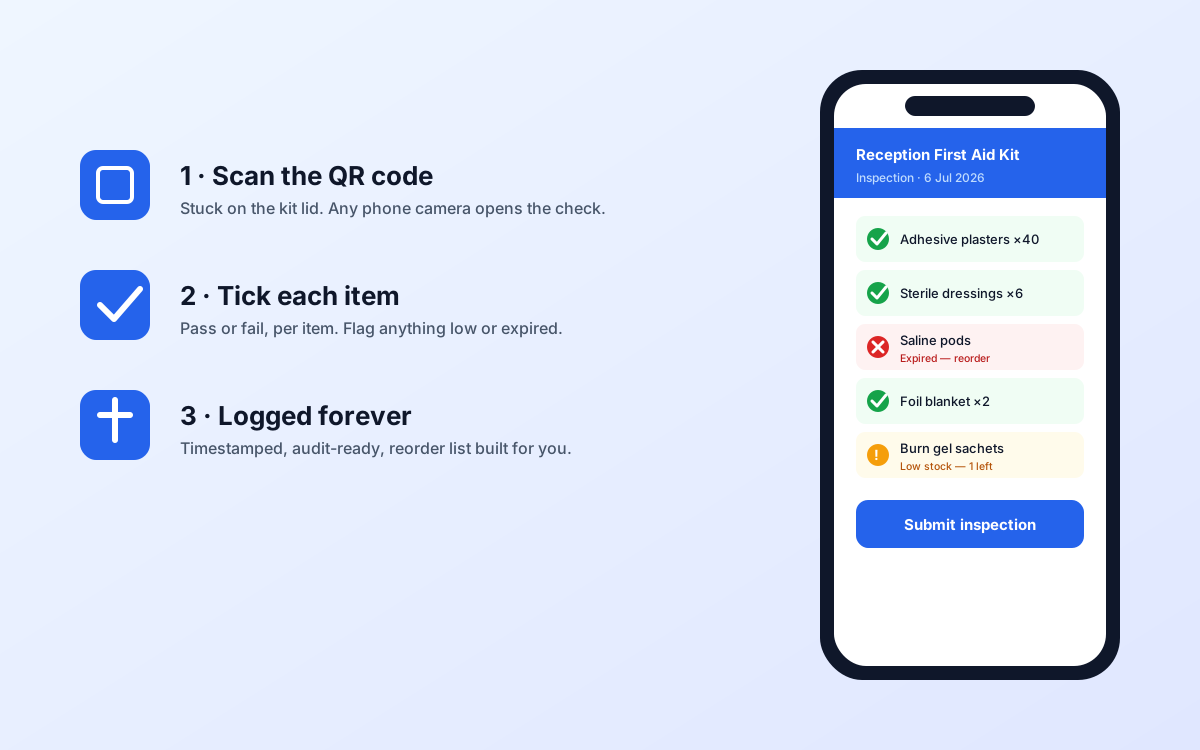
Recognising and treating anaphylaxis is a first-aider's job in the moment; keeping the provision behind them true day to day is the employer's. That's what KitCompliance automates: build each kit from the ISO 45001 suggested list, flag short-dated and expired items automatically, log inspections in seconds, and produce a one-click report that proves your provision. See the getting-started guide to set it up.
Frequently asked questions
Are UK employers legally required to keep an EpiPen at work?
No. There's no legal duty on a general workplace to stock adrenaline auto-injectors, and you can't buy prescription-only adrenaline without a prescription. Staff at risk carry their own devices. What the law does require is that your needs assessment considers employees with known severe allergies and plans how they'll be helped.
Can a first aider use someone else's adrenaline auto-injector?
In a life-threatening emergency a trained first aider can help a person use their own AAI, or administer it for them if they can't. The devices are designed to be simple for exactly this. Using a casualty's own device on the casualty is accepted good practice; only in an extreme emergency with no other adrenaline available would you use one person's device on someone else.
Does a workplace first aid kit contain adrenaline or antihistamines?
No. A BS 8599-1 kit contains no medicines at all. Adrenaline auto-injectors are prescription-only and carried by the individuals prescribed them. Any medication you do choose to hold should be stored separately, logged, and expiry-tracked.
Is anaphylaxis at work reportable under RIDDOR?
It can be. If the reaction is caused by occupational exposure — for example latex or a chemical used at work — and a worker is incapacitated, it may be reportable. A reaction to food someone brought in themselves is generally not work-related. Record it in the accident book and check the RIDDOR criteria if unsure.