Around one in eleven people in the UK has asthma, so the odds are high that someone in your workplace does. Most keep it well controlled and you will rarely see a problem — but a trigger at work, a chest infection, or simply a forgotten inhaler can tip a normal day into an asthma attack. The good news is that the first aid is straightforward: sit the person up, help them use their reliever, and know the handful of signs that mean you must call 999 without delay.
What happens in an asthma attack
Asthma affects the airways — the small tubes that carry air in and out of the lungs. In an attack, the muscles around those tubes tighten, the lining swells and produces sticky mucus, and the airways narrow. Air struggles to get through, which is why breathing becomes hard, wheezy and exhausting.
A reliever inhaler — usually blue, most commonly salbutamol — relaxes those muscles and opens the airways within minutes. That is why getting the reliever into the person quickly is the single most important thing you can do, alongside keeping them calm and upright.
Spotting an asthma attack
Someone having an attack may show some or all of these signs. Trust the overall picture rather than waiting for every symptom.
| Early / building signs | Severe — act fast |
|---|---|
| Coughing and wheezing | Too breathless to speak in full sentences |
| Shortness of breath | Reliever inhaler not helping |
| Tight chest — "a band around the chest" | Breathing fast and hard, gasping |
| Difficulty talking in long sentences | Lips, fingers or face turning blue or grey |
| Feeling anxious or agitated | Drowsiness, exhaustion or confusion |
A silent chest — where the wheezing stops but the person is clearly still struggling — is a danger sign, not a good sign: too little air is moving to make a noise. Treat any severe sign as a 999 emergency.
Treating an asthma attack: step by step
Use these steps for a conscious adult who can help themselves.
- Sit them up and keep them calm. Help them sit upright — never lie down — and loosen tight clothing. Reassure them and encourage slow, steady breathing. Fear and panic tighten the chest further.
- Help them use their reliever inhaler. One puff of the blue reliever every 30–60 seconds, up to a maximum of 10 puffs. A spacer, if they have one, delivers the medicine far more effectively than the inhaler alone.
- Call 999 if it is not improving. Ring for an ambulance if they are no better after 10 puffs, if they get worse at any point, if you are worried at any time, or if it is their first attack. Say clearly that it is an asthma attack.
- Repeat the reliever while you wait. If the ambulance has not arrived within 10 minutes and they are still unwell, repeat step 2 — one puff every 30–60 seconds up to 10 puffs.
- Monitor breathing and be ready to act. Stay with them. If they become drowsy, exhausted or blue around the lips, or stop breathing normally, call 999 again and be ready to start CPR if they become unresponsive.
Most people with asthma know their own condition and their inhaler well — let them lead, and support them. Your job is to keep them calm, keep them upright, make sure the reliever is used, and make the 999 call at the right moment.
When to call 999
| Call 999 if… | Why |
|---|---|
| The reliever is not helping after 10 puffs | An attack that won't respond to the reliever needs urgent medical treatment. |
| They are too breathless to speak, eat or sleep | A sign the attack is severe and the airways are badly narrowed. |
| Lips, fingers or face turn blue or grey | Not enough oxygen is reaching the body — a medical emergency. |
| They become drowsy, exhausted or confused | The person is tiring — respiratory failure can follow. |
| It is their first ever attack, or you are worried | When in doubt, always call 999 — it is better to call early. |
If the person becomes unresponsive and stops breathing normally, call 999 (again), send someone for the nearest defibrillator, and start CPR straight away.
What UK employers should have in place
No regulation names "asthma", but the duty to be ready for a medical emergency flows from the Health and Safety (First-Aid) Regulations 1981, which require "adequate and appropriate" provision. Your first aid needs assessment is where you weigh known health conditions in your workforce and any respiratory triggers in the workplace itself:
| Provision | What to put in place |
|---|---|
| Trained first-aiders | Enough first-aiders who can recognise an attack and coach the reliever routine, covering every shift. |
| Access to relievers | Make sure staff with asthma keep their inhaler and spacer with them and in date. Some workplaces keep an emergency spare reliever and spacer under clear local guidance — a sensible addition beyond the standard kit contents. |
| Control the triggers | Dust, fumes, cold air, cleaning chemicals and some processes can trigger or worsen asthma. Managing them through your risk assessment protects everyone and reduces occupational asthma risk. |
| Individual management plans | Where an employee discloses asthma, agree a short, confidential plan: their triggers, usual signs, where they keep their inhaler, and when to call 999. This is a reasonable adjustment under the Equality Act 2010. |
| Somewhere to recover | A quiet space to sit up and recover — a first aid room or calm area away from any trigger. |
| Recording & reporting | Log the incident in your first aid record and accident book, and check whether it is reportable under RIDDOR — especially if a work substance may have triggered it. |
After the emergency
Once the person has recovered or been handed to the ambulance crew, write down what happened while it is fresh — the signs you saw, how many puffs were taken and when, and how they responded — in your first aid treatment record. An asthma attack from a personal condition is generally not reportable under RIDDOR, but always log it, and report it if a work activity caused or contributed to it. Anyone who has had an attack should follow up with their GP or asthma nurse, and should not drive themselves home.
Supporting a colleague through a frightening attack is stressful, even when it ends well. Offer a quiet debrief to everyone involved and check in on the person afterwards — looking after the responder is part of a first-aider's duties and responsibilities.
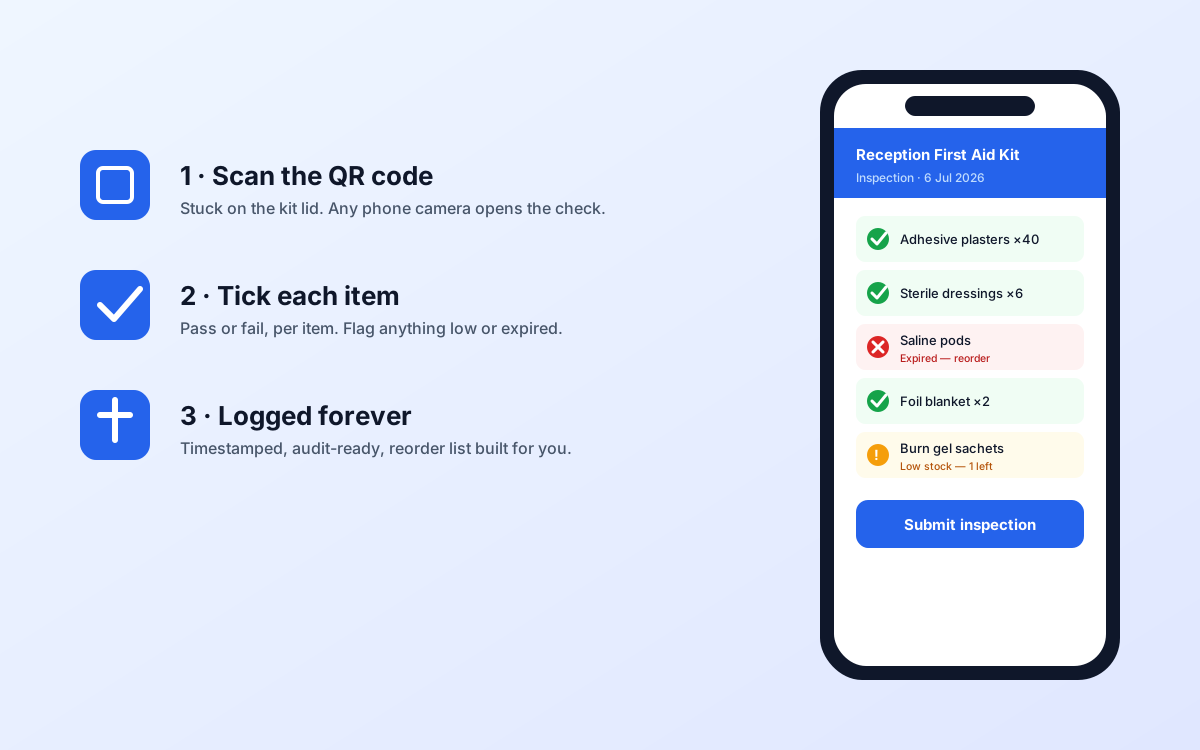
Helping someone through an asthma attack is a skill; keeping the provision behind your first-aiders in order is a routine. That is what KitCompliance does: track every first aid kit and its contents, every certificate and refresher due date, and log your checks in seconds — with reminders before anything lapses and a one-click report that proves your provision. See the getting-started guide to set it up.
Frequently asked questions
What should you do if someone has an asthma attack at work?
Sit the person upright — never let them lie down — and keep them calm. Help them take one puff of their blue reliever inhaler every 30–60 seconds, up to a maximum of 10 puffs, using a spacer if they have one. Call 999 if they feel no better after 10 puffs, if they get worse, if you are worried at any point, or if it is their first attack. While you wait, repeat the reliever every 30–60 seconds up to 10 puffs if there is no ambulance within 10 minutes, and monitor their breathing.
When should you call 999 for an asthma attack?
Call 999 if the reliever is not helping after 10 puffs, if the person is getting worse, if they are too breathless to speak, eat or sleep, if their lips or fingers turn blue, if they become drowsy or exhausted, if it is their first ever attack, or any time you are worried. It is always better to call than to wait — an asthma attack can become life-threatening quickly.
How many puffs of a reliever inhaler are safe in an emergency?
In an attack, current UK guidance is one puff of the blue reliever every 30–60 seconds, up to a maximum of 10 puffs, ideally through a spacer. If there is no improvement after 10 puffs, call 999. While waiting for the ambulance, the 10-puff cycle can be repeated every 10 minutes if the person is still struggling. This emergency dosing is very different from everyday use, where repeatedly needing a reliever is a warning sign to see a doctor.
Can a first-aider give someone else's inhaler to a colleague?
A workplace first-aider should help the person use their own reliever inhaler, not routinely administer someone else's prescribed medicine. In a genuine life-threatening emergency where the person cannot help themselves and there is no alternative, helping them take a reliever is defensible — but the safe, correct approach is to encourage self-administration, call 999, and follow the ambulance handler's instructions. An emergency spare reliever should only be used in line with clear local guidance.
Is an asthma attack at work reportable under RIDDOR?
Usually not. An attack triggered by the person's own asthma, unconnected to the work, is not reportable. It becomes reportable if a work activity — such as exposure to a substance, dust or fumes — caused or worsened the attack, or if it leads to a specified injury or more than seven days off work. Whatever the cause, record it in your first aid treatment record and the accident book.