Most first aid guidance assumes your people stay on one site. Plenty don't: they drive between locations, visit clients, work on the road, or fly abroad for the business. The duty to look after them doesn't stop at the office door — but the usual workplace rules don't map neatly onto a hotel room in another country either. This guide sets out what UK employers actually need to do for travelling and overseas workers, and how to keep it provable.
Does the law reach travelling and overseas workers?
Two things matter here. The Health and Safety (First-Aid) Regulations 1981 apply to workplaces in Great Britain — they don't travel overseas with your staff. But the Health and Safety at Work etc. Act 1974 puts a general duty on employers to protect employees' health and safety so far as is reasonably practicable, and the Management of Health and Safety at Work Regulations 1999 require you to assess the risks your work creates. Those duties don't stop when someone leaves the building or boards a plane.
So you can't point at the 1981 Regulations for an overseas trip, but you're still expected to have thought the trip through and made sensible provision. For travel within the UK — between sites, to clients, or driving for work — it's simpler: those journeys are part of the work your needs assessment already has to cover.
Travelling workers are usually lone workers too
Someone on the road or abroad is very often working alone, with no colleague nearby to help if they're hurt or taken ill. That stacks two risks together, so treat travel and lone working as one assessment. The same questions apply as for remote and home workers: can they summon help, do they carry a kit, and does anyone know where they are and when to expect them back?
Risk-assess the trip, not just the person
A day-trip to a client in the next city and a two-week project on a remote site are not the same risk. Weigh:
| Factor | What to consider |
|---|---|
| Destination | Country and region, standard of local healthcare, distance to a hospital, language barriers, and any travel advice or health warnings for the area. |
| The work itself | A desk meeting is low-risk; site visits, manual work, driving long distances or handling equipment raise it and may need a bigger kit and more planning. |
| Lone working | Whether anyone is with them, how they raise the alarm, and how they check in — see lone worker first aid requirements. |
| The traveller's health | Known medical conditions, medication they must carry, and whether the destination affects it (climate, altitude, vaccinations, time-zone and medication timing). |
| Access to help | Local emergency number, nearest competent medical care, and a medical-assistance line through travel insurance for anything serious. |
What goes in a travel first aid kit
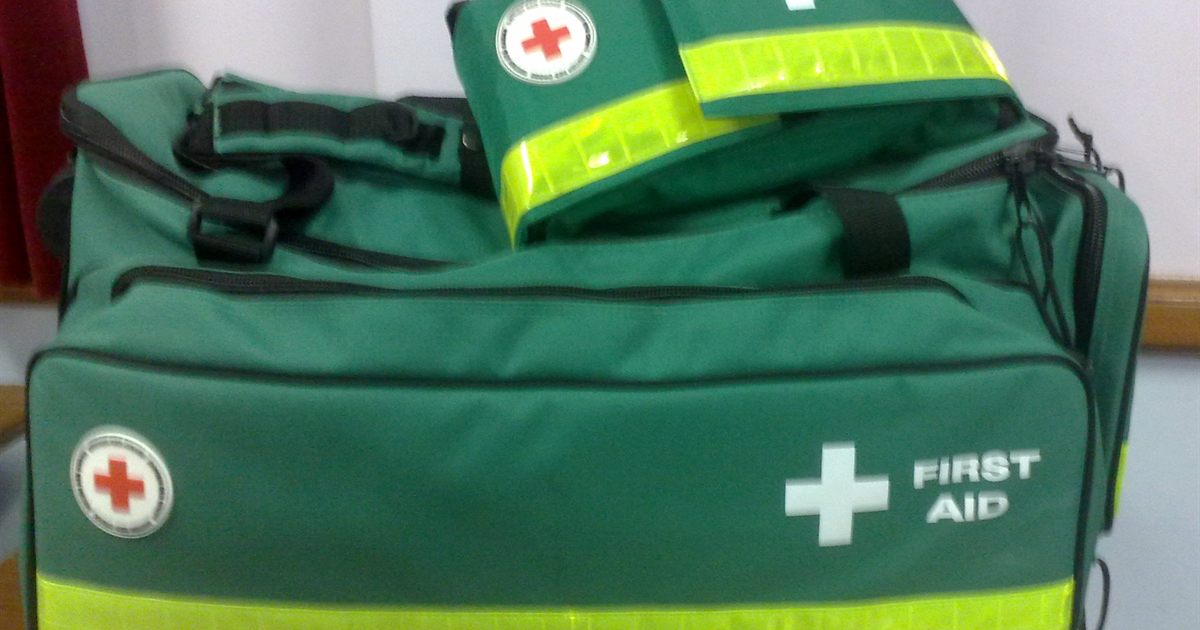
There's no single British Standard for a "travel" kit the way there is for workplace (BS 8599-1) or vehicle (BS 8599-2) kits, so match the contents to the trip. A sensible personal travel kit holds:
- Assorted plasters, sterile dressings and bandages, and wound-cleansing wipes
- Micropore tape, a triangular bandage and safety pins
- Disposable gloves and a resuscitation face shield
- Scissors, tweezers and a foil (survival) blanket
- Any personal medication the traveller needs, in its original labelled packaging
For long-haul, remote or higher-risk trips, add burn dressings, a wider range of dressing sizes, rehydration sachets and anything the destination's risks call for. Always check the destination's rules before packing medicines — some everyday UK medicines are restricted or banned elsewhere, and carrying a GP letter for prescription items avoids trouble at the border.
Keeping travel kits in date
Travel kits are the easiest to let slip, because they live in a bag or a boot rather than on a wall where someone sees them. Dressings and medicines carry expiry dates, and a kit that comes back from one trip needs restocking before the next. Fold every travel and vehicle kit into the same inspection routine as your fixed workplace kits so nothing goes out of the door empty or expired.
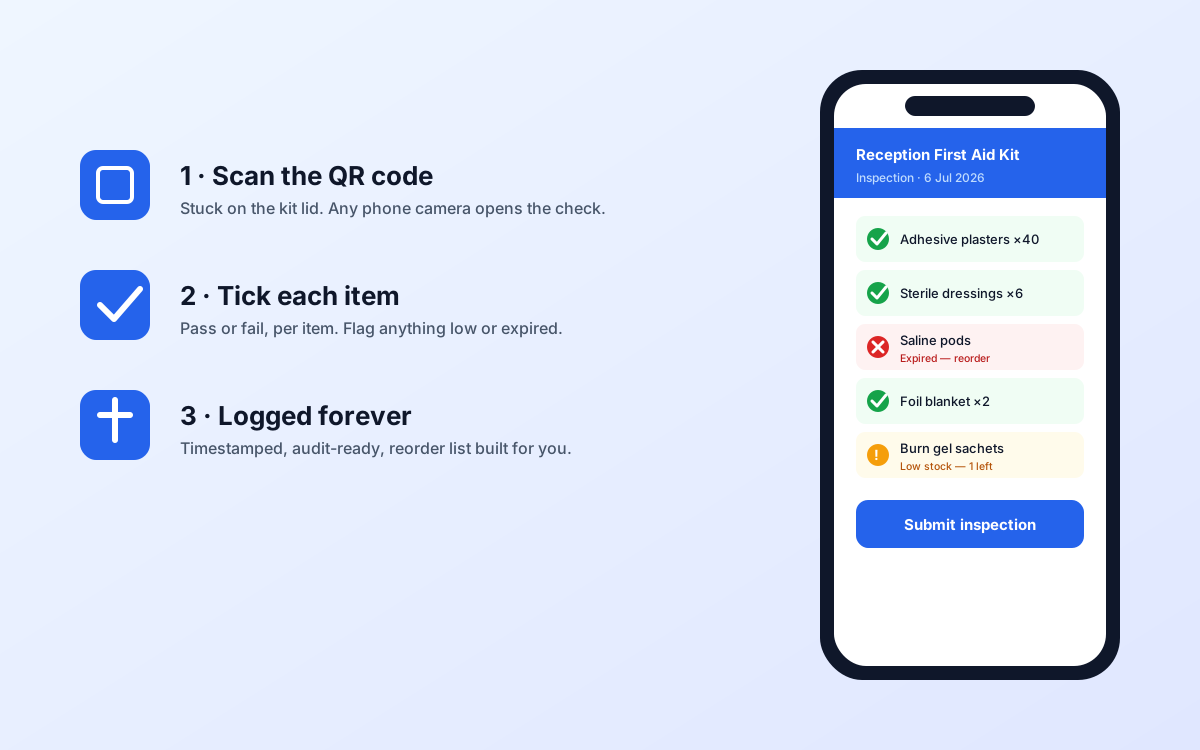
The arrangement is only as good as the kit behind it. That's where KitCompliance helps: register each travel and vehicle kit alongside your workplace kits, log a quick check before it ships out, and get reminders before any dressing or medicine expires — with a one-click report that shows every kit was in date when it left. See the getting-started guide to set it up.
Frequently asked questions
Do UK first aid regulations apply when employees travel or work abroad?
The 1981 First-Aid Regulations apply to your GB workplaces, not to trips overseas. But your duty of care under the Health and Safety at Work etc. Act 1974 and the duty to risk-assess under the Management Regulations 1999 do follow the employee, so far as is reasonably practicable — so you still assess the trip and make suitable provision.
What should be in a business travel first aid kit?
Match it to the trip. A core kit holds plasters, sterile dressings and bandages, wipes, tape, gloves, a face shield, scissors, tweezers and a foil blanket, plus personal medication. Remote or long-haul trips need more — burn dressings, extra dressings and rehydration. Check destination rules before packing medicines.
Do employees who drive for work need a first aid kit?
No law forces one into a work vehicle, but your needs assessment will almost always say yes. A BS 8599-2 motoring kit is the recognised standard; keep it in date and check it with your other kits.
Who is responsible for first aid for travelling employees?
The employer. The duty to assess and provide stays with you even when the employee is off-site or abroad — it can't be handed to the traveller.