A salon looks like a low-risk workplace — and on paper it mostly is — but it quietly combines four hazards an office never has to think about: strong chemicals next to skin and eyes, sharp blades in constant use, wet and slippery floors, and a chair full of members of the public. Hairdressing is also one of the leading causes of work-related skin disease in the UK. That mix is exactly what your first-aid provision has to be built around. This guide covers what UK law requires of a hair, beauty or barber salon, the hazards to plan for, how many first-aiders and what kit you need, and how to keep it all provable.
The legal starting point
There is no salon-specific first-aid law. Salons sit under the same framework as every other workplace: the Health and Safety (First-Aid) Regulations 1981, which require an employer to provide adequate and appropriate equipment, facilities and people so that staff who are injured or taken ill at work can be given immediate help. If you employ anyone — even one stylist or a Saturday junior — these duties apply. A self-employed chair-renter still has to look after their own first aid, and the salon owner has to think about how the space, its hazards and its clients are covered.
Two things push "adequate and appropriate" a notch above a quiet office. First, the products — bleach, peroxide, colour, perming and relaxing chemicals, and nail solvents — bring burn, irritation and allergy risks that fall under COSHH as well as first aid. Second, your premises are full of clients. The Regulations technically cover employees, but the HSE strongly recommends including non-employees such as customers in your assessment — and in a salon the person in the chair is often the one a chemical or blade could hurt.
Start with a needs assessment
Every decision below flows from a first aid needs assessment. For a hair or beauty salon, weigh these site-specific factors:
| Factor | What it means for a salon |
|---|---|
| Chemical burns & skin disease | Bleach, peroxide, colour, perming and relaxing products can burn the scalp, skin and eyes, and repeated wet-work causes dermatitis — hairdressing's most common occupational illness. |
| Allergic reactions | Hair dye (notably PPD) and some treatments can trigger reactions ranging from a rash to, rarely, anaphylaxis. Skin-allergy testing reduces but never fully removes the risk. |
| Cuts & sharps | Scissors, thinning shears, clippers and cut-throat razors cause cuts and expose you to blood — a barber shop in particular needs a strong sharps and bleed response. |
| Slips, hot tools & burns | Wet and hair-covered floors, hot tongs, dryers, steamers and depilatory wax all cause slips and burns on a busy salon floor. |
| Lone & late working | Staff opening, closing or working alone in a small salon need their own cover and a way to raise the alarm. |
How many first-aiders — and what training?
There's no legal ratio; the number falls out of your assessment (for the general rules of thumb, see how many first aiders you need). Most salons are treated as low-risk on headcount but with hazards that push the training level up. As a practical guide:
- A very small, low-risk salon might meet the minimum with an appointed person — someone who looks after the kit and calls the emergency services — rather than a qualified first-aider.
- Most salons conclude they want at least one EFAW-trained first-aider on every shift, given the chemicals, sharps and public. Emergency First Aid at Work is the usual level; a larger or higher-risk site may go for full FAW.
- Cover for absence. A single trained stylist is no cover at all the day they're on holiday — build in enough people that you're never left with none.
For the difference between an appointed person, a first-aider and the employer's duty, see who is responsible for first aid at work.
Kit: what a salon should provide
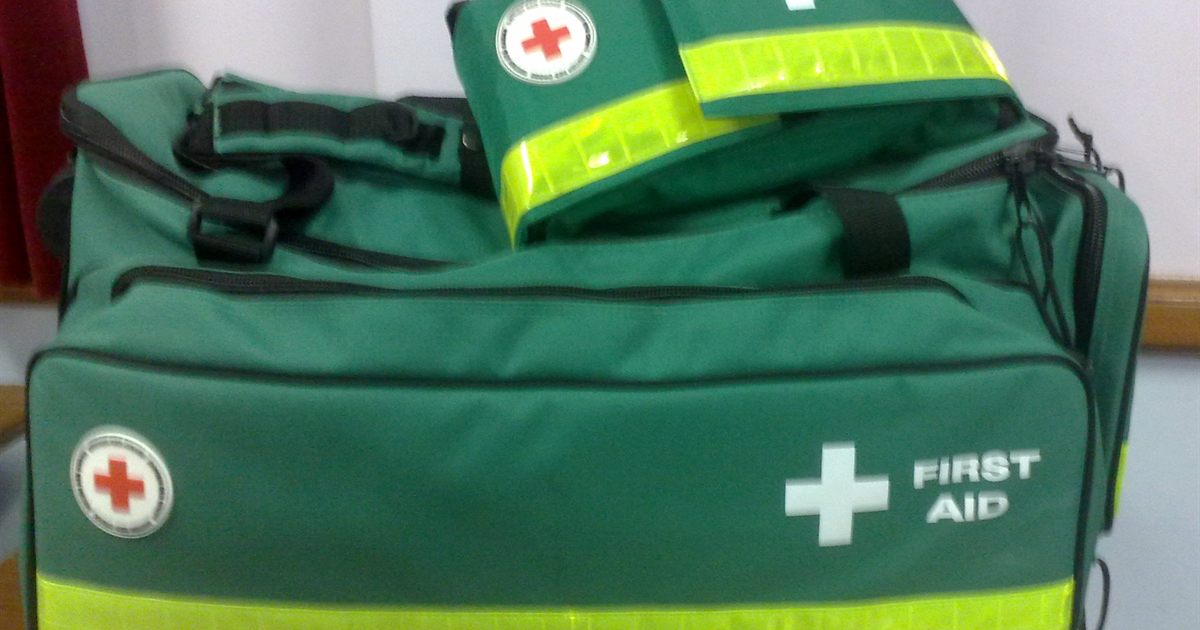
Start with a BS 8599-1 workplace first aid kit sized to your headcount, kept within easy reach of the salon floor. On top of the standard kit, a salon's hazards call for:
- Sterile eye wash for chemical splashes, especially where a basin's running water isn't immediately to hand — see eyewash station requirements.
- Burns provision — burn dressings or a small burns kit for scalds from hot tools, wax and chemical burns. Our burns first aid guide covers treatment and what to hold.
- Plenty of dressings and gloves for cuts and to protect against blood — a barber shop should carry more, and the catering-style blue detectable plasters are worth considering where hygiene matters.
- No tablets or medicines — HSE guidance keeps painkillers and creams out of the workplace kit.
Whatever you provide has to stay stocked and in date. Salon kits get raided for the odd plaster and their contents expire, so inspect them regularly and restock promptly.
Signs, records and reporting
Once your provision is in place, make it visible and provable:
- Signage — first-aid signs so staff can find the kit and the nearest first-aider fast.
- Accident book — record every injury to staff or clients, kept in line with data-protection rules (see the accident book and RIDDOR).
- RIDDOR reports — certain serious incidents to staff, and incidents to clients that result in them being taken straight to hospital, are reportable to the HSE. A severe chemical burn or an allergic collapse could qualify — know which do.
- Inspection logs — dated evidence that kits and eye wash are checked and in date, so you can prove provision at a glance.
Quick salon first aid checklist
| Item | In place? |
|---|---|
| Written needs assessment covering staff and clients | … |
| Appointed person or EFAW first-aider on each shift | … |
| BS 8599-1 kit within reach of the salon floor | … |
| Sterile eye wash for chemical splashes | … |
| Burns provision for hot tools, wax and chemicals | … |
| COSHH sheets, skin-allergy testing and safe storage | … |
| First-aid signage displayed | … |
| Accident book, RIDDOR process and inspection logs | … |
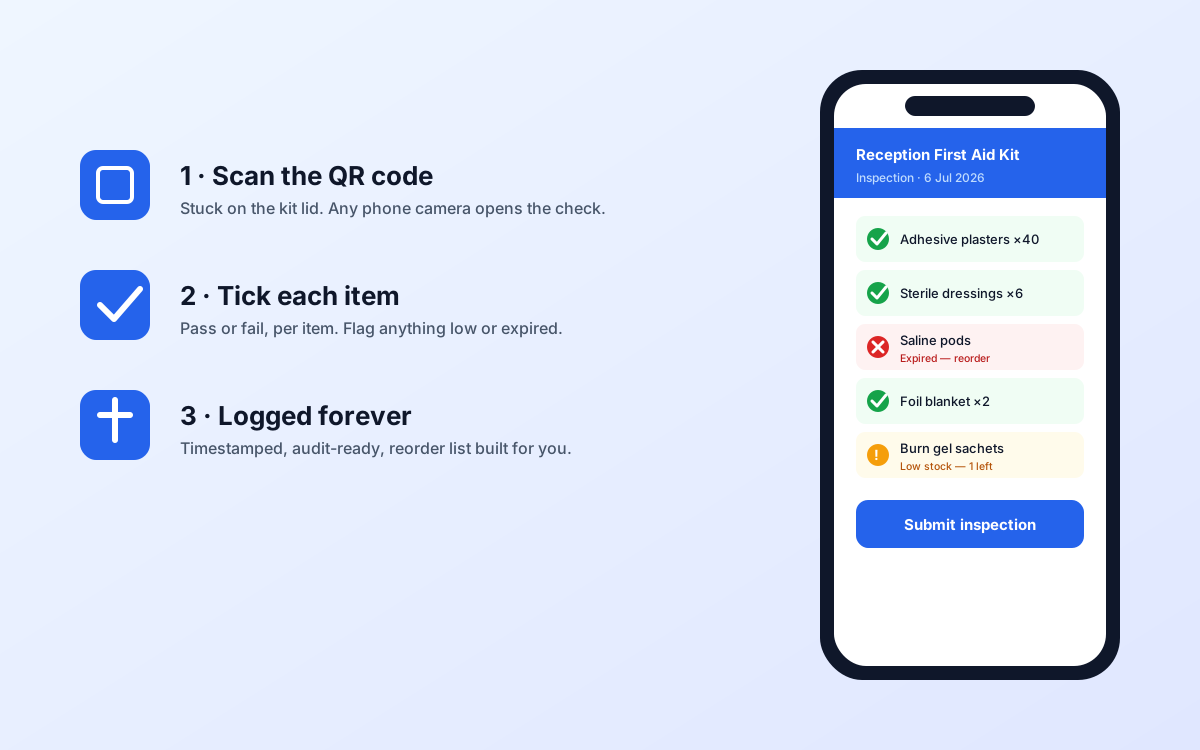
A salon's first-aid burden isn't the paperwork on day one — it's keeping it true across busy weeks: every kit stocked, the eye wash and burns dressings in date, every inspection logged, every first-aider's certificate current. That's exactly what KitCompliance automates. Build your kit from the ISO 45001 suggested list, add the eye wash and burns items your salon needs, record checks in seconds, and get reminders before anything lapses — with a one-click report that proves your provision. See the getting-started guide to set it up.
Frequently asked questions
Do hair and beauty salons legally need a first aider in the UK?
Every salon must provide first aid that is "adequate and appropriate" under the 1981 Regulations, and a needs assessment decides what that is. There's no law that names salons and orders a qualified first-aider — a very small, low-risk salon might manage with an appointed person and a stocked kit — but because salons handle chemicals, sharps and the public, most conclude they need at least one EFAW-trained first-aider on each shift.
What are the main first aid hazards in a salon?
Chemical burns and skin irritation from bleach, peroxide and perming products; allergic reactions to hair dye (including rare anaphylaxis to PPD); cuts from scissors, clippers and razors; eye splashes; slips on wet or hair-covered floors; and burns from hot tongs, dryers and wax. Nail bars add solvent and dust exposure.
Does a salon need an eye wash station?
If your assessment shows a realistic risk of chemicals reaching someone's eyes — likely in most colour and treatment salons — provide sterile eye wash where a basin's running water isn't immediately to hand, and keep it in date.
Is a skin allergy test part of first aid?
No — a manufacturer's skin-allergy (patch) test before colour is a product-safety and insurance requirement, not first aid. But it directly reduces the reactions you'd otherwise treat, so always follow the product instructions, record it, and still be ready to manage a reaction if one occurs.