A care or nursing home is one of the trickier workplaces to get first aid right — not because the rules are unusual, but because two things collide: it runs around the clock, and it is full of vulnerable people. On top of that, two different regulators are watching: the HSE for your staff and the CQC for your residents. This guide untangles who requires what, how many first-aiders you actually need to cover every shift, and the kit and equipment a home should have.
Two rulebooks: HSE for staff, CQC for residents
The single most misunderstood point about care home first aid is that "first aid" means two different things depending on who is hurt.
- Your employees are covered by the Health and Safety (First-Aid) Regulations 1981, enforced by the HSE. That is the duty to provide kits, equipment and trained first-aiders — the same law that applies to any UK workplace.
- Your residents are covered by the Care Quality Commission under the Health and Social Care Act 2008 (Regulated Activities) Regulations 2014 — safe care and treatment, staffing and the duty of candour. That is a clinical and care duty, not a first-aid-box duty.
In real life the two blur together: the first-aiders you train and roster for staff will almost always be first on scene when a resident falls or collapses too. But keeping the legal distinction clear matters, because an HSE inspector and a CQC inspector will look at different evidence — and both can turn up.
A care home is a higher-risk workplace
When you weigh provision, treat the home as higher-risk rather than low-risk. The hazards to your staff are real and varied:
- Moving and handling — hoisting and repositioning residents is a leading cause of staff musculoskeletal injury.
- Cleaning and sluice chemicals — splash and eye-injury risk that may call for eyewash.
- Kitchen and laundry — burns, scalds and cuts, which is why a catering area needs a blue-plaster kitchen kit.
- Slips, trips and needlestick — wet floors, and sharps where clinical care is given.
- Lone and night working — small night teams working with little back-up (see lone worker first aid).
Higher risk means more first-aiders, First Aid at Work (FAW) rather than the shorter Emergency First Aid at Work qualification, and extra equipment — the same logic a warehouse or construction site applies, just with a different hazard mix.
How many first-aiders does a care home need?
There is no fixed legal ratio — it comes out of your needs assessment. But the HSE's higher-risk rule of thumb is the place to start: at least one FAW-trained first-aider for 5–50 staff on duty, and one more for every additional 50. For a full breakdown by headcount and risk level, see how many first aiders you need and the difference between FAW and EFAW.
Kits, AEDs and equipment
Provision follows the assessment, but a typical home should have:
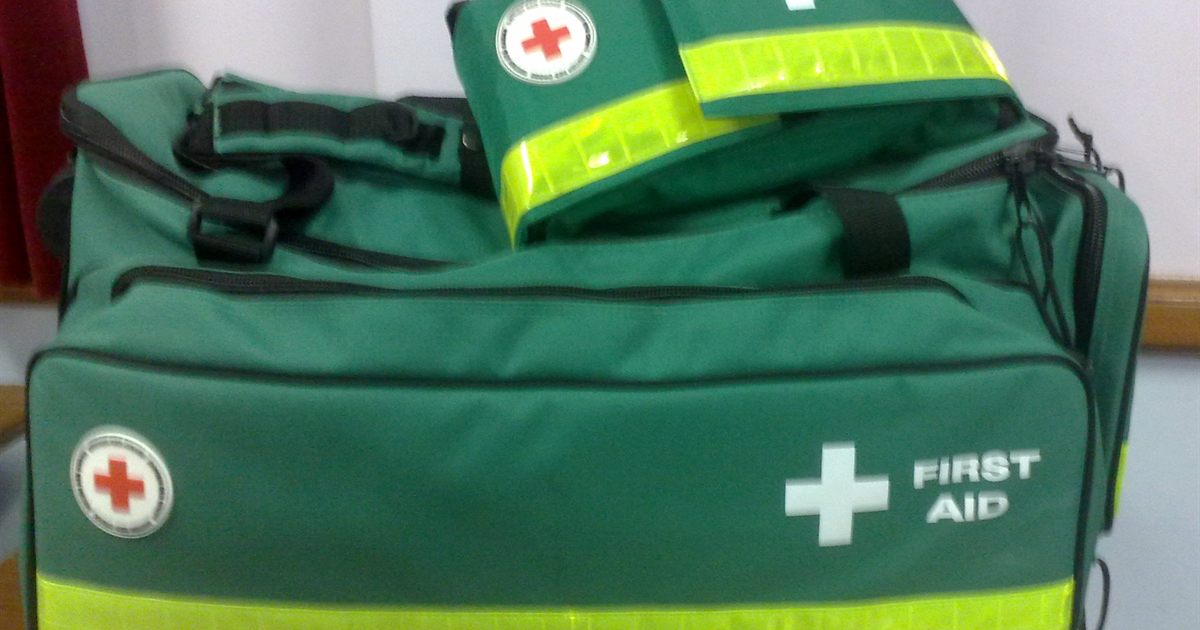
- BS 8599-1 kits — enough kits of the right size so one is within easy reach of every unit, floor and communal area (see what belongs in a kit).
- A catering kit in the kitchen, with blue detectable plasters.
- A defibrillator (AED). No law forces one, but with an older, cardiac-risk resident group most homes' assessments conclude an AED is appropriate — see workplace defibrillator requirements. Place it centrally and keep the pads and battery in date.
- Eyewash where sluice or cleaning chemicals are used.
- Signage — clear signs so agency and night staff can find the nearest kit, first-aider and AED fast.
Records, expiry and inspections
Care is a heavily audited sector, so evidence matters as much as equipment. Keep on top of:
- An accident book and knowing when an injury becomes RIDDOR-reportable to the HSE.
- Kit inspections on a set schedule (see how often to inspect) and expiry dates on dressings and AED consumables.
- First-aid certificates — FAW and EFAW last three years, so track renewals so cover never quietly lapses.
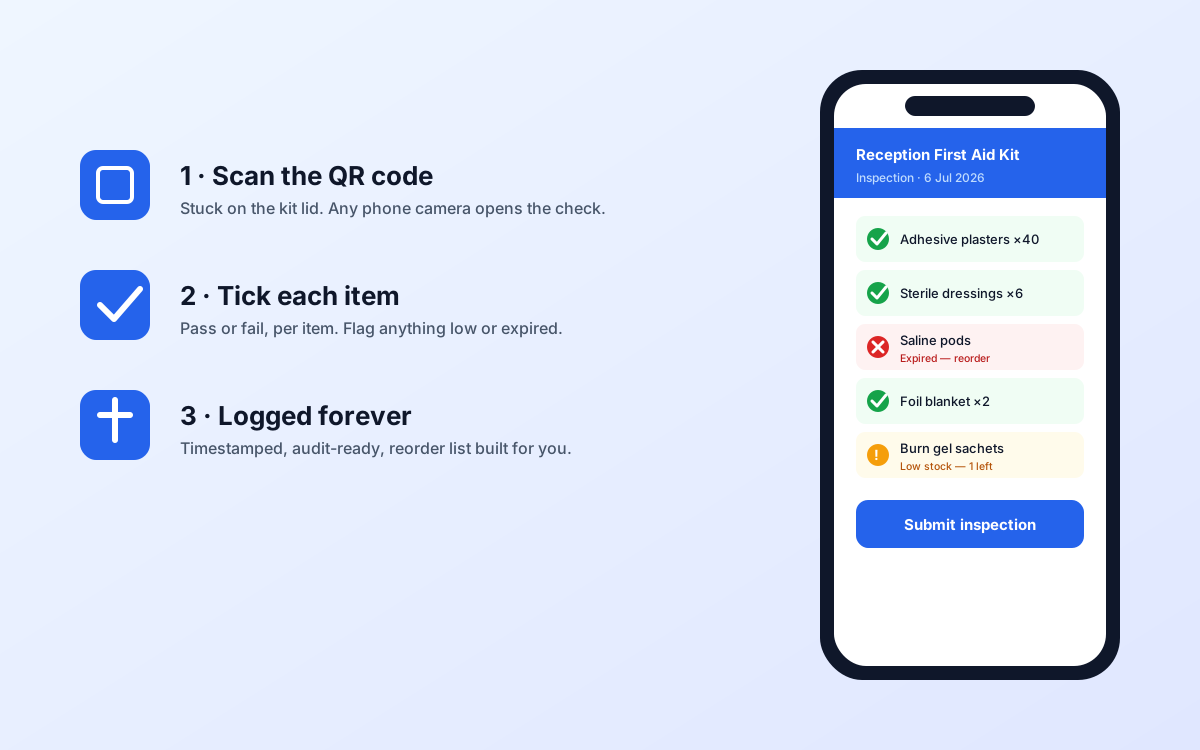
A home has kits, AEDs and certificates spread across floors, units and shifts — exactly the situation where paper checks slip. That's what KitCompliance automates: build each kit from the ISO 45001 suggested list, log inspections in seconds, and get reminders before a dressing expires or a certificate lapses, with one-click reports to show an HSE or CQC inspector. See the getting-started guide to set it up.
Frequently asked questions
How many first aiders does a care home need?
There's no fixed ratio. As higher-risk HSE guidance, plan for at least one FAW first-aider for 5–50 staff on duty and one more per extra 50 — but count the busiest shift and make sure trained cover exists on every shift, nights and weekends included. Most homes need several to rota round the clock.
Is first aid for residents the same as first aid for staff?
No. Staff are covered by the HSE's First-Aid Regulations 1981; residents' care is regulated separately by the CQC. The same first-aiders usually respond to both, but they are different legal duties with different inspectors.
Does a care home need a defibrillator?
No law requires one, but with an older, higher-risk resident group a needs assessment for most homes concludes an AED is appropriate, and the HSE and Resuscitation Council UK encourage it.
Does a care home need first aid cover at night?
Yes. A home runs 24/7, so a trained first-aider must be on duty during night shifts and weekends, with enough people trained to cover leave and sickness without ever leaving a shift uncovered.