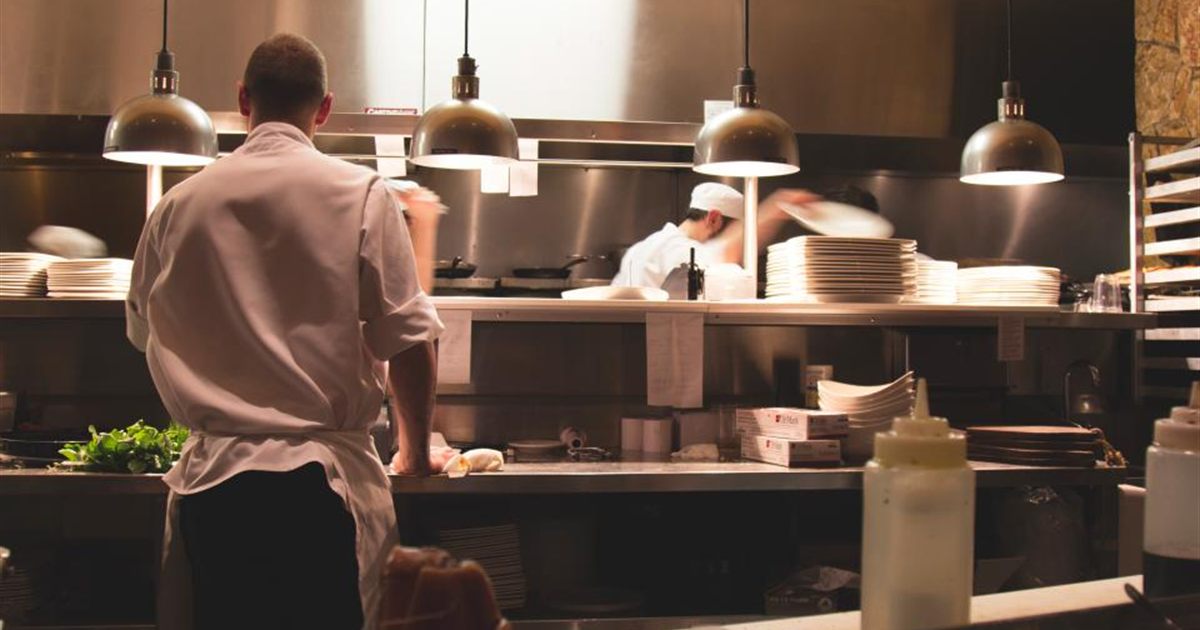
A commercial kitchen packs more first-aid hazards into a small space than almost any other workplace: open flames, deep fryers, boiling stock, razor-sharp knives, slicers, greasy wet floors and cleaning chemicals — all under time pressure during a service rush. Add a front-of-house team, split shifts and late nights, and getting first aid right in hospitality is less about knowing an obscure rule and more about covering a genuinely busy, higher-risk site properly. This guide covers what the law requires, how many first-aiders you actually need, and the kit a restaurant or caterer should have.
Is first aid a legal requirement for a restaurant?
Yes — the same law applies to a restaurant as to any other UK workplace. The Health and Safety (First-Aid) Regulations 1981 place a duty on every employer to provide "adequate and appropriate" equipment, facilities and people so that staff who are injured or taken ill at work can be helped immediately. There's no separate hospitality rulebook and no magic staff number written into law — but there is a strong steer, because "appropriate" is judged against the risk, and a kitchen is clearly not a low-risk office.
It's worth being clear about who the duty protects: like everywhere else, the Regulations cover your employees. They don't strictly require you to treat customers — but no one runs a restaurant that ignores a choking diner, and the HSE strongly encourages provision that can cover the public too. In a room full of people eating, that's simply good practice.
Why a kitchen counts as higher-risk
When you weigh provision, treat the kitchen as higher-risk rather than low-risk. The hazards are constant and well understood:
- Burns and scalds — fryers, grills, ovens, hot pans and boiling liquids make thermal injuries the signature kitchen accident, which is why burns provision matters so much (more below).
- Cuts and amputations — chef's knives, mandolines, slicers and food processors cause deep lacerations and, at worst, fingertip injuries.
- Slips and falls — wet, greasy floors are the most common cause of major injury in catering, and a fall onto a hot surface or a knife compounds it.
- Cleaning chemicals — degreasers, sanitisers and oven cleaners bring splash and eye-injury risk that may call for eyewash.
- Manual handling and heat — carrying stock, lifting heavy pots, and long shifts in a hot kitchen where someone can feel faint or collapse.
Higher risk means more first-aiders, the fuller First Aid at Work (FAW) qualification rather than the shorter Emergency First Aid at Work course, and extra equipment — the same logic a warehouse or construction site applies, just with a hospitality hazard mix. A restaurant inside a hotel takes on more again — 24/7 cover and guests on site around the clock.
How many first-aiders does a restaurant need?
There's no fixed legal ratio — it comes out of your needs assessment. But the HSE's higher-risk rule of thumb is where to start: at least one FAW-trained first-aider for 5–50 staff on duty, and one more for every additional 50. For a full breakdown by headcount and risk level, see how many first aiders you need and the difference between FAW and EFAW.
Burns: the injury a kitchen must be ready for
If there's one thing that sets catering first aid apart, it's burns. Scalds from hot liquids and fat, and contact burns from grills and pans, are the most common serious injury in a kitchen — and the immediate treatment (cool running water for at least 20 minutes, then a sterile, non-adhesive burns dressing) genuinely changes the outcome. No single item is written into law, but a needs assessment for any kitchen with fryers, ovens or hot liquids will almost always conclude that cool burns dressings or a dedicated burns kit are appropriate. The good news: the BS 8599-1 catering kit already includes a burns dressing for exactly this reason. Our guide to burns first aid at work walks through the cool-call-cover steps and what a burns kit should hold.
Kits and equipment
Provision follows the assessment, but a typical restaurant should have:
- A BS 8599-1 catering kit in the kitchen — where every plaster is blue and detectable so it can be spotted (and picked up by a metal detector) if it falls into food, plus a burns dressing. See what belongs in a kitchen kit.
- A standard BS 8599-1 workplace kit for front of house, of the right size for the team (see standard kit contents).
- Extra burns provision — additional cool burns dressings or a burns kit near the hot line, where they'll be reached in seconds.
- Sterile eyewash where cleaning chemicals are decanted, mixed or used.
- Signage — clear signs so agency, seasonal and new staff can find the nearest kit and first-aider fast, which matters in a sector with high turnover.
Multi-site operators and event caterers have the added job of keeping every branch or mobile setup stocked to the same standard — and for off-site catering, a portable kit that travels with the team, much like lone and remote worker provision.
HSE and the EHO both look at your kit
Restaurants are unusual in having two sets of eyes on their first aid. The HSE — or, more often for small food businesses, your local authority's health and safety team — enforces the First-Aid Regulations 1981 for your staff. Separately, the Environmental Health Officer (EHO) who inspects for food hygiene will also glance at the kitchen kit, because a plaster coming loose into food is a contamination risk. That's the whole reason catering plasters are blue: it's a food-safety measure as much as a first-aid one. Keep both inspectors satisfied with a stocked, in-date catering kit and tidy records.
Records, expiry and inspections
Evidence matters as much as equipment — and in a fast-moving kitchen, checks are exactly what slip. Stay on top of:
- An accident book, and knowing when a burn, a deep cut or a serious fall becomes RIDDOR-reportable to the HSE.
- Kit inspections on a set schedule (see how often to inspect) and expiry dates on dressings and burns gel — heat and steam age a kitchen kit faster than an office one.
- First-aid certificates — FAW and EFAW last three years, so track renewals across a team that changes often, and never let cover quietly lapse.
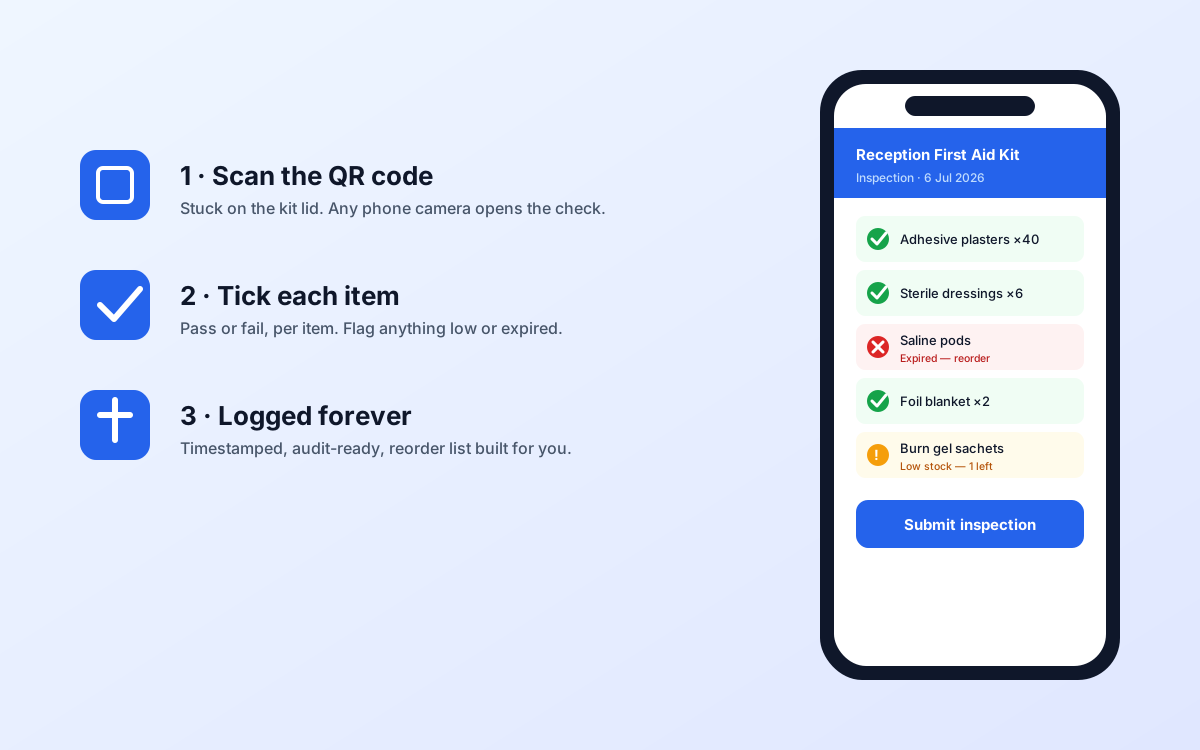
A restaurant has a catering kit, a front-of-house kit, burns provision and certificates spread across shifts — and, for a group, across branches. That's exactly where paper checks fall apart. That's what KitCompliance automates: build each kit from the BS 8599-1 catering or workplace list, log inspections in seconds, and get reminders before a burns dressing expires or a certificate lapses, with one-click reports to show an HSE inspector or EHO. See the getting-started guide to set it up.
Frequently asked questions
Does a restaurant legally need a first aider?
No law names a minimum number, but the First-Aid Regulations 1981 require every employer to provide adequate and appropriate first aid. A kitchen is higher-risk, so almost every restaurant's needs assessment concludes it needs at least one trained first-aider on duty whenever it's trading — with enough people trained to cover every shift.
What first aid training do restaurant staff need?
Because a kitchen is higher-risk, the fuller three-day FAW qualification is usually the right call over the one-day EFAW, especially for a busy kitchen. A small, low-risk café might justify EFAW from its assessment. Both certificates last three years.
What should be in a restaurant first aid kit?
A BS 8599-1 catering kit in the kitchen (blue detectable plasters plus a burns dressing) and a standard BS 8599-1 workplace kit for front of house. Add sterile eyewash where cleaning chemicals are used, and size the kits to your staff numbers and risk.
Are burns dressings a legal requirement in a commercial kitchen?
No single item is fixed by law, but burns and scalds are the most common serious kitchen injury, so a needs assessment for any kitchen with fryers, ovens or hot liquids will almost always conclude that cool burns dressings or a dedicated burns kit are appropriate.
Who checks first aid in a restaurant — the HSE or the EHO?
Both can. The HSE (or your local authority) enforces the First-Aid Regulations for your staff, and the EHO inspecting for food hygiene also checks the kitchen kit — especially that plasters are blue and detectable — because a plaster in food is a contamination risk.