Cold is the mirror image of heat illness — and just as under-rated as a workplace hazard. A loading yard in January, a chilled food store, a roof in the wind, a breakdown on a rural road, a farm at dawn: it does not take an arctic winter for someone to get dangerously cold on the job, especially once they are wet or exhausted. Most early cases pass if you get the person warm and dry. The danger is missing the point where it tips into hypothermia — a genuine emergency where the body can no longer keep its core temperature up. The skill is warming the person gradually, keeping them still, and knowing the signs that mean call 999.
Cold stress vs hypothermia
"Cold stress" is the umbrella term for the body struggling in the cold; hypothermia is the serious end of it, when the core temperature falls below 35°C. The two sit on the same scale, and mild cold stress can slide into hypothermia if someone stays cold and wet. Telling them apart is what decides whether you warm-and-watch or dial 999.
| Mild cold stress / early hypothermia | Severe hypothermia (emergency) |
|---|---|
| Shivering; cold, pale skin | Shivering stops even though still cold |
| Tiredness, numb hands, clumsiness | Confusion, slurred speech or strange behaviour |
| Fast breathing, feeling cold to the core | Slow, shallow breathing and a slow pulse |
| Still alert and making sense | Drowsiness, collapse or loss of consciousness |
| Usually improves once warm and dry | Does not improve with warming — needs 999 now |
The most important warning sign is a change in how the person is thinking and behaving, together with shivering stopping while they are still cold. Someone with mild cold stress is uncomfortable but makes sense. Someone who is confused, drowsy or has gone quiet and still in the cold may have severe hypothermia — treat it as an emergency.
Hypothermia: what to do, step by step
- Move them somewhere warm and sheltered. Get them out of the cold, wind and rain — indoors, into a cab, or at least behind a windbreak — and stop the task that chilled them.
- Remove wet clothing. Take off anything wet or frozen and replace it with dry layers or blankets. Wet clothing draws heat out of the body far faster than dry, so this matters more than people expect.
- Wrap them up and insulate the head. Use dry blankets, coats or a survival blanket, cover their head, and put a mat, cardboard or coats between them and a cold floor or the ground.
- Warm them gradually, not rapidly. If they are fully conscious and can swallow, give warm — not hot — sweet drinks and high-energy food. Warm the body gently and evenly. Do not use intense direct heat (hot bath, radiator, heat lamp, or a hot water bottle against the skin), do not rub their arms and legs, and never give alcohol.
- Keep them still and monitor. Handle them gently and keep them lying or sitting still — rough movement can upset a cold heart. Stay with them and keep checking their breathing and how alert they are.
- Call 999 if it is severe or they do not improve. Call for anyone very cold, confused, drowsy, no longer shivering or unresponsive, or if warming is not working. Keep warming them gently while you wait.
A word on frostbite
Prolonged cold can also injure the extremities — fingers, toes, ears, nose — causing frostnip and, if it continues, frostbite: skin that turns white or grey-blue, hard and numb. Get the person into the warm, remove anything tight (rings, wet gloves), and rewarm the area gently with body heat or warm — not hot — water. Do not rub the area, do not use direct heat, and do not let it thaw if there is any chance it will refreeze before you reach help, as that causes more damage. Anyone with suspected frostbite needs medical assessment.
Who is most at risk
Cold injury is not only an outdoor, mid-winter problem. A first aid needs assessment should flag anyone working:
- Outdoors in cold, wet or windy weather — construction, roofing, grounds, utilities and farm work
- In chilled or frozen environments — cold stores, chillers and refrigerated areas inside warehouses and factories
- In unheated vehicles, or drivers and field staff who could break down far from shelter
- Anyone who could get wet — rain, spray or immersion strips body heat quickly, even in mild temperatures
- Alone, where no one may notice them getting into trouble — see lone-worker first aid and remote & field workers
Older workers, very young workers, people who are tired, hungry or unwell, and anyone on certain medications or who has been drinking are more vulnerable. Exhaustion, dehydration and poor clothing all raise the risk.
What UK employers should have in place
There is no absolute legal minimum working temperature in the UK. The Workplace (Health, Safety and Welfare) Regulations 1992 require a "reasonable" indoor temperature — the Approved Code of Practice suggests at least 16°C, or 13°C for strenuous work — but those figures do not apply outdoors or in cold stores. There the HSE expects you to assess and control the risk from cold, and the Health and Safety (First-Aid) Regulations 1981 require "adequate and appropriate" first aid for the emergencies your work can cause:
| Provision | What to put in place |
|---|---|
| Control the cold first | Risk-assess cold work and reduce exposure — shelter, heating, suitable warm and waterproof PPE, warm-up breaks, hot drinks and job rotation — so cold injury is far less likely in the first place. |
| Warm shelter and dry kit | A warm place to rest and rewarm, a means to dry or change out of wet clothing, and spare dry layers or blankets for anyone caught out. |
| Trained first-aiders | Enough first-aiders who can recognise cold stress and warm a casualty safely, covering every shift and cold period. |
| A stocked kit and warming means | A full, in-date kit plus practical warming aids where the assessment supports them — survival/foil blankets and insulation for cold or remote work. |
| Recording & reporting | Log every case in your first aid record and accident book, and check whether it is reportable under RIDDOR. |
After the incident: recording and RIDDOR
Write down what happened while it is fresh — the conditions, what the person was doing, the signs you saw and how you warmed them — in your first aid treatment record and the accident book. Cold injury has RIDDOR triggers: if hypothermia or a cold injury caused by work keeps someone off their normal duties for more than seven consecutive days, report it as an over-seven-day injury; a loss of consciousness caused by the cold may be a specified injury; and a member of the public taken directly to hospital for treatment is reportable too. Then restock anything you used so the kit is ready next time.
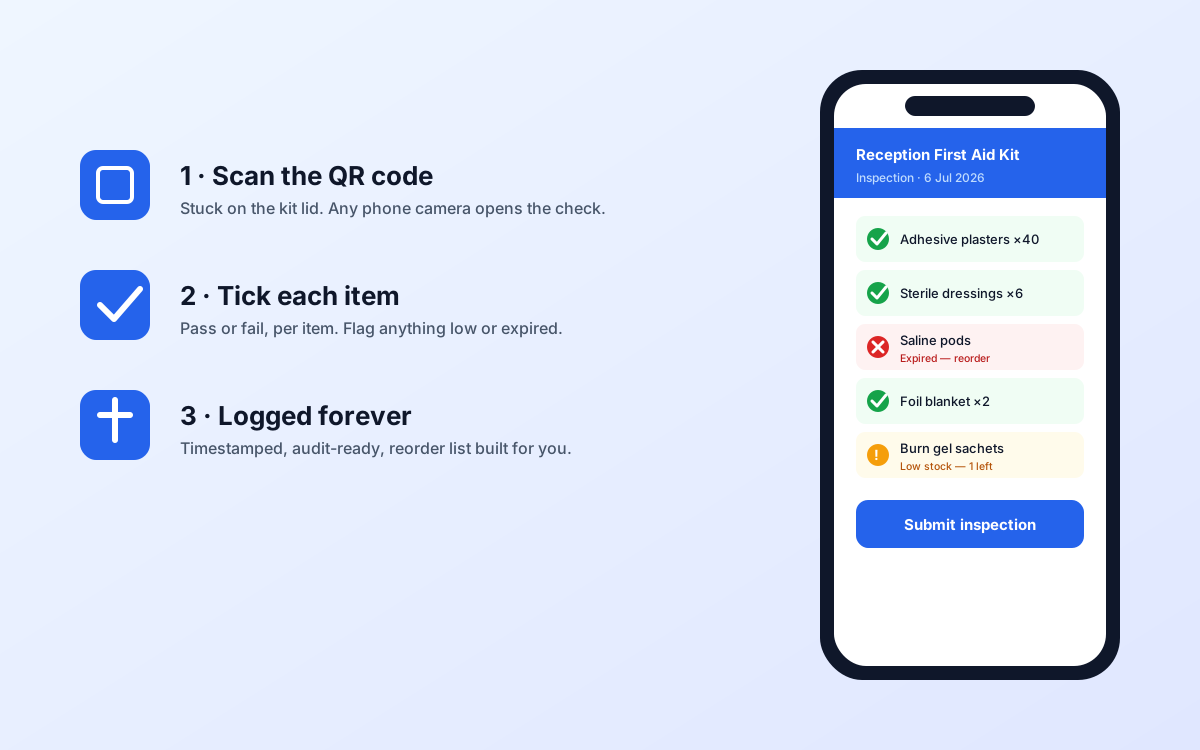
Treating cold injury is a skill; keeping the provision behind your first-aiders in order is a routine. That is what KitCompliance does: track every first aid kit and its contents, every certificate and refresher due date, and log your checks in seconds — with reminders before anything lapses and a one-click report that proves your provision. See the getting-started guide to set it up.
Frequently asked questions
What are the signs of hypothermia?
Early hypothermia shows as shivering, cold and pale skin, tiredness and fast breathing. As it gets worse the signs change: shivering may stop, the person becomes confused, clumsy or slurs their speech, breathing and pulse slow down, and they may become drowsy or lose consciousness. Hypothermia means the body's core temperature has dropped below 35°C, and shivering stopping while someone is still cold is a sign it is getting more serious, not better.
When should you call 999 for someone who is too cold at work?
Call 999 for any severe case: someone very cold and confused, drowsy or slurring their words, who has stopped shivering despite still being cold, or who is unresponsive. Also call if a baby or elderly person has hypothermia, or if the person does not improve as you warm them. Keep warming the person gently while you wait, handle them carefully, and be ready to start CPR if they stop breathing normally.
How do you warm up someone with hypothermia?
Move them out of the cold into shelter, remove any wet clothing and replace it with dry layers or blankets, cover their head, and insulate them from the cold ground. Warm them gradually and evenly, and if they are fully conscious give warm, sweet drinks and high-energy food. Do not warm them too fast: avoid hot baths, heat lamps, radiators and hot water bottles against the skin, do not rub their arms or legs, and never give alcohol.
Is there a minimum working temperature in the UK?
There is no absolute legal minimum. The Workplace (Health, Safety and Welfare) Regulations 1992 require a "reasonable" indoor temperature, and the Approved Code of Practice suggests at least 16°C, or 13°C where much of the work is physically demanding. Those figures do not apply outdoors or in cold stores, where the HSE expects you to assess and control the risk from cold through your risk assessment rather than meet a fixed number.
Is hypothermia or a cold injury at work reportable under RIDDOR?
It can be. If hypothermia or a cold injury caused by work keeps a worker off their normal duties for more than seven consecutive days, it is reportable as an over-seven-day injury. A loss of consciousness caused by the cold may be reportable as a specified injury, and a member of the public taken directly to hospital for treatment is reportable too. Whatever the outcome, record it in your first aid treatment record and the accident book.