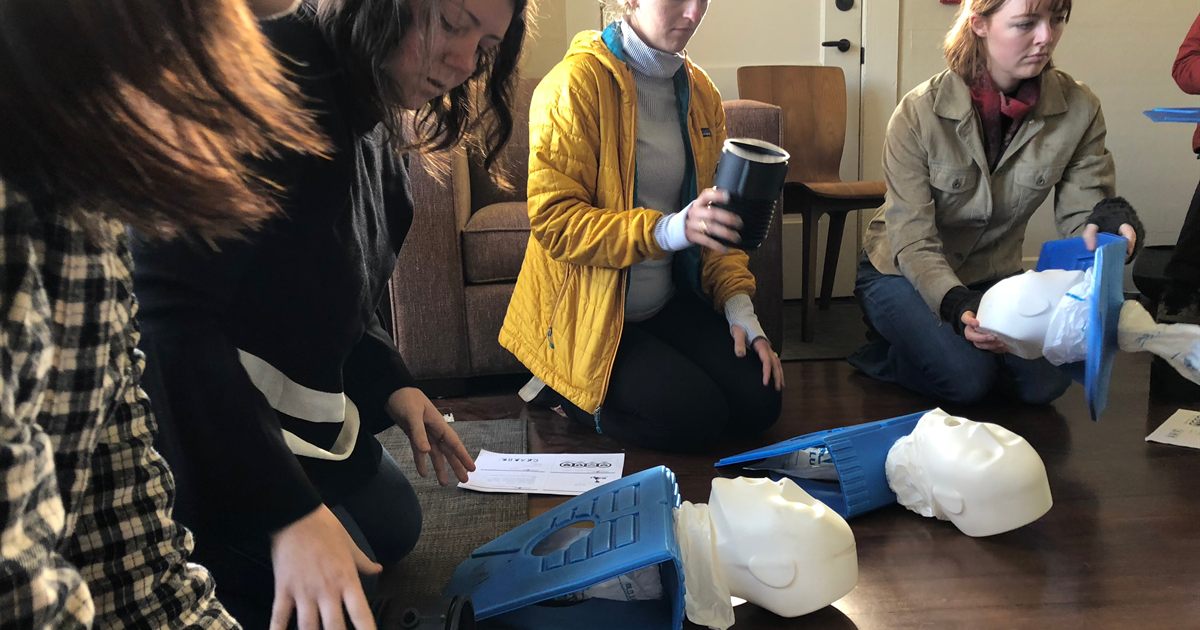
A suspected spinal injury is one of the few workplace emergencies where doing less is almost always right. Move the casualty and you risk turning a recoverable injury into permanent paralysis; keep them still and support the head, and you give them the best chance until the ambulance arrives. Falls from height, forklift and vehicle incidents, and being struck by heavy objects are the usual causes at work — so warehouses, construction sites and factories need their first-aiders confident on this. This guide covers when to suspect a spinal injury, exactly what to do, and what UK employers must have in place.
When to suspect a spinal injury
You cannot rule a spinal injury out by how the casualty looks or what they say — someone can walk, talk and feel fine and still have an unstable spinal fracture. That is why first aid is based on the mechanism of injury: if the force involved could have damaged the spine, treat it as if it did. Suspect one after any of:
- A fall from height, down stairs, or from more than a standing height.
- A vehicle, forklift or heavy machinery incident, or being thrown.
- Being struck on the head, neck or back by a heavy object.
- A diving-style head-first impact.
- Any casualty found unconscious where a fall or blow is possible — see head injury first aid, which often goes hand in hand with spinal injury.
Signs and symptoms, if present, reinforce the suspicion: pain or tenderness in the neck or back, a twisted or odd neck position, tingling, numbness or weakness in the arms or legs, loss of bladder or bowel control, or difficulty breathing. Absence of these signs does not clear the casualty — the mechanism alone is enough to act.
What to do: step by step
The priority order is the same as any emergency — assess the scene, then the casualty — but with spinal injuries you protect the neck throughout.
- Keep them still and reassure. Tell the casualty not to move and to stay calm. Do not move them yourself unless they are in immediate danger.
- Call 999 early. Ask for an ambulance, say you suspect a spinal injury and how it happened. Send someone to meet and guide the crew.
- Support the head in the position found. Kneel behind the casualty's head, place a hand on each side over the ears, and hold it still so the head, neck and spine stay in a straight line. This is manual in-line stabilisation. Keep holding until the ambulance crew takes over — do not let go to do anything else if you can help it.
- Monitor airway and breathing. Keep checking the casualty is responsive and breathing. If the airway is blocked, use a jaw thrust (lifting the jaw forward without tilting the head) rather than the usual head-tilt.
- Treat other injuries without moving the spine. Control any serious bleeding and keep them warm. Support — do not straighten — any suspected fracture.
When is the recovery position safe?
The recovery position is normally the right call for an unresponsive but breathing casualty — but with a suspected spinal injury it is a last resort, used only when you cannot otherwise keep the airway clear. Move them if the casualty:
- becomes unresponsive and you cannot keep the airway open, or
- vomits or is about to, or
- must be moved away from immediate danger (fire, water, traffic).
When you do move them, use a log roll: keep the head, neck and spine aligned and turn the whole body as one unit, ideally with one person controlling the head and others supporting the torso and legs. A protected airway always wins over a protected spine — an unconscious casualty who cannot breathe will not survive, so never leave them on their back if their airway is at risk.
What UK employers must have in place
The Health and Safety (First-Aid) Regulations 1981 require "adequate and appropriate" first-aid provision, and your first aid needs assessment is where you decide what that means. For spinal-injury risk, specifically make sure:
| What | Why it matters |
|---|---|
| Trained first-aiders on every shift | Spinal immobilisation and jaw thrust are taught on First Aid at Work (FAW) courses. Higher-risk sites need FAW, not just EFAW, and cover across every shift. |
| A clear emergency and 999 procedure | Everyone should know how to raise the alarm, who the first-aiders are, and how to direct an ambulance on site — part of your workplace first aid procedure. |
| Blankets and a stocked kit within reach | You cannot splint a spine, but you keep the casualty warm and treat other injuries. Keep a compliant first aid kit near high-risk areas such as mezzanines and loading bays. |
| An accident book and RIDDOR awareness | Every incident is logged, and serious spinal injuries are usually reportable to the HSE under RIDDOR. |
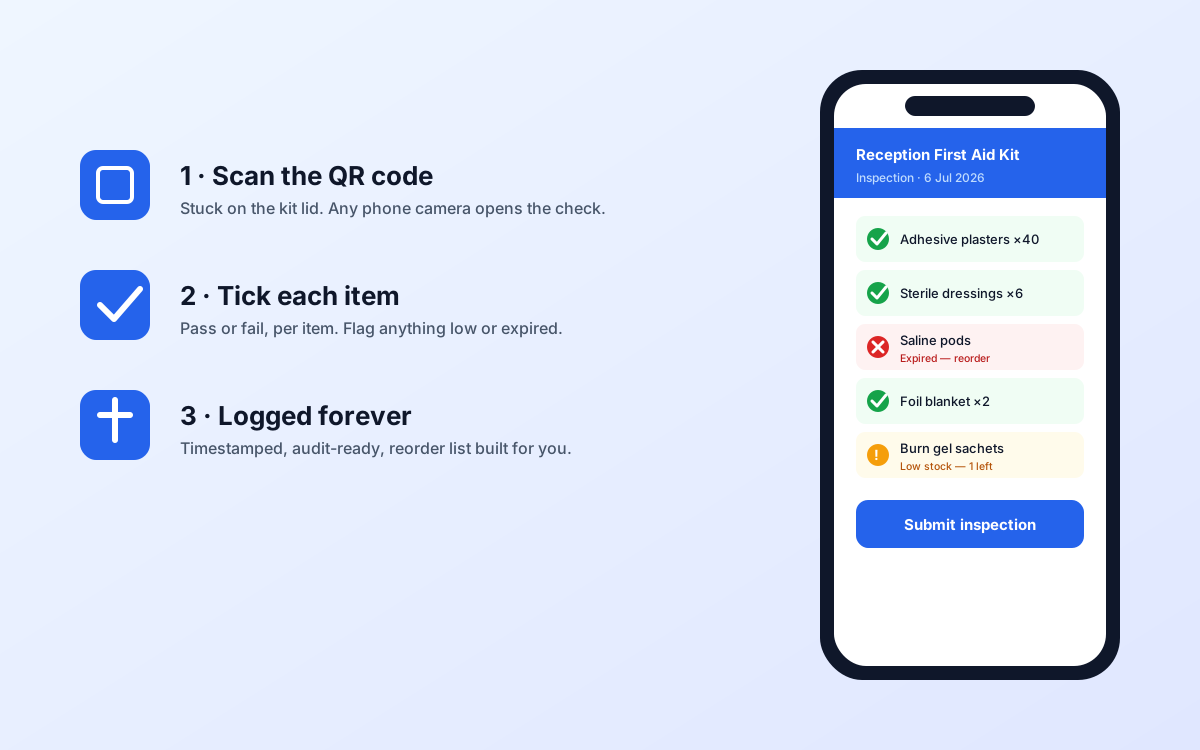
A spinal injury is the moment your preparation is tested. The response itself is low-tech — stillness, a steady pair of hands and an early 999 call — but it only works if a trained first-aider is on shift, the kit nearby is stocked, and the incident is logged properly afterwards. That everyday readiness is what KitCompliance keeps provable: track every kit and expiry date, log inspections and incidents in seconds, and get reminders before a certificate or restock lapses. See the getting-started guide to set it up.
Frequently asked questions
When should you suspect a spinal injury at work?
Whenever the force was significant: a fall from height or down stairs, a vehicle or forklift incident, being struck by a heavy object, a diving-style impact, or any casualty found unconscious after a fall. Neck or back pain, tingling, weakness or numbness point to it too — but the mechanism of injury alone is enough to treat it as spinal.
Should you move them into the recovery position?
Only if you have to — if they become unresponsive and you cannot keep the airway open, they vomit, or they are in danger. Otherwise keep them still and support the head. If you must move them, log roll while keeping the head, neck and spine aligned.
Do you remove a motorcycle or cycle helmet?
Leave it on unless it blocks the airway or you cannot assess breathing. Taking a helmet off risks moving the neck; if it is essential, two first-aiders should do it together with one holding the head still.
Is a spinal injury reportable under RIDDOR?
Often. A fracture (other than to fingers, thumbs or toes) and any injury keeping the worker off normal duties for more than seven consecutive days are reportable to the HSE. Log every spinal incident in your accident book, as it may become reportable once the extent is known.