If anyone in your workplace handles needles, blades or other sharps — or might encounter a discarded one — you need somewhere safe to put them the instant they're finished with. That's a sharps bin: a rigid, sealable, puncture-proof container that stops a used sharp ever being left loose. Getting it wrong isn't a paperwork problem — a sharp poking out of an overfilled or wrong-coloured bin is exactly how a needlestick or sharps injury happens. This guide covers when you need one, the standard it must meet, the lid colour code, and how to set up, fill and dispose of it legally.
What is a sharps bin?
A sharps bin (sharps container) is a yellow rigid box with a coloured, lockable lid, designed so a used needle, scalpel blade, lancet, cannula or ampoule can be dropped in and never taken back out. It must be puncture- and leak-resistant and carry a temporary closure (to stop spills while in use) and a permanent closure (to seal it for disposal). In the UK, sharps bins should conform to BS 7320 and UN 3291 — the UN approval that lets the sealed bin be carried as clinical waste. Newer bins may also reference BS EN ISO 23907-1.
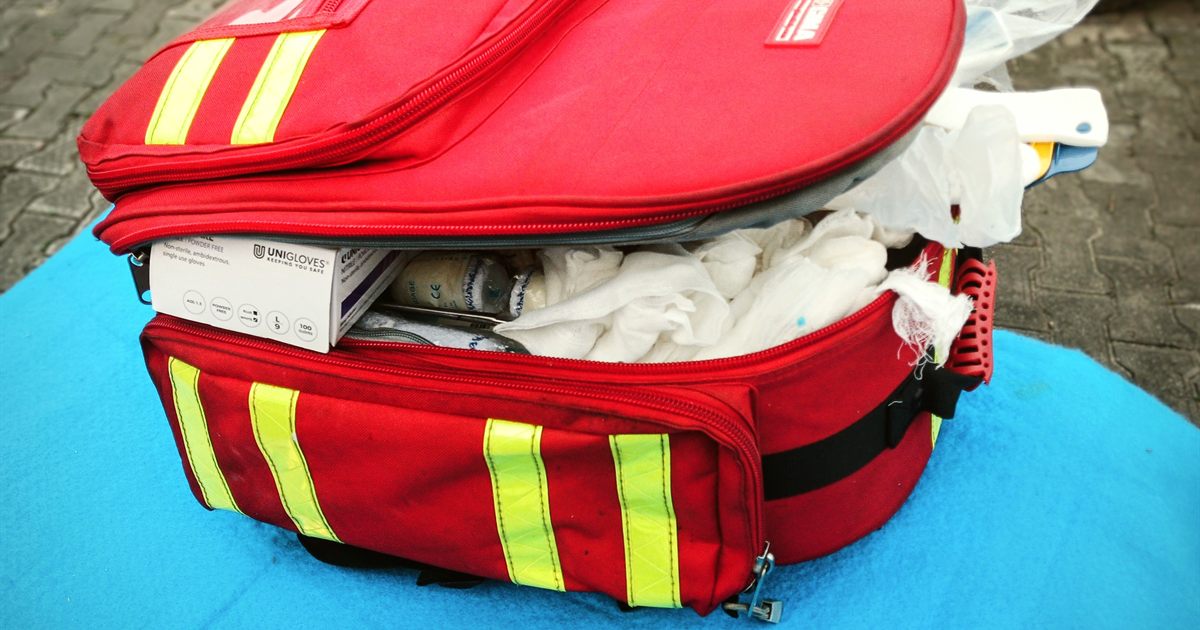
A sharps bin is not a first aid kit item and it is not a general bin. It is a dedicated piece of equipment that sits alongside the kit, the way an eyewash station or a body fluid spill kit does — provided because your risk assessment calls for it.
Does my workplace need one?
There's no regulation that simply says "every workplace must have a sharps bin". As with everything in UK first aid, it falls out of your first aid needs assessment and the duty to provide "adequate and appropriate" equipment under the Health and Safety (First-Aid) Regulations 1981. For healthcare employers, the Health and Safety (Sharp Instruments in Healthcare) Regulations 2013 add a specific duty to use safer sharps and dispose of them safely. If sharps are foreseeable, a compliant bin is almost always part of "adequate".
Sites that typically need a sharps bin include:
- Healthcare, dental & pharmacy — needles, lancets, scalpels and ampoules as routine.
- Care homes & community care — insulin pens, lancets and medication sharps.
- Laboratories — needles, glass pipettes and contaminated sharps, often alongside COSHH hazards.
- Tattoo, piercing & aesthetics — needles and blades in direct skin contact.
- Veterinary practices — animal needles and blades, including cytotoxic medicines.
- Waste, recycling, cleaning & facilities — staff who may find discarded needles in bins, parks or public toilets.
Sharps bin lid colours explained
Sharps bins follow the UK healthcare waste colour code (set out in the Department of Health's "Safe management of healthcare waste" guidance). The lid colour, not the box, tells the carrier how the contents must be treated:
| Lid colour | Use it for | Disposal route |
|---|---|---|
| Orange | Sharps not contaminated with medicinal products — e.g. clean sharps, or sharps contaminated with body fluids only. | Treated to render safe, then disposed of. |
| Yellow | Sharps contaminated with medicines or anaesthetic agents (a part-used medication syringe, for example). | Incineration. |
| Purple | Sharps contaminated with cytotoxic or cytostatic medicines (some chemotherapy and veterinary drugs). | Incineration at a licensed facility. |
How to set up and use a sharps bin
Most sharps injuries from bins come down to assembly, overfilling or placement. Work through these five steps every time:
- Choose the right bin and colour — size it to the volume and frequency of use, and match the lid to the waste stream above.
- Assemble it correctly — push the lid on until it clicks fully home so it can't be lifted off, and set the temporary closure to open.
- Label it on assembly — complete the integral label with your organisation, the site or department, the date it was put into use, and the signature of whoever assembled it.
- Position and fill safely — keep it at the point of use, wall-mounted or on a stable surface, secured and out of reach of children and the public. Drop sharps straight in; never push, never force, never fill past the marked fill line (about three-quarters).
- Close and hand over — when full, or after three months in use, engage the permanent lock, complete the closure label, store it securely and have a licensed carrier collect it.
Disposing of a full sharps bin legally
A sealed sharps bin is clinical / hazardous waste, and your duty of care under the Environmental Protection Act 1990 doesn't end when it leaves your door. You must:
- Use a licensed clinical-waste carrier — sharps bins never go in general, mixed-recycling or offensive-waste streams.
- Get a consignment note (or waste transfer note) for each collection and keep it — typically for three years — as evidence of safe disposal.
- Store sealed bins securely while they await collection, out of public reach and away from weather.
Keep this alongside your other first-aid evidence. A sharps injury that does occur must still be written up on a first aid treatment record and in the accident book, and may be RIDDOR-reportable if a blood-borne virus exposure is involved.
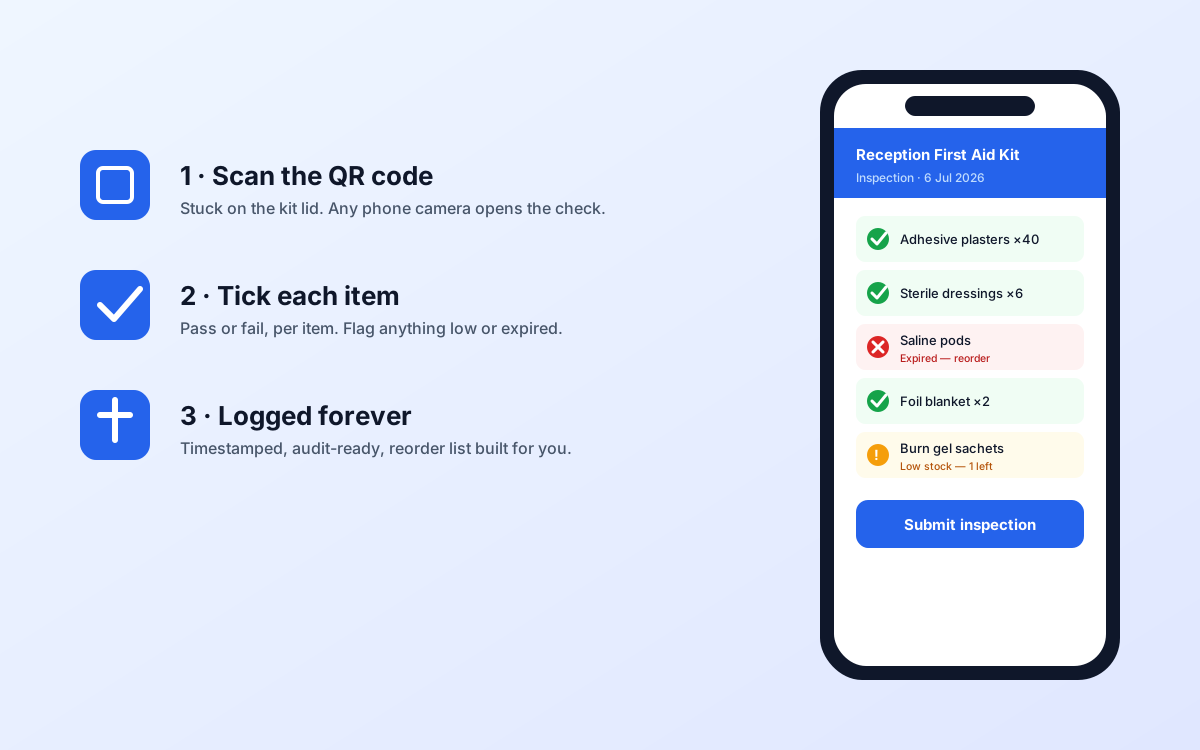
Deciding you need sharps bins is the easy part. The harder part is proving each one was assembled, dated, replaced on time and collected by a licensed carrier — across every site, month after month. That's exactly what KitCompliance is for: log each sharps bin and spill kit as equipment, record its in-use date, get a reminder before the three-month replacement is due, and keep a one-click report that proves your provision. See the getting-started guide to set it up.
Frequently asked questions
Does my workplace legally need a sharps bin?
There's no rule that names a sharps bin, but if your needs assessment foresees contaminated or clinical sharps — healthcare, dentistry, care homes, labs, tattoo and piercing, veterinary, pharmacy, or waste and cleaning roles — you must provide a compliant bin so needles are never left loose. It flows from the 1981 First-Aid Regulations, COSHH and, for healthcare, the Sharp Instruments in Healthcare Regulations 2013.
What do the sharps bin lid colours mean?
Orange is for sharps not contaminated with medicines; yellow is for sharps contaminated with medicines or anaesthetics; purple is for cytotoxic or cytostatic medicinal sharps. The lid colour decides how the waste is treated, so the wrong colour means it can't be disposed of correctly.
How full can a sharps bin be before it's replaced?
Never above the marked fill line — usually about three-quarters. Overfilling causes injuries when sharps are pressed down. Even if it's not full, close and replace a bin after no more than three months in use.
How should a full sharps bin be disposed of?
Seal it with the permanent closure, complete the label, store it securely, and have a licensed clinical-waste carrier collect it with a consignment note you keep on file. Sharps bins must never go in general or recycling waste.