
If your workplace uses cleaning chemicals, solvents, adhesives, fuels, paints, laboratory reagents or anything else that carries a hazard pictogram, two sets of rules apply at once: the Health and Safety (First-Aid) Regulations 1981 and the COSHH Regulations 2002. COSHH is the one that decides what extra first aid a chemical risk demands — the eyewash, the spill kit, the antidote — and it is the part employers most often miss. This guide explains what COSHH asks of your first-aid provision and how to get it right.
What is COSHH and how does it relate to first aid?
COSHH requires employers to prevent or adequately control exposure to substances hazardous to health — chemicals, fumes, dusts, vapours, mists, gases and biological agents. The first duty is always to control exposure: substitute, enclose, ventilate, use PPE. But COSHH also recognises that controls can fail, so Regulation 7 and the supporting guidance expect you to plan for accidents and emergencies, which includes having the right first aid on hand for the specific harm each substance can do.
That is the key difference from ordinary first aid. A standard workplace first aid kit deals with cuts, burns and the general run of injuries. COSHH asks a sharper question: what does this particular chemical do to a person, and what must be available the moment it happens?
Reading the safety data sheet (Section 4)
The supplier of any hazardous substance must give you a safety data sheet (SDS). It has 16 standard sections; the one that drives your first-aid provision is Section 4 — First-aid measures. It tells you, for that exact product:
- What to do after inhalation, skin contact, eye contact and ingestion.
- The most important symptoms and whether effects can be delayed (some corrosives and respiratory sensitisers show harm hours later).
- Any specific treatment or antidote needed, and whether a doctor should see the information.
Read Section 4 of every hazardous substance you hold, not just the obviously nasty ones. It is the single most useful thing you can do to get COSHH first aid right, and inspectors expect you to have it to hand.
The first-aid measures COSHH typically calls for
Exactly what you need falls out of your assessment and the data sheets, but these are the provisions that come up most often:
| Risk from the substance | First-aid provision to consider |
|---|---|
| Eye contact (splashes, dusts, vapours) | Eyewash provision — sterile pods for low-risk splashes; a plumbed emergency eyewash or shower for corrosives, where you must flush for 15 minutes or more. |
| Skin contact (irritants, corrosives, sensitisers) | Running water or skin-wash stations to remove the substance fast, plus burn dressings for chemical burns (see burns first aid at work). |
| Spills and contamination | A spill kit or chemical spill kit matched to the substance, so an exposure can be cleaned up without spreading it. |
| Inhalation | A plan to move the person to fresh air and summon help; for a few substances, oxygen or a named antidote specified on the SDS. |
| Substances with a specific antidote | Where the SDS names one (e.g. calcium gluconate gel for hydrofluoric acid), it must be available, in date and known to your first-aiders. |
How to meet COSHH first aid requirements
Work through these five steps:
- List the substances and read the data sheets. Inventory everything hazardous on site and read Section 4 of each SDS.
- Decide the measures. From the data sheets and your COSHH assessment, decide what each substance needs — eyewash, skin washing, spill kit, burn dressings, antidote, oxygen.
- Provide and locate the equipment. Put it within reach of where the substance is used — not in a central cupboard across the site. Seconds matter for a corrosive.
- Train and inform. Brief first-aiders on the substance-specific actions and tell every employee what to do and where the eyewash and data sheets are.
- Record, check and review. Keep the SDSs and your decisions on file, check eyewash and antidotes for expiry, and review whenever a substance, process or supplier changes.
Where COSHH first aid meets your needs assessment
A COSHH assessment and a first aid needs assessment are different documents, but they should talk to each other. The COSHH assessment identifies the chemical hazards and the first-aid measures each one needs; the needs assessment sets your overall provision — how many first-aiders, how many kits, and what extra equipment. Make sure the chemical risks you found under COSHH are written into the needs assessment, so the eyewash, spill kits and antidotes are not an afterthought bolted on somewhere else.
Keeping COSHH first-aid equipment in date
COSHH provision fails quietly. Eyewash bottles expire, emergency shower nozzles seize, antidote gels pass their date, spill kits get raided for other jobs. Because this equipment is used rarely, nobody notices until the day it is needed. Build the chemical first-aid items into the same inspection routine as the rest of your kit — see how often to inspect first aid kits — and record each check so you can prove the provision was ready.
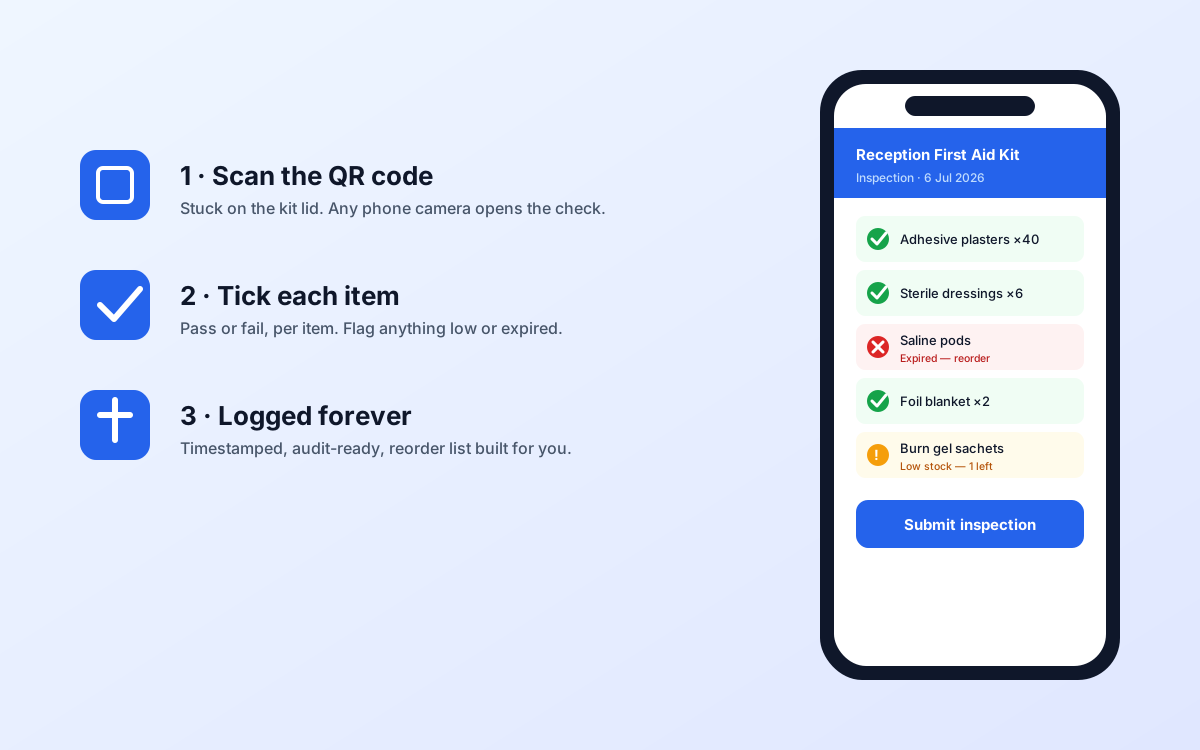
Reading the data sheets tells you what to provide. Keeping that provision true day to day — every eyewash in date, every spill kit complete, every inspection logged — is where most workplaces slip. That's exactly what KitCompliance automates: build each kit and station from a suggested list, record inspections in seconds, and get reminders before anything lapses, with a one-click report that proves your provision. See the getting-started guide to set it up.
Frequently asked questions
Does COSHH require first aid provision?
Yes. Regulation 7 of COSHH requires you to prevent or adequately control exposure, and the regulations and HSE guidance expect suitable first-aid measures where a substance can still cause injury. In practice that means eyewash, skin-washing facilities, spill kits and, for some substances, specific antidotes — decided through your COSHH assessment.
Where do I find the first-aid measures for a chemical?
In Section 4 of the substance's safety data sheet, headed "First-aid measures". The supplier must provide an SDS for any hazardous substance; Section 4 covers inhalation, skin and eye contact and ingestion, and flags delayed effects or antidotes.
Do I need an eyewash station for COSHH?
If your assessment shows a risk of a substance entering the eyes, yes. Corrosives usually need a plumbed emergency eyewash or shower because you must flush for 15 minutes or more; sterile pods suit lower-risk splashes. The eyewash station requirements guide covers which to choose.
Is a COSHH assessment the same as a first aid needs assessment?
No, but they feed each other. COSHH focuses on controlling exposure to specific substances, including the first-aid measures each needs; the needs assessment sets your overall provision. Your COSHH findings should flow into the needs assessment.