Taking on a 16–18 year old, an apprentice or a work-experience student doesn't hand you a new set of first aid rules — but it does change the picture your existing duties are meant to cover. Young people are statistically more likely to be injured at work, and UK law singles them out for extra assessment. This guide explains what actually changes for first aid, the risks the HSE expects you to weigh, and whether a young person can be one of your first-aiders.
Does the law treat young workers differently?
For first aid equipment, no — the Health and Safety (First-Aid) Regulations 1981 apply to your whole workforce, and a young worker is part of it. What's different is the risk assessment. The Management of Health and Safety at Work Regulations 1999 (regulation 3) require an employer to make a specific assessment for anyone under 18 before they start work, taking account of their inexperience, lack of awareness of existing or potential risks, and immaturity. Whatever that assessment throws up then flows into your first aid provision like any other hazard.
In other words: young workers don't get their own first aid kit, but they can change how much first aid cover a task or shift needs. That's a needs-assessment decision, and it sits within the employer's overall duty — see who is responsible for first aid at work.
Who counts as a "young worker"?
Two overlapping definitions matter:
- Young person — anyone under 18. This is the group the extra risk assessment is written for, and it covers most apprentices and 16–17 year old staff.
- Child — anyone under the minimum school leaving age (the summer they turn 16). Children on work-experience placements fall here, and the school or college shares planning duties with you.
Apprentices, T-level industry placements, summer and Saturday staff, and work-experience students are all "young workers" for these purposes. Note this is a different topic from early years first aid, which is about paediatric provision for the under-fives being cared for — not young people at work.
The extra factors to weigh
When you assess a young worker, these are the things that most often change first aid needs:
| Factor | Why it matters for first aid |
|---|---|
| Inexperience & risk awareness | A young worker is less likely to spot a hazard or react safely, so incidents are more likely — make sure cover is genuinely present, not just "on paper". |
| Physical & psychological immaturity | Consider strength, height and reach for the actual task, and whether pressure or an emergency could overwhelm them. |
| Prohibited & restricted work | Under-18s must not do work beyond their physical or psychological capacity, or involving significant exposure to certain hazards — if a task is off-limits, that removes a risk rather than adding cover. |
| Supervision level | Higher supervision reduces risk but doesn't replace first aid — a trained first-aider or appointed person must still be reachable. |
| Health conditions they've disclosed | Asthma, allergies, epilepsy or diabetes may need a plan — see anaphylaxis and medication in the kit. |
How to assess provision for a young worker
Five steps, done before they start:
- Do the young person's risk assessment first. Cover inexperience, awareness and maturity for their actual tasks — this is a legal step in its own right.
- Revisit your first aid needs assessment. Add them to the workforce profile and check whether their tasks, hours or location change what you need.
- Confirm cover for their real hours and place. A first-aider or appointed person must be present whenever and wherever they work — including any off-site or shadowing time.
- Brief them at induction. Tell them who the first-aiders are, where the nearest kit is, and how to raise the alarm. Don't assume they'll read a notice.
- Record and review. Keep both assessments with your records and revisit them if the role, hours or placement change.
Can a young worker be a first-aider?
There's no legal minimum age to hold an EFAW or FAW qualification, and most training providers accept candidates from 16. So yes, a mature 16–17 year old can train and act as a first-aider. But two cautions:
- Weigh maturity and confidence, not just the certificate — responding to a serious incident is demanding.
- Don't rely on a young person as your only first-aid cover on a shift. Pair them with an experienced first-aider so no one is left carrying it alone.
And remember: whether or not they're a first-aider, apprentices and young staff count in your headcount when you work out how many first-aiders you need.
Work experience & short placements
For a work-experience student, the host employer provides the first aid. For the length of the placement the student is treated as your employee for health and safety, so they're inside your risk and needs assessments and your first aid cover. Where the student is under 16 the school or college shares the planning — they'll usually ask about your arrangements — but on-site first aid on the day is yours to provide. The same logic that makes schools assess for pupils applies in reverse when a pupil comes to you.
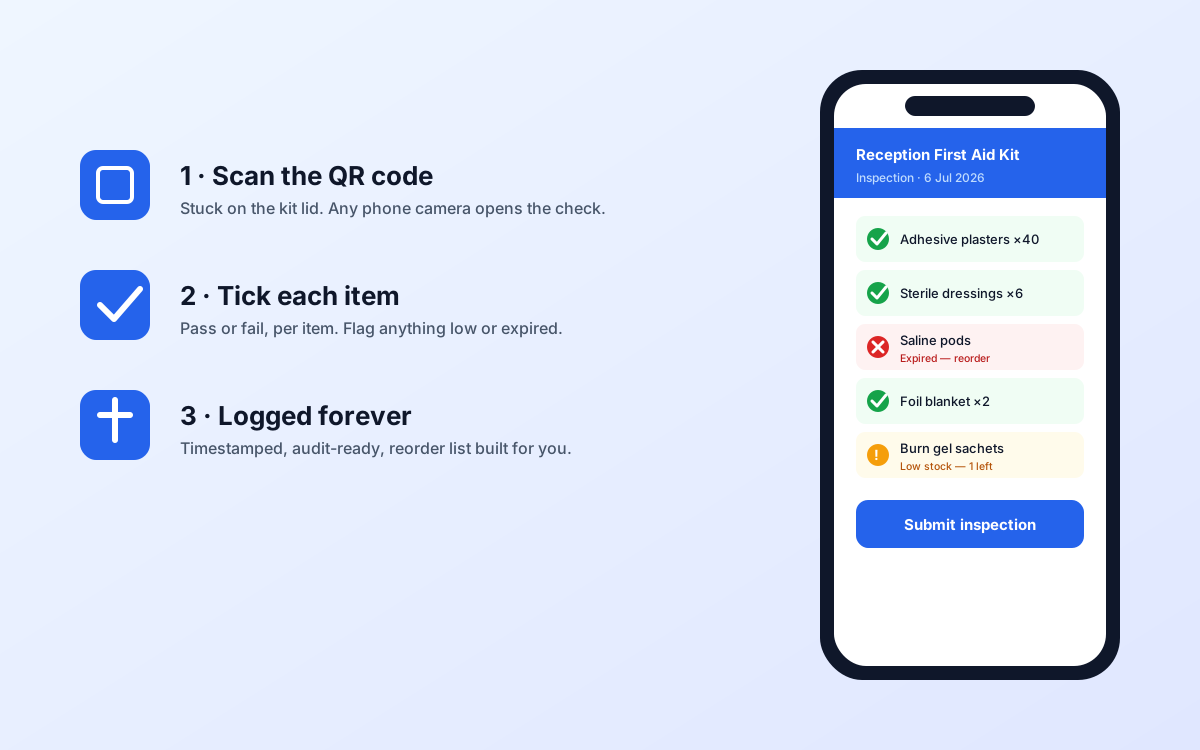
Taking on young workers is one of the "material changes" that should trigger a look at first aid — new people, sometimes new tasks, often a new pattern of hours. The paperwork behind it (needs assessment, first-aider certificates in date, kits stocked and checked) is exactly what KitCompliance keeps on top of: build each kit from the ISO 45001 suggested list, log inspections in seconds, and get reminded before a certificate or item lapses — with a one-click report that proves your provision. Run through the workplace first aid compliance checklist when a young worker joins, and see the getting-started guide to set it up.
Frequently asked questions
Are young workers a special case for first aid?
The equipment and cover are the same, but the assessment isn't. The Management of Health and Safety at Work Regulations 1999 require a specific risk assessment for under-18s before they start, because inexperience and immaturity raise their risk. Whatever it flags feeds into your ordinary needs assessment.
Can a 16 or 17 year old be a workplace first aider?
There's no legal minimum age for an EFAW or FAW qualification and most providers accept 16-year-olds. Judge maturity and confidence, and don't leave a young person as the only first-aider on a shift — provide experienced cover alongside them.
Who is responsible for first aid for a work-experience student?
The host employer. For the placement they're treated as your employee, so they're inside your risk and needs assessments and your first aid cover. For under-16s the school shares planning, but on-site first aid is still yours.
Do apprentices count towards my first aider numbers?
Yes — apprentices are employees, so they're part of the headcount your needs assessment uses to decide how many first-aiders and kits you need.