Running a nursery, pre-school or childminding setting means meeting a first aid duty that most workplaces never have to think about: keeping a paediatric first aider on hand for the children in your care, at all times. That duty comes from the EYFS statutory framework, and it sits on top of the ordinary employer's duty to look after your staff. This guide untangles the two rulebooks, sets out exactly what "paediatric first aid" cover means in practice, and lists the kit and records an Ofsted inspector will expect to see.
Two rulebooks: EYFS for children, HSE for staff
The point that trips settings up is that "first aid" means two different things depending on who is hurt — a child or a member of staff — and each is governed by a different framework.
- Children are covered by the Early Years Foundation Stage (EYFS) statutory framework, which applies to all Ofsted-registered early years providers in England — nurseries, pre-schools, playgroups and childminders. It imposes a specific paediatric first aid duty.
- Staff are covered by the Health and Safety (First-Aid) Regulations 1981, because your setting is also a workplace. As an employer you owe your employees "adequate and appropriate" first aid, just like any other business.
A common mistake is to assume the paediatric certificate covers everything. It does not: a PFA course is designed for treating babies and young children, so you still need to think about first aid for adults on site. In a small setting the same trained people usually cover both, but the two duties are legally separate — and an inspector can ask about either.
The EYFS paediatric first aid duty in detail
This is the requirement unique to early years, so it is worth getting exactly right:
| Requirement | What it means in practice |
|---|---|
| Someone PFA-trained, always available | At least one person with a current full PFA certificate must be on the premises and available at all times children are present, and must go on every outing. |
| New level 2 & 3 staff | Newly qualified staff with a relevant level 2 or 3 qualification must hold a full PFA or emergency PFA (EPFA) certificate within three months of starting to be counted in the staff:child ratios. |
| Childminders | A registered childminder — and any assistant who might be left in sole charge — must hold a current full PFA certificate. |
| Relevant, quality training | PFA training must be relevant for workers caring for young children and, where relevant, babies. Providers should assess child numbers, staff and layout so a first aider can respond quickly. |
| Renew every three years | A PFA certificate is valid for three years. Re-book training before it lapses — a lapsed certificate can put you below the required cover overnight. |
Full PFA vs emergency PFA (EPFA)
There are two levels of paediatric first aid training:
- Full PFA — a minimum 12-hour course (usually two days) covering a broad range of childhood illnesses and injuries. This is the certificate that satisfies the EYFS "available at all times" duty.
- Emergency PFA (EPFA) — a shorter minimum 6-hour course. On its own it does not meet the "at all times" duty; it only counts towards ratios for newly qualified level 2 and 3 staff during their first three months.
How many paediatric first aiders do you need?
The EYFS sets no fixed ratio of first aiders to children — it sets an outcome: a PFA-trained person must be available at all times. Meeting that reliably means training well more than one person, because a single certificate can't be in two rooms at once, or on an outing and in the baby room at the same time, or present while its holder is on lunch, off sick or on leave.
Work out your realistic minimum from:
- Rooms and split provision — babies, toddlers and pre-school rooms each need cover, and outings need their own PFA adult.
- Opening hours and shifts — early drop-off and late pick-up shifts must each have a paediatric first aider present.
- Absence — build in enough people that holidays and sickness never leave you without cover.
The staff side follows the ordinary how-many-first-aiders logic for a lower-risk workplace, but in a nursery the paediatric cover almost always drives the higher number. Decide both from a single first aid needs assessment and write the conclusion down.
First aid kit and equipment
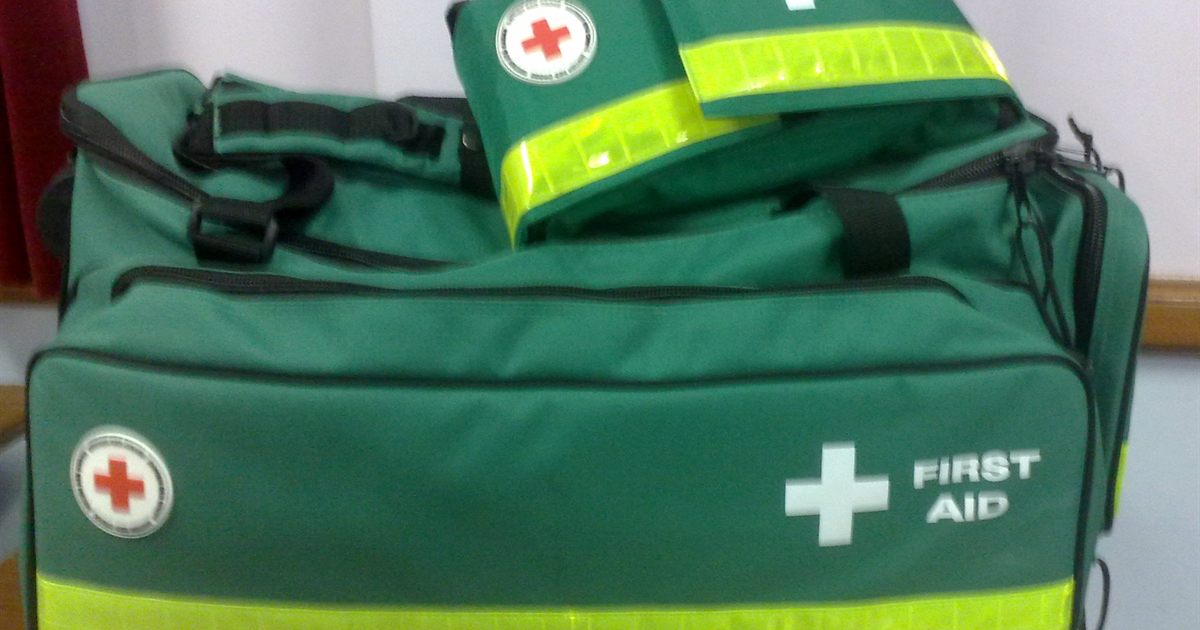
The EYFS requires a first aid box, suitable for use with children, that is accessible at all times. In practice:
- A stocked kit in every room plus a portable grab bag for the garden and outings — a locked cupboard a corridor away doesn't meet "accessible at all times".
- Child-appropriate contents. A BS 8599-1 workplace kit is a sensible base, but early years settings typically add child-friendly plasters, extra dressings and cold packs. Keep any medicines and sharps well out of children's reach.
- Kept in date. Sterile items and cold packs expire; build a routine to check them (see how often first aid kits should be inspected).
An AED (defibrillator) is not a statutory requirement for a nursery, but many settings choose to have one — paediatric pads make them safe for children. If you're weighing it up, see workplace defibrillator requirements.
Records, accidents and reporting
Early years settings carry extra record-keeping duties:
- Accident and treatment records. Log every accident, injury and first aid treatment given to a child, and inform parents the same day. Keep the records to show patterns and evidence your response.
- Notify Ofsted. You must notify Ofsted (or your childminder agency) and local child protection agencies of any serious accident, illness or injury to — or the death of — a child in your care, as soon as reasonably practicable and at the latest within 14 days.
- RIDDOR. Reportable injuries to staff, and certain injuries to children arising from the work activity or premises, go to the HSE under RIDDOR — the same regime covered in the workplace accident book & RIDDOR guide.
An early years first aid checklist
| Check | In place? |
|---|---|
| Full PFA holder on site whenever children are present | … |
| Enough PFA staff to cover breaks, sickness, outings | … |
| Childminder / sole-charge assistants hold current PFA | … |
| All PFA certificates in date (renew before 3-year expiry) | … |
| Staff (HSE) first aid provision from a needs assessment | … |
| Accessible, in-date first aid box in each room + grab bag | … |
| Accident / treatment records and parent notification | … |
| Ofsted & RIDDOR notification process understood | … |
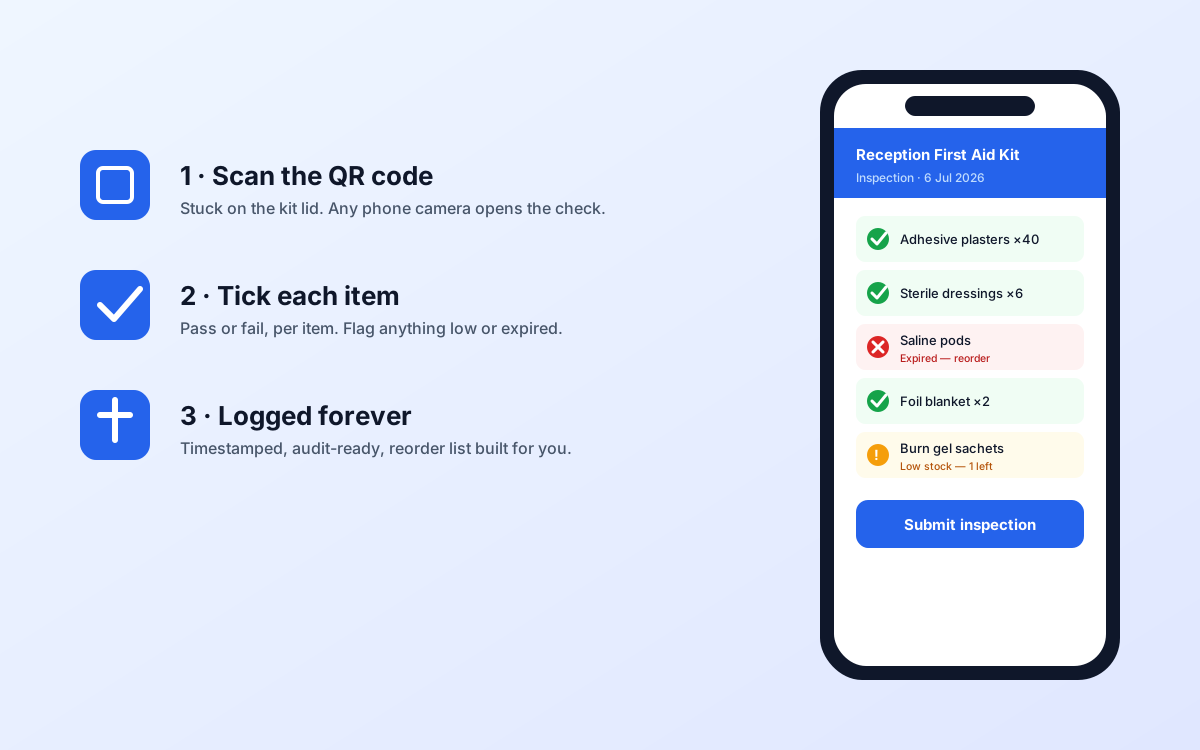
Early years first aid isn't hard in principle — it's hard to keep true. Multiple rooms, portable grab bags, PFA certificates all expiring on different dates, and an Ofsted inspector who can ask to see any of it. That's exactly what KitCompliance is built for: set up a kit for each room, log inspections in seconds, and get reminders before a dressing or a certificate lapses, with a one-click report that proves your provision. See the getting-started guide to set it up.
Frequently asked questions
Is paediatric first aid a legal requirement for nurseries?
Yes. The EYFS requires at least one person with a current full paediatric first aid (PFA) certificate on the premises and available at all times children are present, and on every outing — on top of the separate HSE duty to provide first aid for staff.
What's the difference between PFA and emergency PFA (EPFA)?
Full PFA is a minimum 12-hour course and is what meets the EYFS "at all times" duty. Emergency PFA is a shorter 6-hour course that only counts towards ratios for newly qualified level 2 and 3 staff in their first three months. Both last three years.
How many paediatric first aiders does a nursery need?
There's no fixed ratio — the EYFS requires a PFA-trained person available at all times. In practice that means enough trained staff to cover breaks, sickness, holidays, split rooms and outings, which is usually several people rather than one.
Do childminders need paediatric first aid?
Yes. A registered childminder, and any assistant left in sole charge, must hold a current full PFA certificate, renewed every three years.
Does a nursery also need workplace first aid for staff?
Yes. A nursery is a workplace, so the 1981 Regulations apply to its employees. Provide adequate first aid for staff — decided by a needs assessment — separately from the EYFS paediatric duty.