
Checking a first aid kit is only half the job. If you cannot show the check happened — when, by whom, and what you found — then as far as the HSE, an insurer or an ISO 45001 auditor is concerned, it didn't. A first aid kit inspection log is the dated, signed record that turns a routine look in the box into evidence your provision is adequate and kept stocked. This guide covers exactly what each entry should capture, how long to keep it, and a template you can copy.
What is a first aid kit inspection log?
It's a running record of every inspection of your workplace first aid kits. Each entry answers four questions an inspector will ask: which kit, checked when, by whom, and with what result. It sits alongside — but is separate from — your first-aid treatment record, which logs incidents and treatment given to people. One tracks the kit; the other tracks casualties. Keep them apart, because treatment records contain personal data and need tighter handling.
Is keeping a log a legal requirement?
Not explicitly. The Health and Safety (First-Aid) Regulations 1981 require employers to provide and maintain "adequate and appropriate" first-aid equipment — but they don't prescribe a logbook. The point is evidential. If someone is injured and the kit turns out to be half-empty or full of expired items, an undated, unsigned kit is treated as an unchecked kit, and you're left unable to show you maintained it. A simple log closes that gap. It's also one of the first things an auditor asks to see when checking your wider first-aid compliance.
What every log entry should record
A good entry is quick to complete but leaves no doubt about what was checked. Capture these fields each time:
| Field | What to record |
|---|---|
| Kit reference & location | A unique ID and where the kit lives, so the entry clearly maps to one box — vital if you have several kits across a site. |
| Date of check | The day the inspection was done — the single most important field for proving a check is current. |
| Inspector name & signature | Who carried it out. A signature (or an auditable electronic equivalent) makes the entry accountable. |
| Contents vs list | Whether the kit matches its BS 8599-1 / needs-assessment contents list, and what (if anything) is missing or used. |
| Earliest expiry date | The soonest expiry date in the box, so you can see at a glance when the kit next needs attention. |
| Seals & condition | Tamper seals intact, sterile wrappers unbroken, the container clean, dry and undamaged. |
| Outcome & actions | Pass or fail, items to reorder, and who will restock the kit and by when. |
| Next check due | The date of the next scheduled inspection, set from your inspection frequency. |
How to keep the log: five steps
Whether you use paper, a spreadsheet or an app, the method is the same:
- Identify the kit — give every kit a reference and location so an entry can never be ambiguous.
- Check contents against the list — compare to the BS 8599-1 or needs-assessment list and note anything used, missing or damaged (a kit checklist makes this fast).
- Check expiries and seals — record the earliest expiry and confirm sterile items and tamper seals are intact.
- Record outcome and actions — mark pass/fail, list reorders, and name who restocks and by when.
- Date, sign and store — add the date, inspector and signature, then file the entry with your health-and-safety records.
A simple first aid kit inspection log template
Copy this into a spreadsheet or print it as a sheet kept with each kit. One row per check:
| Column | Example |
|---|---|
| Kit ref / location | FA-03 / Warehouse mezzanine |
| Date checked | 12/10/2026 |
| Checked by | … |
| Contents complete? (Y/N + notes) | … |
| Earliest expiry in kit | … |
| Seals / condition OK? | … |
| Outcome (pass / fail) | … |
| Action & restock date | … |
| Next check due | … |
| Signature | … |
How long to keep inspection records
There's no fixed retention period for kit checks. Keeping at least three years of logs is a sensible default — long enough to show a consistent history and to cover the typical window in which a civil claim might surface. This is different from treatment records, which contain personal data, must be stored securely, and are often kept far longer. Don't mix the two in one book.
Paper, spreadsheet or app?
A clipboard on the wall works for one kit. The trouble starts when you have several kits, more than one site, or staff turnover — logs get lost, dates get skipped, and nobody notices a kit hasn't been checked in months until it's needed. A rolling audit across every kit is only as good as the record behind it.
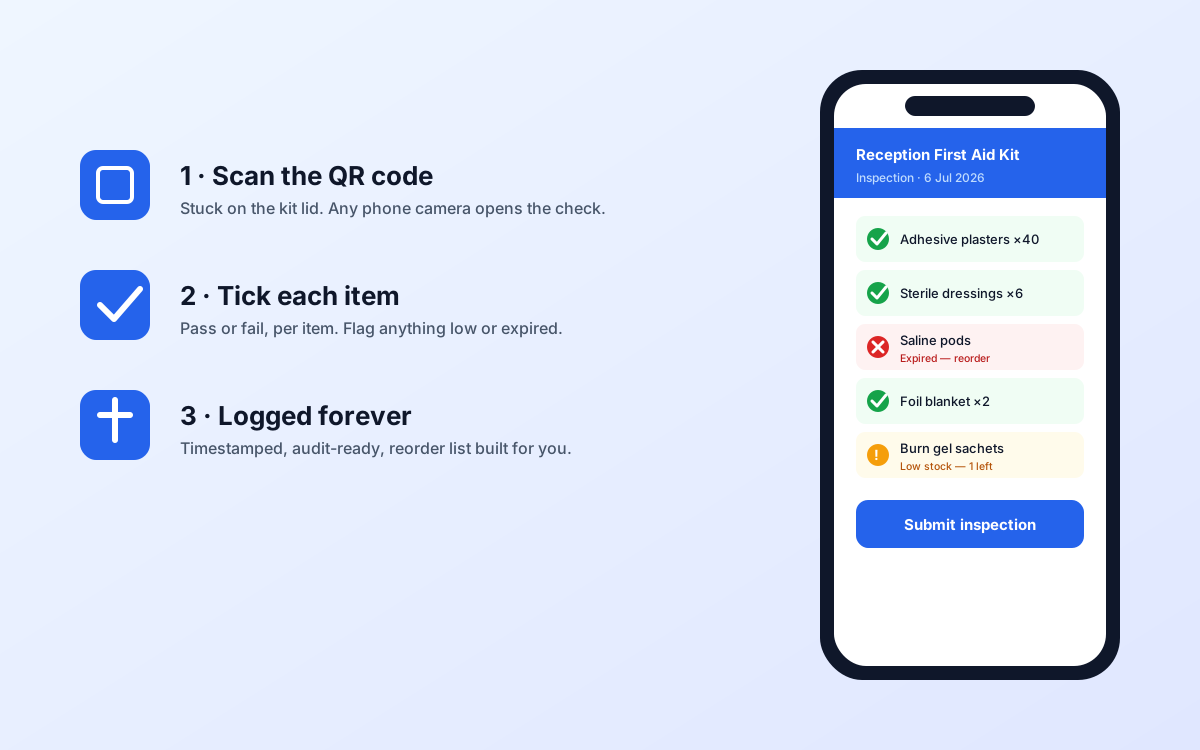
That's exactly what KitCompliance automates. Each kit carries a QR code: scan it to run a timestamped pass/fail check against the BS 8599-1 list in under a minute. Every inspection is logged against the right kit automatically, with the inspector, the findings and the restock captured — no clipboard to lose, no spreadsheet to reconcile. You get reminders before anything lapses and a one-click report that is your inspection log. See the getting-started guide to set it up.
Frequently asked questions
Is a first aid kit inspection log a legal requirement?
There's no explicit duty to keep one, but the 1981 Regulations require you to provide and maintain adequate first-aid equipment — and a dated, signed log is how you evidence that. An unlogged kit is treated as an unchecked kit after an incident or during an HSE or ISO 45001 audit.
What should a first aid kit inspection log record?
The kit reference and location, the date, the inspector's name and signature, whether contents match the list, the earliest expiry date, any items used or missing, the pass/fail outcome, the restock action and the next-check date.
How long should you keep the records?
There's no fixed period; at least three years is a sensible default so you can show a consistent history. Keep kit logs separate from treatment records, which hold personal data and are usually retained longer.
Who can sign off a first aid kit inspection?
Anyone competent and briefed on the contents list — it needn't be a qualified first-aider. Usually it's the appointed person, a first-aider or a facilities or health-and-safety lead. The log should name whoever did it.