Sprains and strains are the quiet workhorse of the workplace injury book. They rarely make the news, but slips, trips and falls and manual handling are between them the biggest causes of non-fatal injury at work in the UK, and the soft-tissue damage they cause — a wrenched ankle, a pulled back, a strained shoulder — is exactly what your first-aider will deal with most. This guide covers how to treat a sprain or strain step by step, how to tell one from a fracture, when it needs a hospital, and what UK employers are expected to have in place.
Sprain or strain — what's the difference?
People use the words interchangeably, and the first aid is the same either way, but they're different injuries:
| Injury | What it is | Typical workplace cause |
|---|---|---|
| Sprain | A stretched or torn ligament — the tissue joining bone to bone at a joint. | A rolled ankle on an uneven floor or stairs, a twisted knee or wrist from a slip or fall. |
| Strain | An overstretched or torn muscle or tendon — the tissue that moves a joint. | A pulled back or shoulder from lifting, carrying or twisting during manual handling. |
Both are soft-tissue injuries, and both respond to the same immediate treatment. The signs are usually pain, swelling, bruising and tenderness around the area, with the joint or muscle difficult to use but — unlike most fractures — some movement often still possible.
How to treat a sprain or strain at work: RICE
The long-standing first aid approach is RICE. Work through it in order and keep going for the first couple of days:
- Rest & protect. Stop the activity, help the person sit or lie down, and protect the injured part from further load. Avoid using it for the first day or two, but don't keep it completely still for long — gentle, pain-free movement helps recovery once the first day has passed.
- Ice. Apply a wrapped cold pack or instant ice pack for 15–20 minutes every 2–3 hours for the first 48–72 hours. Wrap it in a cloth — never put ice straight onto the skin, which can cause a cold burn.
- Compression. Support the area with an elastic bandage, firm but not tight, to limit swelling. Loosen it at once if the limb beyond the bandage goes numb, cold, pale or tingly.
- Elevation. Raise the injured limb above heart level where you can, supported on a chair or cushions, to help swelling drain away.
When is it more than a sprain? Spotting a fracture
You often can't tell a bad sprain from a broken bone without an X-ray, so the golden rule is the same as for any suspected break: if in doubt, treat it as a fracture. Arrange medical assessment — minor injuries unit, GP or A&E — if any of these are present:
- The person cannot bear weight on the limb or use it at all.
- The pain or swelling is severe, or comes on very fast.
- The joint or limb looks deformed, out of shape or at an odd angle.
- There's numbness, pins and needles, or the area below the injury turns pale or cold.
- There's no improvement after a few days of RICE.
For a suspected break, support the injury in the position found and don't try to straighten it — see fractures & broken bones first aid at work for the full approach. And where someone has fallen awkwardly or from height, watch for a head injury or a spinal injury as well: if you suspect the back or neck, don't move them unless they're in immediate danger, and call 999.
Back strains and manual handling
The single most common workplace strain is the back, and it almost always comes from manual handling — lifting, lowering, carrying, pushing or twisting with a load. First aid is the same RICE-based approach, with the person resting in the most comfortable position, but back injuries matter twice over: they are both a first aid event and a sign your manual handling risk assessment may need another look. A sprain that recurs, or several people straining the same task, is the injury book telling you the job needs redesigning, not just treating.
Record it — and check RIDDOR
Every injury, however minor it looks, goes in your records. Note what happened, what you saw and what you did in the first aid treatment record and the accident book while it's fresh. Sprains and strains have one of the most easily missed RIDDOR triggers of any injury: under RIDDOR 2013, if a work-related injury keeps an employee off their normal duties for more than seven consecutive days (not counting the day of the accident), the employer must report it to the HSE within 15 days. A wrenched back that puts a warehouse operative on light duties for a fortnight is exactly that kind of report — so follow up on how long people are actually off their usual work, not just whether they went home that day.
What employers need in place
As with everything in UK workplace first aid, provision flows from your first aid needs assessment and the duty to make "adequate and appropriate" provision under the Health and Safety (First-Aid) Regulations 1981. For sprains and strains that means:
- Trained first-aiders or an appointed person who can assess the injury, apply RICE and decide whether it needs hospital.
- A stocked BS 8599-1 first aid kit. The standard kit includes triangular bandages (useful as a sling or support) but not ice packs — so many workplaces, especially higher-movement sites, add instant cold packs and elastic support bandages to theirs.
- A way to keep those extras in date and in stock — instant cold packs and adhesive supports have expiry dates and get used up.
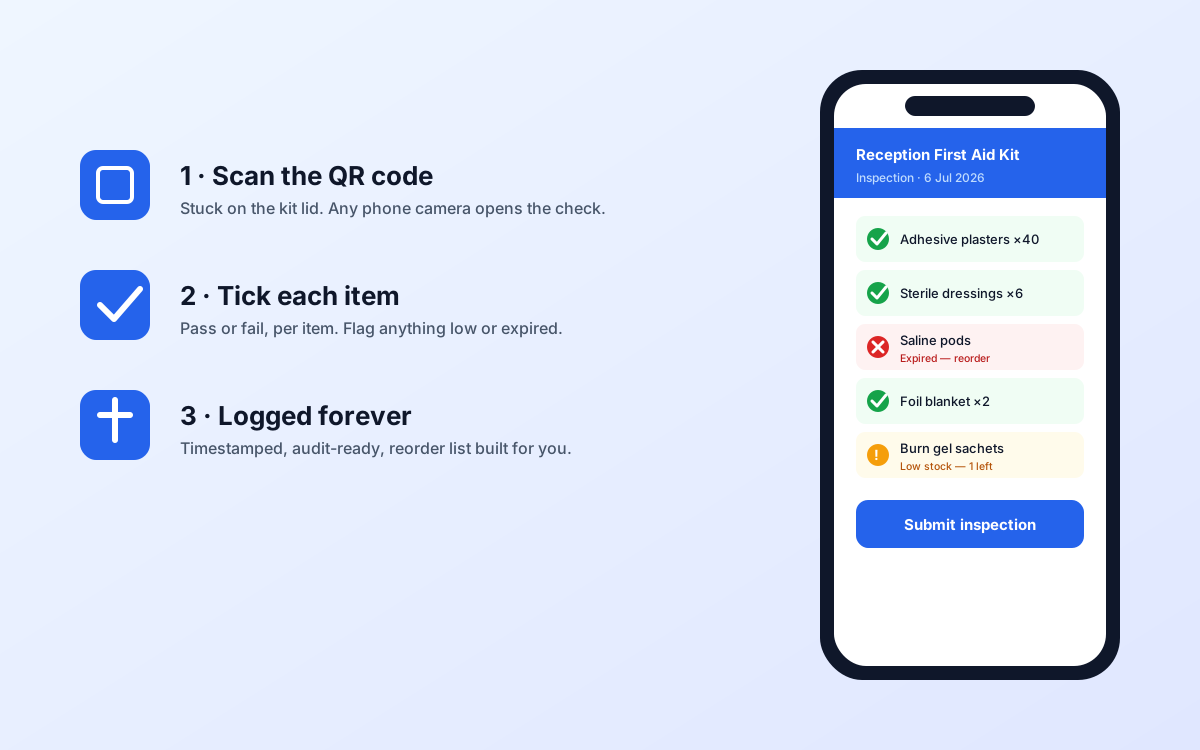
Knowing how to treat a sprain is only half the job; the cold pack and support bandage have to actually be in the box, in date, on the day someone rolls an ankle. That's what KitCompliance is built for: build each kit from the recommended list plus your own extras, log inspections in seconds, and get a reminder before anything expires or runs low — with a one-click report that proves your provision to an HSE inspector or auditor. See the getting-started guide to set it up.
Frequently asked questions
What is the difference between a sprain and a strain?
A sprain is a stretched or torn ligament (bone-to-bone at a joint), typically from a twist or wrench like a rolled ankle. A strain is an overstretched or torn muscle or tendon, typically from lifting or overloading, like a pulled back. Both are soft-tissue injuries and both are treated the same way with RICE.
Should you use ice or heat on a sprain at work?
Ice, not heat, for the first 48–72 hours — a wrapped cold pack for 15–20 minutes every few hours reduces swelling and pain. Avoid heat, alcohol, hard activity and massage early on, as they make swelling worse.
When should a sprain or strain at work go to hospital?
If the person can't bear weight or use the limb, the pain or swelling is severe, the joint looks deformed, there's numbness, or there's no improvement after a few days. If you can't tell a bad sprain from a fracture, treat it as a fracture and get it X-rayed.
Is a sprain or strain at work reportable under RIDDOR?
It can be. If a work-related injury keeps an employee off their normal duties for more than seven consecutive days (excluding the accident day), the employer must report it to the HSE. Back strains from manual handling are a common over-seven-day report, so always record the injury and track how long the person is off their usual work.